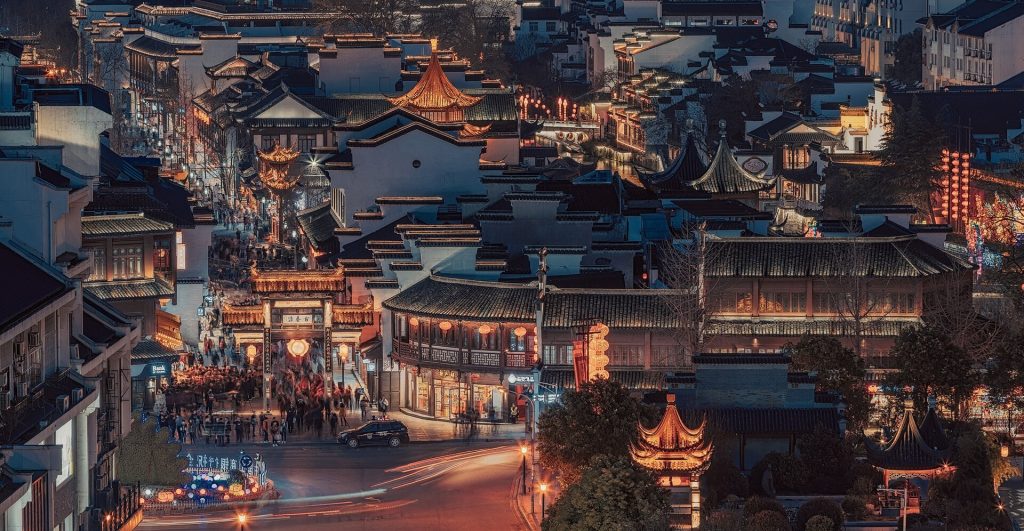
Nanjing in mid-November carries a specific, crisp weight in the air. By 5:30 PM, the late-autumn sun has already dipped below the Ming city walls, and the ambient temperature drops just enough to justify a thick sweater. This is the perfect moment to find yourself near the Qinhuai River, watching the pedestrian zones around the Confucius Temple (Fuzimiao) transition from a bustling afternoon market to a glowing, lantern-lit nightscape. It is a slower, distinctly southern Chinese evening, where history feels tangibly layered beneath neon signs and ancient eaves.
The Qinhuai River at Dusk
The Qinhuai River has always been the cultural spine of Nanjing, and in the evening, its dark waters become a mirror for the surrounding architecture. As you stand on Wende Bridge in the fading November twilight of 2026, the painted wooden boats (huafang) begin their slow, rhythmic routes. The air off the water is mild but carries a distinct autumn edge, smelling faintly of roasted chestnuts and damp stone.
Unlike the expansive, industrial sweep of southern rivers, the Qinhuai feels intimate and enclosed. The white walls and black-tiled roofs of the Jiangnan-style buildings frame the water tightly, their edges illuminated by hundreds of golden and red lights. It is a cinematic backdrop, but one firmly rooted in the everyday reality of Nanjing residents strolling after dinner. The reflection of the imperial examination halls on the water ripples as the boats pass, creating a hypnotic effect. If you are building a Nanjing November weekend planner, dedicating a Friday or Saturday evening specifically to this riverside stroll is essential for understanding the city’s historical mood.
Navigating the Fuzimiao Pedestrian Zones
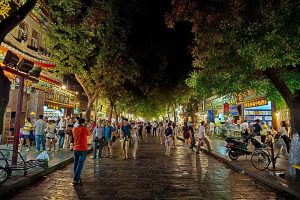
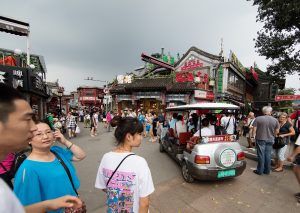
The area surrounding the actual Confucius Temple is a sprawling pedestrian zone, and acknowledging its commercial nature is part of the experience. On a November evening, especially on a weekend, the main arteries are packed with domestic tourists, local families, and vendors. The sensory input is heavy: the mechanical hum of tourist boats, the overlapping calls of snack vendors, and the soft ambient music drifting from riverside teahouses.
To manage the crowds, the best strategy is to stay mobile and occasionally duck into the narrower, less illuminated alleys branching off the main plaza. The eastern side of the market tends to bottleneck near the food stalls, so walking with intent helps. Grab a steaming bowl of duck blood and vermicelli soup (yaxue fensi tang)—a Nanjing winter staple—or a skewer of tanghulu (candied hawthorn) to keep your hands warm, and let the current of the crowd guide you toward the temple gates.
An Evening Preparation Checklist:
Dress in layers: November temperatures in Nanjing can drop rapidly after sunset; a windproof outer layer is highly recommended near the river.
Prep your digital wallet: Ensure Alipay or WeChat Pay is funded, as cash is rarely accepted by small snack vendors.
Carry a physical passport: While walking the streets is free, you will need your original passport to purchase entry tickets to the inner temple or the boat rides.
Wear comfortable footwear: The flagstones around the Qinhuai River are uneven and often slippery in the damp evening air.
The Temple Grounds and Lanterns
While the surrounding neighborhood is free to wander, the Confucius Temple itself requires a modest entry fee. Passing through the main gate, the atmosphere immediately shifts. The commercial roar of the streets muffles, replaced by the quiet rustle of old courtyard trees losing their remaining autumn leaves.
In November, the sun sets early, allowing the temple’s famous lanterns to take center stage well before 6:00 PM. The Dacheng Hall, central to the complex, is flanked by ancient bronze statues and stone steles, all softly up-lit. Shadows stretch across the stone courtyard, creating a contemplative space that sharply contrasts the bustling streets outside. When capturing the glowing red lanterns or the intricate wooden roof brackets, remember to be mindful of your surroundings; brushing up on temple photo etiquette ensures you remain respectful of areas designated for prayer or reflection, even in heavily visited historical sites. The light here in the evening is deeply atmospheric—low, warm, and highly directional—making it an ideal environment for slow, deliberate photography without the harsh glare of midday.
A Practical Exit: The Metro Return
By 8:30 PM, the late-autumn chill usually deepens, signaling that it is time to retreat. One of the great advantages of visiting Fuzimiao is its deep integration into Nanjing’s excellent public transit system, saving you from the frustration of flagging down a taxi in a crowded tourist hub.
Walking away from the river, the transition back to modern Nanjing is abrupt. Within ten minutes, the traditional eaves give way to modern concrete and the glowing blue signs of the Nanjing Metro. Line 3 (Fuzimiao Station) is the most direct access point, though Line 1 (Sanshanjie Station) is only a slightly longer walk and often less congested on busy weekend nights.
For expats and foreign travellers, the metro is entirely frictionless if your digital payment systems are set up. Simply scanning your Alipay or WeChat transit code at the turnstile gets you through the gates in seconds. If you are still navigating the initial setup of these apps, reviewing essential China travel tools before your trip will ensure you aren’t stuck buying physical tokens from machines. The subway trains are heavily heated, offering a sudden, comforting wave of warmth as you ride back toward Xinjiekou or Gulou, carrying the faint scent of the Qinhuai River with you into the night.
Frequently Asked Questions (FAQ)
Do I need advance tickets to walk around the Fuzimiao area?
No. The greater Fuzimiao pedestrian area and the Qinhuai River walkways are completely free and open to the public without reservations. You only need to purchase tickets if you wish to enter specific enclosed historical sites, such as the Confucius Temple complex itself or the Jiangnan Examination Hall.
How late do the lights stay on in November and December?
We do not invent a switch-off hour. Lanterns and street lighting usually follow dusk and the precinct’s seasonal notice, so verify near your travel week rather than memorizing a blog time.
Related Lovely China reading
For payments, start with Alipay and WeChat Pay hub and WeChat Pay vs Alipay for tourists. For trains, keep high-speed rail first-timers guide and 12306 passport signup for foreigners handy. City hubs: Beijing first-visit guide, Shanghai first-visit guide. Connectivity: roaming vs local SIM honest guide, pocket Wi-Fi vs eSIM for China, offline maps for foreigners. Bookmark China travel tools page.
Practical checklist
- Confirm official rules on the relevant government, park, airline, or bank page near your travel week
- Screenshot bookings, tickets, and QR codes while you still have stable Wi-Fi
- Save hotel and attraction names in Chinese characters in your phone notes
- Carry passport, a backup payment method, and a small cash float (why cash is still needed)
- Test one small mobile payment before you rely on wallets at a gate or taxi
- Keep the China travel tools page page bookmarked for related Lovely China hubs
FAQ
Is this stories advice official?
No. Lovely China orients travellers. Verify live rules on official pages, apps, and counters near your travel week.
Will every city behave the same?
No. Airports, stations, parks, and markets differ. Use local signage and staff instructions when they conflict with a general guide.
What should I screenshot before I lose Wi-Fi?
Bookings, tickets, hotel Chinese address, pickup pins, and payment success screens.
Notes for late 2026 travellers
November and early December bring cooler mornings, earlier sunsets, and comfortable walking weather across much of eastern and central China. Pack layers and leave extra time on clear weekends at popular sights.
This article does not invent ticket prices, opening hours, processing times, consular fees, or official statistics. When a number matters, verify it on the official site, app screen, or ticket board near your travel week.
If an official rule page disagrees with this guide, follow the official page. Lovely China orients English-speaking travellers; we are not an immigration, banking, or medical authority.