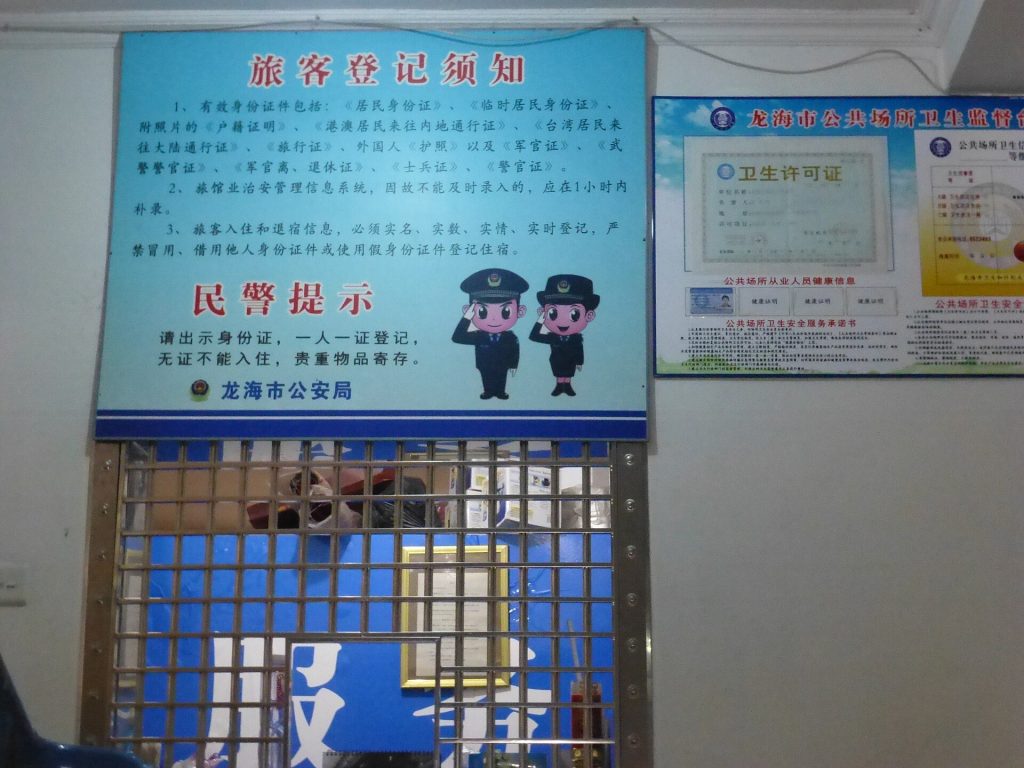
The first night’s hotel desk in China usually takes your passport, enters the stay into the police registration system, and hands the document back with a key card. That filing is for that stay. It is not a season pass. When you check out of Hotel A and walk into Hotel B in another district—or even later the same day in the same city—the next licensed front desk will typically register you again.
This article is the change-of-hotel sequence. The basic obligation is explained in hotel registration for foreigners. What changes if you chose a homestay is covered in hotel vs homestay registration on 30-day visa-free entry and, when a desk cannot file for you, in police-station temporary residence registration. Transit stays have their own note in 240-hour transit hotel registration.
Why the second desk asks for the passport again
China’s temporary residence rules for foreign visitors are tied to where you are actually sleeping. A licensed hotel or guesthouse that receives foreign guests is set up to report those stays. The second hotel does not “see” the first hotel’s paperwork as a reason to skip the step. From the desk’s point of view, you are a new arrival.
You do not need to carry a printout from Hotel A as proof that you already registered somewhere else, though keeping booking confirmations in a folder is still useful if a question comes up. What you do need is the same passport you used at the border, plus a booking the desk can match to a room.
What to have ready at Hotel B
Have the passport biodata page clean and accessible, the booking name matching the passport as closely as possible, and the hotel’s Chinese name and address already saved in your notes. If someone else booked the room, say so early and have their confirmation on one screen. Front-desk software and a tired late-night queue both go faster when you offer one document at a time.
If you will arrive after midnight, say so when you book and again when you message the desk. International arrivals still get registered; the risk is a property that cannot legally take foreign passports, or a door that is unstaffed. Arriving late at night walks through that first-night version of the same problem.
Before you pay a non-refundable rate, confirm that the property registers foreign passports. A listing photo and an English-language “passport OK” line in a booking app are weaker than a written confirmation from the desk.
Homestays, short-term rentals, and friends’ sofas
If Hotel B is not actually a licensed hotel, the convenient desk-side filing may not exist. Some unofficial stays leave you needing to visit a local police station to complete temporary residence registration. That is a different errand, with station hours and a format that varies by neighbourhood. Do not invent a fine table here; treat an unlicensed room as a process you must confirm in advance, not as a bargain that silently inherits the first hotel’s registration.
Staying with a friend does not automatically transfer their registration to you. Ask, before you commit, how foreign guests are reported in that building.
Same-city hops, day-use rooms, and mid-trip surprises
A day-use room, an early check-in after a night train, or a one-night stop between two longer stays is still a stay if you are sleeping there. If your train is late and you miss a planned check-in, tell the desk; do not assume the next morning’s property will “cover” a night you spent elsewhere unregistered.
If a desk says they cannot register a foreign passport, do not argue from a previous city. Leave yourself time to find a licensed hotel or to complete whatever local process they describe. Keep the conversation factual: passport, dates, booking.
Practical rhythm for a multi-city trip
Build a simple habit. Each time you change beds, treat registration as part of check-in, not as a one-time airport chore. Photograph the passport stamp once after entry, keep bookings offline, and use licensed hotels when you want the filing to be boring. The goal is a quiet desk visit, not a debate about last week’s city.
Ground-level reminders for this topic
Stay flexible when a counter, app screen, or staff instruction disagrees with a blog. Lovely China orients travellers; live official pages and bilingual signs win. Keep China travel tools page, essential apps for foreigners, and Alipay and WeChat Pay hub bookmarked so logistics stay boring while you focus on the angle of this guide: Explain that each licensed hotel stay typically involves a fresh police registration for a foreign passport, so moving from Hotel A to Hotel B is not a one-time formality you completed on night one. Cover what to have ready at the next front desk, what happens with late check-ins, and when a homestay or unlicensed room may leave you needing a police-station registration instead. Distinct from the original hotel-registration explainer, the 240-hour transit hotel article, hotel-vs-homestay visa-free registration, and the police-station temporary-residence article—this piece is the change-of-hotel sequence..
Related Lovely China reading
For payments, start with Alipay and WeChat Pay hub and WeChat Pay vs Alipay for tourists. For trains, keep high-speed rail first-timers guide and 12306 passport signup for foreigners handy. City hubs: Beijing first-visit guide, Shanghai first-visit guide. Connectivity: roaming vs local SIM honest guide, pocket Wi-Fi vs eSIM for China, offline maps for foreigners. Bookmark China travel tools page.
Practical checklist
- Confirm official rules on the relevant government, park, airline, or bank page near your travel week
- Screenshot bookings, tickets, and QR codes while you still have stable Wi-Fi
- Save hotel and attraction names in Chinese characters in your phone notes
- Carry passport, a backup payment method, and a small cash float (why cash is still needed)
- Test one small mobile payment before you rely on wallets at a gate or taxi
- Keep China travel tools page bookmarked for related Lovely China hubs
FAQ
Does the first hotel’s registration cover the rest of my trip?
Usually no. Each licensed hotel stay typically involves a fresh registration of your passport for that stay. Treat check-in at Hotel B as a new filing, not a formality you already finished.
What if I book a homestay or an unlicensed room?
The desk may not be able to file for you, and you may need a local police-station process instead. Confirm this before you pay a non-refundable booking, and use a licensed hotel if you want the filing to stay at the front desk.
Do I need paperwork from the previous hotel?
You do not normally need a printout from Hotel A as proof. Bring the same passport you used at the border and a booking the next desk can match. Keep confirmations offline in case a question comes up.
What about a late-night or same-day hotel change?
Tell the desk if you will arrive after midnight, and confirm the property can register foreign passports. A day-use room or a one-night gap is still a stay if you sleep there.
Notes for late 2026 travellers
Late December 2026 and the New Year week into 2027 bring colder mornings, earlier sunsets, and holiday crowds in many city hubs. Pack real winter layers in the north, and leave extra time on weekends and around 1 January.
This article does not invent ticket prices, opening hours, processing times, consular fees, or official statistics. When a number matters, verify it on the official site, app screen, or ticket board near your travel week.
If an official rule page disagrees with this guide, follow the official page. Lovely China orients English-speaking travellers; we are not an immigration, banking, or medical authority.