Why early autumn suits a first Wuhan visit
Wuhan is a Yangtze River city of three towns — Wuchang, Hankou, and Hanyang — linked by bridges and metro lines. For a first visit in early autumn 2026, two practical days are enough to feel the river, climb one landmark tower, and taste hot dry noodles without turning every hour into a transfer race.
Early autumn usually brings milder mornings for outdoor viewpoints after the heavier summer heat. The calendar still shapes crowds: Mid-Autumn Festival is Friday 25 September 2026 (short holiday roughly 25–27 September), with makeup workday Sunday 20 September; National Day Golden Week runs 1–7 October 2026, with makeup workday Saturday 10 October (国办发明电〔2025〕7号). If your dates sit near either holiday, read Golden Week 2026 vs Mid-Autumn before you lock every hotel night and tower ticket.
Wuhan does not empty for holidays. Riverfront parks, Yellow Crane Tower queues, and snack streets reshape themselves around family travel. Your best first-timer strategy is simple: keep Day 1 for Wuchang landmarks and a paced noodle lunch, keep Day 2 for a Hankou riverside or concession-era street walk, and leave bridge-crossing time as buffer rather than a photo checklist.
Before you arrive: payments, metro, and hotel check-in
Set up Alipay and WeChat Pay before you need a metro gate or a breakfast stall that only shows a QR code. A working SIM or eSIM helps with maps across the three towns. At the hotel, follow passport registration calmly — China hotel check-in with a foreign passport.
Screenshot your hotel’s Chinese address and the nearest metro exits. Wuhan Metro covers the core well, with English station names on major lines. For airport or late cross-town hops, Didi saves stress; for daytime sightseeing, metro plus walking usually feels calmer than fighting river-crossing traffic.
Day 1 — Yellow Crane Tower, river glance, noodles with pace
Morning: Yellow Crane Tower as orientation
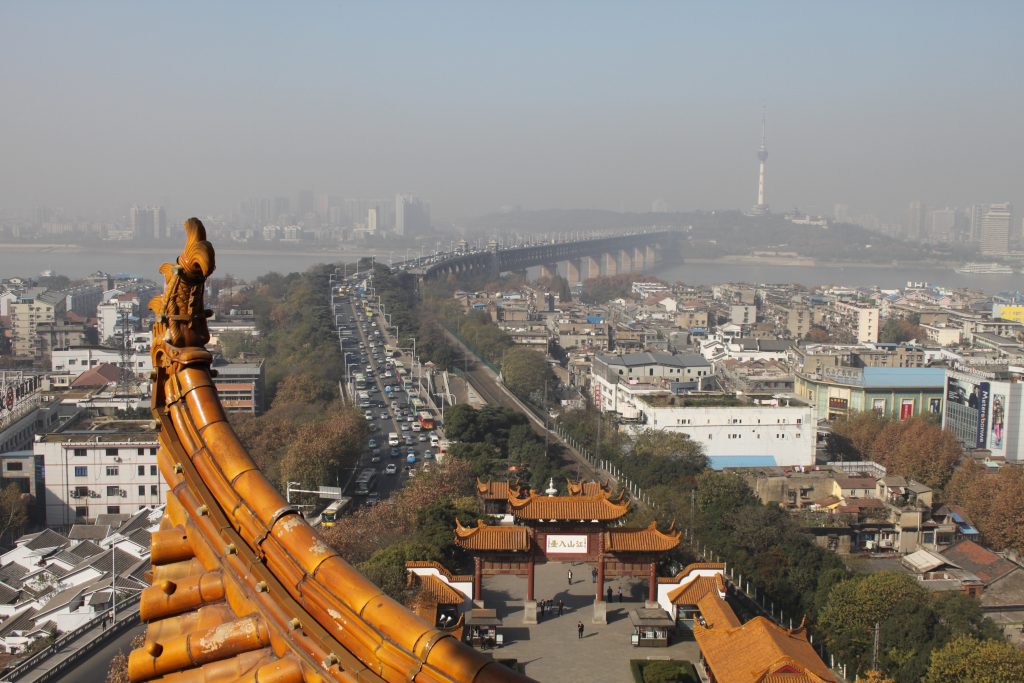
Start in Wuchang with Yellow Crane Tower (黄鹤楼) if you want the classic Wuhan skyline-and-river orientation. Book authorised tickets ahead when you can, and aim for an earlier slot — queues grow on weekends and holiday eves. Practical notes:
- Carry your passport for real-name ticketing if asked.
- Wear shoes with grip for stairs and polished floors.
- Treat the tower as orientation: look across the Yangtze toward Tortoise Hill and the bridges, then decide which riverbank feels clearer for later walking.
- Do not stack a distant second major site into the same morning.
After you descend, walk a short park segment rather than rushing immediately to another district.
Midday: hot dry noodles without the checklist panic
Wuhan’s signature breakfast-and-anytime bowl is hot dry noodles — 热干面 (reganmian). For a first bowl, see our food guide Wuhan hot dry noodles for first-timers. In short:
- Expect a sesame-forward, savoury, slightly dry noodle — not a soup bowl.
- Ask for less chilli if you are sensitive (milder options exist).
- Pair with a simple side or soy milk rather than ordering three heavy dishes at once.
- Eat earlier if Mid-Autumn or Golden Week crowds pack popular shops.
This meal is identity, not a full afternoon. Leave room for dinner.
Afternoon: one riverbank walk, then rest
Pick one riverside promenade stretch rather than hopping between distant bridges. The goal is to feel how Wuhan uses the Yangtze as a spine: boats, bridges, and opposite-bank skylines. When humidity or sun returns, stop indoors for tea or coffee. Early autumn light is good for photos, but sudden showers still appear — a compact umbrella helps.
Evening: Hankou or a calm hotel-neighbourhood dinner
If energy remains, metro toward a Hankou evening street for a lighter dinner. If feet are done, eat near the hotel. End Day 1 early enough that Day 2 does not start as recovery. Near Mid-Autumn, night riverside paths fill earlier.
Day 2 — Hankou pace, optional museum, departure buffers
Morning: concession-era streets or a quieter neighbourhood window
Hankou’s older commercial streets and former concession-era blocks offer a different Wuhan texture from the tower: shop fronts, river proximity, and denser everyday life. Go earlier for easier walking. Treat it as atmosphere and coffee/snack sampling, not as a museum trail you must complete. If old-street crowds drain you, swap for a quieter park near your hotel.
Midday: second local lunch with a pacing plan
Day 2 lunch can be another noodle style, a dry pot, or a milder home-style Hubei plate. Rules that protect the rest of the trip:
1. Tell staff your spice preference early.
2. Share plates; Wuhan portions can be generous.
3. Drink water — river humidity sneaks up on visitors.
4. If your stomach is sensitive, keep lunch milder after a rich Day 1 noodle breakfast.
Afternoon: optional museum buffer or bridge viewpoint
Optional add-ons only — one museum if rain arrives, or one short bridge-adjacent viewpoint if weather is clear. Do not force a same-day day trip to a distant lake resort on a first two-day visit; that deserves its own planning window. A first Wuhan trip is about learning the three-town river grammar, not collecting every famous name.
Evening: pack for trains and confirm tickets
Use the last evening to check tomorrow’s transport. High-speed trains out of Wuhan are major national links — book ahead, especially around holidays. See how visitors book mainland trains on 12306 if you still need the booking flow.
Mid-Autumn and Golden Week timing for Wuhan
Before Mid-Autumn (early–mid September): Usually the calmest window for a first visit, with cooler mornings for the tower and fewer holiday-only crowds.
Mid-Autumn short holiday (~25–27 September 2026): Tower queues and snack streets get busier; book tickets and hotel nights with more buffer. Makeup workday Sunday 20 September may shift weekday patterns.
Between Mid-Autumn and Golden Week: A useful gap for travellers who can shift dates — still autumn weather, with less peak-holiday pressure than early October.
Golden Week (1–7 October 2026): Expect denser transport hubs and popular photo spots. Keep itineraries shorter, start earlier, and protect meal times. Makeup workday Saturday 10 October follows the holiday week.
Practical packing and city manners
- Shoes: Comfortable soles for tower stairs and long metro transfers.
- Layers: Early autumn mornings can feel milder on the river; afternoons warm up.
- Power: Maps and translation drain batteries — carry a cable.
- Metro manners: Stand clear of doors; have your QR or card ready before the gate.
- Food pace: Hot dry noodles are filling; do not treat every snack stall as mandatory.
A simple two-day skeleton
| Block | Day 1 | Day 2 |
| — | — | — |
| Morning | Yellow Crane Tower | Hankou streets / quieter walk |
| Midday | Hot dry noodles lunch | Second local lunch |
| Afternoon | One riverbank stretch | Museum or short viewpoint |
| Evening | Soft dinner + rest | Confirm tickets + pack |
Crossing the river without turning it into a project
First-timers often over-plan which bridge to photograph. For a two-day visit, treat river crossings as metro convenience, not as a separate attraction list. Ride one metro segment under or across the Yangtze as ordinary transport, look out when the train or bus gives you a window, and save your energy for walking on one bank at a time.
If you want a classic bridge view, combine it with an already-planned stop — for example glancing toward the First Yangtze Bridge area while you are already near Yellow Crane Tower — rather than scheduling a standalone transfer. In early autumn haze can soften distant skylines; that is normal, not a failed photo day. Keep one “good enough” viewpoint and move on to food or rest.
Near Mid-Autumn and Golden Week, bridge-adjacent promenades host more family walkers in the evening. Start earlier, keep bags zipped, and avoid standing in bicycle lanes for photos.
Final tip
Wuhan’s first-visit magic is the river plus one landmark tower — then a second day that shows how everyday streets sit on the opposite bank. Early autumn 2026 works well if you stay ahead of Mid-Autumn and Golden Week peaks, keep noodle spice under control, and treat metro transfers as part of the experience. For holiday timing, use Golden Week 2026 vs Mid-Autumn. For the noodle deep-dive, open Wuhan hot dry noodles for first-timers. Questions: [email protected]. Lovely China was founded in 2025.