<!–
title: How to Order Soup Dumplings Outside Shanghai
slug: order-soup-dumplings-outside-shanghai
category: Food
focus: soup dumplings china
meta: Xiaolongbao-style soup dumplings traveled far beyond Shanghai. First-timers find chains, Jiangnan restaurants, and northern shops with different skins and so
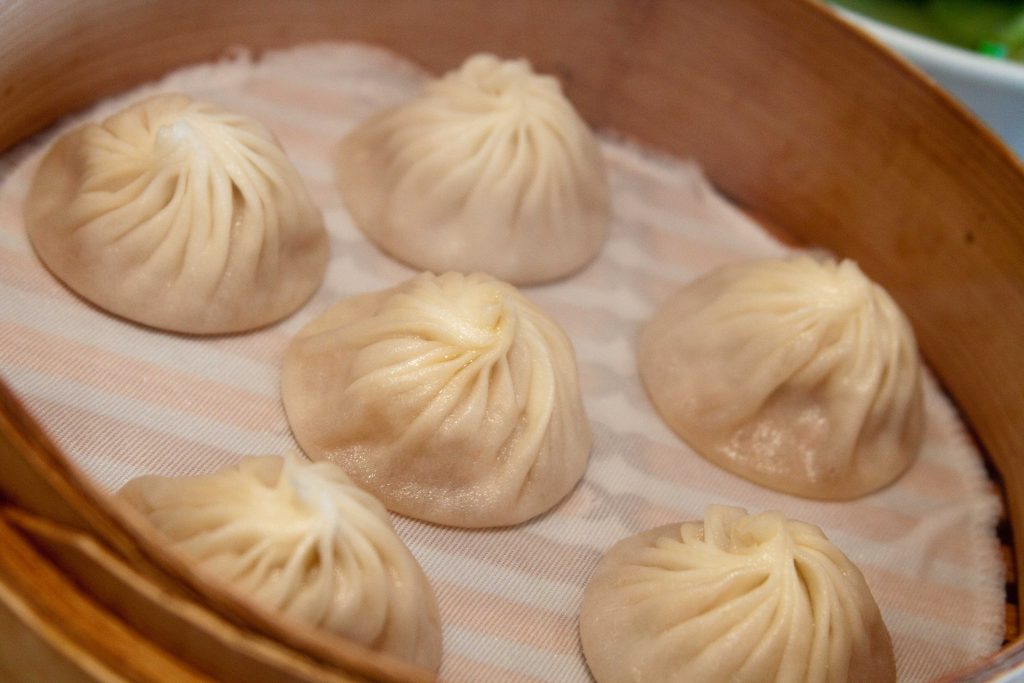
cover_alt: Soup dumplings in a bamboo steamer basket
cover_credit: Photo: Bodhikun / Wikimedia Commons (CC BY 3.0)
word_count: 1252
–>
Why travelers care about Soup dumplings outside Shanghai
Xiaolongbao-style soup dumplings traveled far beyond Shanghai. First-timers find chains, Jiangnan restaurants, and northern shops with different skins and soup levels. Quality cues beat city names on signs.
Learn technique in how to eat xiaolongbao in Shanghai. Nearby cousin: shengjianbao.
What 小笼包 (xiǎolóngbāo) actually is
Steamed parcels with hot broth inside need a spoon, vinegar-ginger, patience, and intact skins. Outside Shanghai, thicker skins or less soup can appear — different, not automatically fake.
Spotting quality
Intentional pleats, intact skins, soup present. Dry interiors warn you off.
Chains vs specialists
Chains teach consistency. Specialists vary. Steamers should turn over.
How to eat anywhere
Spoon, nibble, sip, then eat. Vinegar-ginger on the side.
Naming confusion
灌汤包 and similar names exist. Ask if broth is inside.
Ordering size
One steamer per person to start; add greens if needed.
Step-by-step first order
1. Confirm soup dumplings
2. Order one steamer
3. Use spoon and vinegar
4. Bite carefully
5. Reorder only if excellent
Useful phrases
- 小笼包 (xiǎolóngbāo) — Soup dumplings
- 醋姜 (cù jiāng) — Vinegar and ginger
- 再来一笼 (zài lái yī lóng) — Another steamer
- 小心烫 (xiǎoxīn tàng) — Careful — hot
Common mistakes
- Biting like a bagel
- Rejecting all non-Shanghai versions
- Too many mains plus steamers
Quick reference
| Cue | Good | Risky |
| — | — | — |
| Skin | Intact | Broken/dry |
| Soup | Present | Empty |
| Turnover | Busy | Cold trays |
Payments, menus, and visitor logistics
Set up Alipay and WeChat Pay before you rely on a specialty counter — many shops are QR-first. When a table tent shows only a code, use our Chinese restaurant QR menu tips for foreigners. Screenshot the Chinese dish name from this article so you can show staff without perfect pronunciation.
Portion discipline beats collecting every named plate. Order the signature item, one balancing dish, and a staple if needed, then add more. On rainy nights, food delivery in a Chinese city can help once you understand tipping is not the US model and photos are your friend. Keep tissues and battery for longer specialty meals.
For Soup dumplings outside Shanghai, the winning habit is the same as elsewhere in China: arrive slightly off-peak, watch one local order, and keep your first ticket modest.
QR ordering help: restaurant QR menus.
Pacing, leftovers, and the next meal
Taste the signature carefully before you escalate spice, sweetness, or richness. Share family-style when the table is larger than two. Ask about separate checks early if your group needs them.
Leftovers are normal — request a box when sauces are worth tomorrow’s lunch. Schedule the next meal lighter: congee, noodles, or vegetables. Keep the next meal mild if today was rich, spicy, or banquet-heavy.
State allergies and exclusions before cooking starts. “No peanut,” “no pork,” or “no shellfish” is easier to honor at ordering time than after plating. Hydrate, especially with chili oil meals.
A calm first-timer checklist for 小笼包
Before you go, save the Chinese name 小笼包, a map pin, and payment apps. At the door, confirm opening hours and whether the specialty requires a wait. At the table, order the core expression of Soup dumplings outside Shanghai rather than a novelty remix. While eating, notice texture and seasoning balance — those teach you more than chasing every topping. Before you leave, decide whether a second visit should escalate spice, portion, or a related dish. This loop — modest first ticket, careful tasting, intentional second visit — is how English-speaking travelers build confidence across China’s regional food map without burning out on day one.
Field notes that improve the next order
Write down what worked: spice level, portion size, sauce preference, and whether you would return at lunch or dinner. That tiny note beats memory after three cities. If a shop was excellent, save the Chinese name and the nearest metro exit. If it was mediocre, note why — temperature, oil, sweetness, wait time — so you do not repeat the same miss.
Travelers who treat each specialty meal as a short lesson learn China’s regional map faster. You do not need encyclopedic mastery on day one; you need one clear reference experience and a plan for the sequel. Keep receipts or order screenshots only when useful for expense reports; otherwise focus on flavor memory and logistics memory.
When friends ask for a recommendation later, you will be able to say more than “it was famous.” You will be able to say how to order it kindly, how much to buy, and what to skip.
Final tip
Why this belongs on an autumn 2026 China food list
Autumn 2026 travel around Mid-Autumn and Golden Week rewards flexible food plans: popular specialty shops get busier near holidays, while ordinary weekday lunches stay teachable. Building one excellent Soup dumplings outside Shanghai stop into a city day is smarter than stacking three heavy dinners. Use mornings for lighter breakfasts, keep your specialty meal at lunch or early dinner, and leave evenings adjustable for weather and queues. If your itinerary already includes another rich iconic dish the same day, move one of them. Regional Chinese cooking is diverse enough that you will eat better by sequencing contrasts — chili then mild, rich then soupy, banquet then bakery walk — than by treating every famous name as mandatory tonight. For 小笼包, that means protecting appetite, asking for heat or sweetness adjustments early, and treating staff guidance as part of the craft rather than a barrier. Travelers who learn this rhythm usually remember the meal fondly and still have energy for the next city’s different grammar.
Sensory cues to trust
Trust your senses more than English hype adjectives on a plastic menu. Fresh oil smells clean, broths smell savory rather than stale, and steamed items should arrive hot. If a specialty famous for crispness arrives soggy, or a soup famous for brightness tastes flat and reheated, you are allowed to keep the meal short and choose a different shop next time. Lines of locals are imperfect signals, but empty tourist rooms with only English feast posters are weaker ones. Take a photo of the order ticket or QR confirmation, keep chopsticks and spoons organized on shared tables, and wash or wipe hands before handling phones after chili oil or crab shells. These small habits protect both hygiene and patience — and they make Soup dumplings outside Shanghai feel like a craft you participated in, not a checklist you survived.
Judge soup dumplings on craft. Technique stays the same as our Shanghai guide.
Questions: [email protected]. Lovely China was founded in 2025.


