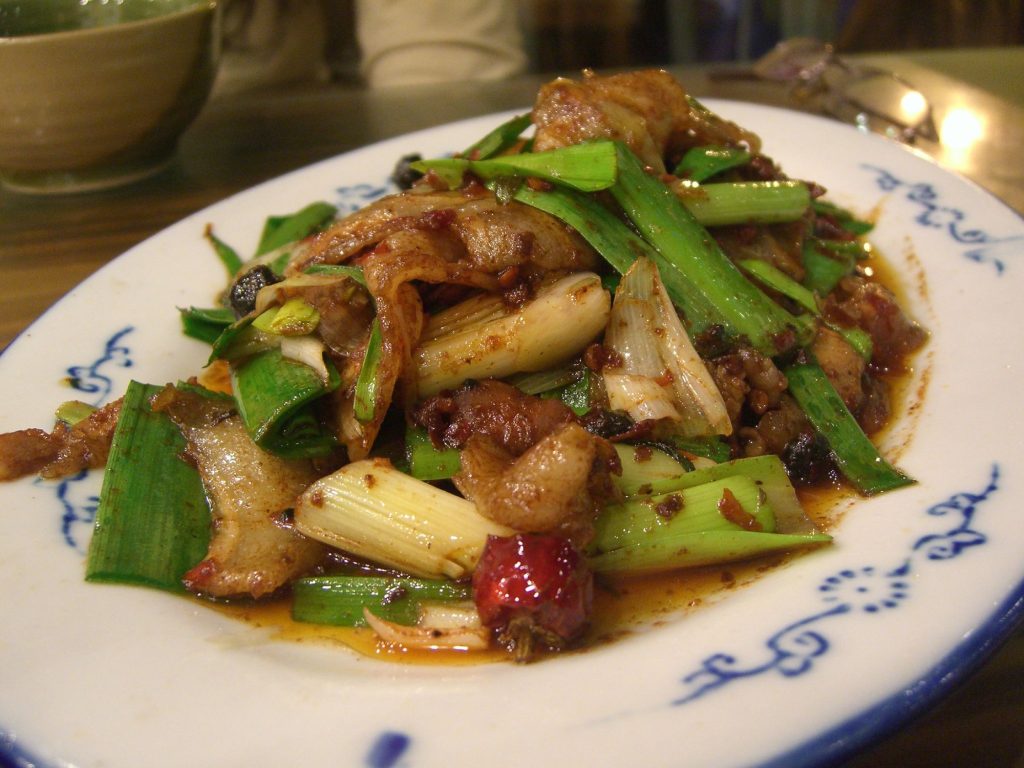
What huiguorou actually is
Huiguorou—回锅肉 (huíguōròu)—is one of Sichuan’s everyday home-and-restaurant classics: pork belly (sometimes with a little lean) is first boiled or steamed until cooked through, cooled and sliced, then returned to the wok (“hui guo”) and stir-fried with chili bean paste, fermented black beans or sweet bean sauce, and quick-cooking greens such as garlic sprouts or green peppers. The name literally means “meat returned to the pot.”
English menus may say “twice-cooked pork,” “twice-cooked belly,” “hui guo rou,” or “return-to-pot pork.” The Chinese 回锅肉 is the reliable label. If the translation app invents poetry, photograph the characters—see reading Chinese menus with photo translation apps.
This guide is for English-speaking travelers and expats who want a calm first order: what the dish should look and taste like, how spicy it usually is, what to eat with it, how it differs from other red oily Sichuan plates, and a pocket ordering script.
Why first-timers should care
Huiguorou is a rice dish, not a snack. It is salty-savory, a little sweet, chili-fragrant, and often more approachable than mapo tofu’s numbing heat or a full mala xiangguo dry pot. Many Chengdu and Chongqing family restaurants treat it as a default meat dish for a two- or three-person table. If you only order “mild” tourist set menus, you may miss one of the most common plates locals actually share.
It is also a useful calibration meal: if a shop’s huiguorou tastes balanced and not greasy-for-no-reason, their other Sichuan stir-fries are often worth exploring next.
What should arrive on the plate
Expect thin slices of pork with a pink-to-white layered look (fat and lean), glossy red-brown sauce clinging to the meat, and bright green garlic sprouts (蒜苗) or sliced green chili/pepper. The pork should be tender enough to bite cleanly without chewing forever; the fat should render and coat rice, not sit as rubbery slabs.
Good signs:
- Visible garlic sprouts or greens, not only meat
- Sauce that looks emulsified and glossy, not a puddle of clear oil
- A gentle chili fragrance (豆瓣酱 / doubanjiang) rather than only dried chili heat
Warning signs for a weak version: thick chewy slabs, pale sauce with little fermented bean depth, or a plate that is mostly oil with a few lonely slices. Busy lunch places usually do better than empty tourist traps with English-only laminated photos.
Prices vary by city, cut, and whether the kitchen uses premium belly—check the menu board, not a blog number.
Spice level: what to expect and how to ask
Classic huiguorou is savory-spicy, not “numb your face” like heavy mala. The heat often comes from Sichuan chili bean paste (Pixian-style doubanjiang) plus fresh green chili or dried chili segments. Sichuan peppercorn may appear lightly; it is usually not the star the way it is in mapo tofu or dan dan noodles.
Useful phrases:
- 不要太辣 — not too spicy
- 微辣 — mild
- 少放辣椒 — less chili
- 不要花椒 / 少花椒 — no / less Sichuan peppercorn
- 清淡一点 — lighter overall
- 蒜苗回锅肉 — huiguorou with garlic sprouts (the classic call)
Many kitchens cook to a house default. Asking 微辣 before the wok starts is more effective than complaining after. If green peppers look fierce on the photo, you can ask for 青椒少一点 (fewer green chilies).
Taste a slice with rice first. The salt and fermented bean paste concentrate on the meat edges—do not judge the dish from a solo fatty bit eaten dry.
How to order it (portion and table logic)
For two people, one plate of huiguorou plus a vegetable and rice is a normal light meal; add soup or another protein if you are hungrier. For three to four, huiguorou often sits beside a fish or tofu dish and greens. It is rarely ordered as a solo main without rice—plain white rice is the partner, not a side thought.
On QR menus (common in cities), look for the characters 回锅肉 or photos of sliced pork with green sprouts. Pointing works. For QR quirks, see Chinese restaurant QR menus for foreigners.
A calm first-timer script:
1. Sit, scan for 回锅肉 or “twice-cooked pork.”
2. Ask 微辣 or 不要太辣 if you are chili-shy.
3. Order 米饭 (rice)—one bowl each is safer than sharing one.
4. Add a cold vegetable or simple greens to cut richness (cucumber salad, wood ear, seasonal greens).
5. Eat meat-on-rice; do not chase only the fattiest slices.
Pocket line: 一份回锅肉,微辣,两碗米饭。
What goes with huiguorou
Rice is non-negotiable for most tables. The dish is engineered to flavor grains.
Helpful companions:
- Clear soup or light vegetable broth — resets salt
- Cold dishes with vinegar (cucumber, fungus) — cut fat
- Simple greens stir-fried with garlic — balance the plate
- Beer or weak tea if you drink; plain water is fine
Avoid stacking huiguorou with three other heavy red-braised meats on night one unless you know your group’s appetite. Pairing it with shuizhu yu on the same table is a classic “one dry-savory, one chili-oil bath” pattern—ambitious for first-timers, excellent for groups that already know their spice tolerance.
Huiguorou vs other Sichuan pork/chili dishes
Do not confuse labels:
- 回锅肉 — twice-cooked sliced belly, stir-fried, rice-friendly
- 盐煎肉 — salt-fried pork; often drier, saltier, different cut logic
- 鱼香肉丝 — “fish-fragrant” shredded pork; sweeter-sour vinegar profile, no fish required
- 水煮肉片 — boiled sliced pork in chili oil bath; soupier, hotter presentation
- 麻婆豆腐 — tofu with minced beef/pork; numbing-spicy sauce
If you wanted the numbing tofu classic, order mapo by name. If you wanted a dry wok free-for-all, that is xiangguo, not huiguorou.
Regional and restaurant variations
Chengdu / Sichuan home style often leans garlic sprouts and Pixian doubanjiang. Chongqing versions can run hotter and oilier. Coastal city “Sichuan” restaurants may sweeten the sauce or reduce chili for broader tastes—still enjoyable, just milder. Northeast or north China adaptations sometimes use more sweet bean sauce and fewer fresh sprouts.
Some shops offer 回锅肉盖饭 (huiguorou over rice) as a cheap solo lunch—convenient, portion fixed, less sharing etiquette. Mall food courts may serve a sweeter, redder plate that looks more like generic “chili pork.” Ask whether it is spicy before you commit if you are sensitive.
Outside Sichuan, “twice-cooked pork” on a pan-Asian menu abroad is not automatically the same dish—fermented bean paste depth varies widely. In China, the characters matter more than the English gloss.
How to eat it politely and practically
Shared plates are normal. Use serving chopsticks if provided, or flip your chopsticks to the clean ends when taking from a communal dish with new acquaintances who care about that custom. Do not tip in ordinary Chinese restaurants.
Leftover oil on the plate is common; leftover untouched meat usually means the portion was large or the fat ratio was higher than your group likes. Solo diners can ask whether a small portion exists (小份); not every kitchen offers it.
Peak lunch (11:30–13:00) and dinner rushes mean slower wok times. Huiguorou cooks quickly once the belly is pre-boiled, so waits are often about restaurant traffic, not long braising.
For street-adjacent small eateries, use the same judgment as any first-month snack stop—see street food safety notes. Sit-down restaurants with visible turnover are the easier first try.
Payment is usually QR via Alipay or WeChat Pay; keep Alipay and WeChat Pay for foreign visitors ready.
Common first-timer mistakes
- Ordering huiguorou without rice and deciding it is “too salty”
- Expecting mala numbness equal to hotpot and being confused when the heat is different
- Picking only fatty pieces and skipping the garlic-sprout bites that balance the plate
- Stacking it with three other chili-oil dishes on the first Sichuan night
- Assuming every red pork stir-fry is the same as sweet-and-sour or Cantonese BBQ pork—char siu and roast meats are a different tradition
- Not saying 微辣 in a tourist restaurant that defaults spicy for “authenticity” theater
Allergies and diet notes
Pork is the core—there is no classic vegetarian huiguorou. Lard or pork fat flavor the wok. Chili bean paste and fermented black beans can include wheat or soy—ask if you have gluten or soy concerns (有没有小麦/面粉? / 有豆制品过敏). Sesame oil sometimes finishes the plate. Cross-contact with other meats on a busy wok line is real.
If you avoid pork for religious or personal reasons, skip this dish entirely and look at tofu or fish options instead of asking for a “huiguorou-style” substitute—the name implies pork belly technique.
A calm first night plan
1. Choose a busy neighborhood Sichuan or home-style restaurant (locals, quick turnover).
2. Order 回锅肉 + 一碗青菜 + 米饭.
3. Request 微辣 if unsure.
4. Taste with rice; adjust with a vinegar cold dish if the salt feels high.
5. Save mapo, hotpot, or xiangguo for a second Sichuan night once you know your baseline.
If the table wants a second Sichuan hit the same week, fuqi feipian or mild Chongqing hotpot options give different textures without repeating the same stir-fry.
Bottom line
Huiguorou is Sichuan comfort food in wok form: twice-cooked pork belly, fermented chili bean depth, garlic sprouts, and rice. Ask for milder chili if you need it, do not skip the rice, and treat the first plate as a calibration meal for how a kitchen handles salt, fat, and doubanjiang. Once you like a shop’s “ordinary” huiguorou, you have a reliable anchor dish for countless future Sichuan tables across China.