The minibus from Ningbo Lishe Airport shuddered to a halt beside a row of electric bikes humming at the curb. Steam rose from a vendor’s soup pot, mixing with the exhaust of a passing logistics truck. I checked the address on my phone — a factory showroom in the industrial belt — then looked up at the grey tiles of an old courtyard house squeezed between two glass towers. Cixi does not announce itself with a skyline. It reveals itself in the rhythm of delivery tricycles, the clatter of mahjong tiles drifting from upper windows, and the particular cadence of a dialect that sits somewhere between Ningbo and Shanghainese.
Getting There Without a Headache
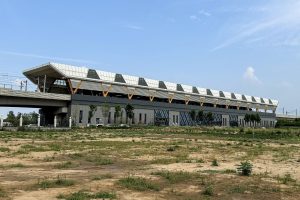
Three airports circle the city like satellites: Hangzhou Xiaoshan, Shanghai Pudong and Hongqiao, and Ningbo Lishe. Ningbo is the closest — about forty minutes by car if the expressway runs clear. From Shanghai, the long-distance bus from the South Station remains the workhorse route; the ride stretches past the two-hour mark when traffic thickens around the Hangzhou Bay Bridge. High-speed rail stops at Yuyao North, a twenty-minute drive north of the center. I once took a D-train from Hangzhou East, stepped onto the platform at Yuyao, and caught a pre-booked ride to my hotel before the station taxis had even formed a queue.
Moving Around the Grid
Licensed taxis carry GPS units and start the meter at a low flag-fall. The dispatcher number — 0574-63981234 — still works when the street empties out after midnight. Ride-hailing apps cover the urban core, but drivers sometimes cancel short hops into the factory zones. The three-wheeled coaches, painted bright blue, linger near the older residential compounds; they negotiate a flat fee rather than a meter. For the industrial parks, I rent an e-bike from a shop near the hotel. The battery lasts a full day of hopping between showrooms, and the narrow lanes behind the main boulevards move faster than the ring road at shift change.
Zhishan Park at Dawn
Zhishan Park sits on a low hill behind the municipal government buildings. Locals arrive before sunrise with thermoses of tea and radios tuned to opera. The paths wind past a pond where koi break the surface, then climb to a pavilion that frames the city’s rooftops — tile, solar panel, satellite dish all jumbled together. I follow the stone steps to the summit just as the first shift whistle blows from a textile plant below. The air carries the scent of damp camphor leaves and fried dough from a stall near the east gate. By mid-morning the pavilion fills with card players; the atmosphere shifts from meditation to tournament.
Butterfly Temple and the Legend That Lingers
Liang Shanbo Temple, known locally as Butterfly Temple, hides down a lane off the old commercial street. The current structure dates to a Qing reconstruction, but the courtyard layout follows the Song footprint. Inside, a single incense coil hangs above a statue of the scholar, his sleeves painted the blue of a scholar’s robe. The legend — Liang Shanbo and Zhu Yingtai transforming into butterflies — has variants across Zhejiang, Jiangsu, and Shandong, yet Cixi claims the tomb site. An elderly caretaker once showed me a stele rubbing he keeps in a plastic sleeve; the characters record a Ming official’s pilgrimage. Visitors tie red ribbons to the ginkgo tree in the forecourt, each knot a quiet petition for exams or marriage.
What the Factories Don’t Tell You
One in four adults here runs a business, and the wealth shows in the banquet halls of the riverside hotels. Weekends, the lobbies swell with wedding parties and deal-closing dinners; rooms book solid months ahead. I learned to reserve a bed the moment my factory visit confirms, otherwise I end up in a Express Inn beside the highway. The dialect turns “thank you” into something closer to “xia-xia” and “eat” into a vowel that rhymes with “sigh.” Shopkeepers switch to Mandarin the moment they hear a foreign accent, but a few words in local tone — “hao chi” for delicious, “mian” for noodles — earns a wider smile and sometimes an extra spoonful of chili oil.
Seasonal Rhythms and Practical Traps
Winter bites damp and raw; the wind off the bay cuts through a down jacket. Spring brings the plum blossoms on Zhishan’s slopes and a week of drizzle that turns the factory roads slick. Summer heat presses heavy, and the air quality index climbs when the northerlies stall. Autumn is the sweet spot — clear skies, cooler nights, and the osmanthus blooming in the pocket parks. Two traps catch newcomers: assuming English signage exists beyond the high-speed rail station, and treating the city as a day trip from Ningbo. The real Cixi — the morning market where grandmothers sort live crabs, the back-alley noodle shop hand-pulling strands at 11 p.m., the factory boss who insists you taste his new baijiu — only appears when you stay past sunset.