The bus from Jingdezhen rattles past the last ceramic factories and into a valley where the road narrows between tea terraces and a creek the color of weak jade. No tour groups cluster at the county gate. An old man sells steamed buns from a bamboo steamer beside a stone bridge that has carried foot traffic since the Ming. This is Fuliang — quiet enough that you can still hear the kiln ash crunch under your shoes.
Getting There Without a Car
City buses 16 and 39 leave Jingdezhen’s main streets every twenty minutes or so and drop you at Fuliang Town in under half an hour. The fare is a few yuan, paid by phone or exact change. For Yaoli, the mountain town deeper in the county, walk to the short-distance station on Shuguang Road. Two departures a day — one at dawn, one after lunch — crawl the winding road in about ninety minutes. Seats fill fast on weekends; arrive twenty minutes early and claim a window. If you miss the last return, a shared van usually waits near the Yaoli parking lot, drivers calling out destinations until they have four passengers.
Fuliang Town: The Yamen and the Red Pagoda
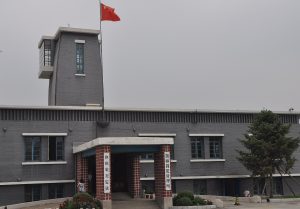
Start at the Old County Yamen, the only intact prefectural government office left in Jiangxi. The main hall still holds the wooden magistrate’s desk, the interrogation rack, and the drum used to announce judgments. Clerks’ quarters flank the courtyard; peer into the side rooms to see ink stones worn smooth by generations of brushes. A volunteer guide — usually a retired teacher — will point out the hidden compartment behind the judge’s seat where evidence was stashed. Allow an hour.
Five minutes west, the Red Pagoda rises seven stories above the tree line. Climbing the spiral staircase rewards you with a view of the county’s rooftops stitched together by the Chang River. The bricks are glazed in a dusty iron-red that deepens after rain. Inside, each landing holds a niche where a porcelain Buddha once sat; most are empty now, but the niches themselves are lined with shards of Song celadon pressed into the mortar — a quiet signature of the kiln workers who built the tower.
Yaoli: Kiln Ruins in the Forest
Yaoli sits in a bowl of hills where the air stays cool even in high summer. The town’s main street follows a clear stream; women wash vegetables on flat stones beside wooden waterwheels that still turn. But the real draw lies uphill behind the guesthouses: scattered Song Dynasty kiln sites, half-swallowed by bamboo and camellia. No fences, no glass cases. You walk dirt paths between mounds of saggar fragments — the clay boxes that protected porcelain during firing — and pick up shards of qingbai glaze the color of frozen pond water. Locals say scavengers still haul away intact pieces by motorcycle at night. If you find a shard with a carved lotus motif, pocket it quietly; the site has no formal protection, and taking a fragment feels less like theft than rescue.
Stay overnight in a courtyard guesthouse run by a family named Hu. They serve tea smoked over pine needles and a breakfast of rice noodles topped with pickled mustard greens and chili oil. Ask the host to show you the kiln-loading diagram scratched into a beam of their woodshed — a family secret passed from the last master potter who worked these slopes.
Village Hopping: Hongyuan and Xianghu
Rent an electric scooter in Yaoli (fifty yuan a day, helmet included) and ride the county roads that ribbon through valleys. Hongyuan Village clings to a slope above a reservoir; its ancestral hall still has the original camphor-wood columns and a stage where Nuo opera masks hang in shadow. An elderly caretaker will unlock the side door if you knock. He expects nothing but may accept a pack of cigarettes.
Xianghu, farther north, is built around a lotus pond that blooms in the seventh lunar month. The village’s claim is a Ming-era kiln cluster where the fireboxes are intact enough to show how draft was controlled — stone channels directing wind from the hillside into the chamber. A farmer tending tea bushes nearby can explain the firing schedule: three days of slow rise, one day of full blast, then a week of cooling. He speaks in dialect; bring a translation app and patience.
Eating: Tea, Tofu, and River Fish
Fuliang’s cuisine leans on what the mountains and streams provide. In Yaoli, order the stone-pot tofu: soft curds simmered in a broth of dried bamboo shoots, smoked pork belly, and wild ginger. The pot arrives bubbling; let it settle two minutes before ladling. At a riverside stall in Fuliang Town, ask for steamed mandarin fish with fermented black beans and shredded ginger — the flesh should flake white and sweet, scented by the bean’s salt. Breakfast is rice noodles in pork bone broth, topped with fried soybeans, cilantro, and a spoon of chili paste the color of dried blood.
- Stone-pot tofu: soft tofu, dried bamboo shoots, smoked pork belly, wild ginger, spring water
- Steamed mandarin fish: whole fish (500g), fermented black beans (2 tbsp), ginger (30g julienned), scallion, hot oil
- Rice noodle breakfast: fresh rice noodles, pork bone broth, fried soybeans, cilantro, chili paste
Home method for the tofu: soak dried bamboo shoots overnight. Sear pork belly cubes until fat renders. Add ginger, bamboo, and water; simmer thirty minutes. Slide in tofu blocks. Cover and cook ten minutes. Finish with a drizzle of sesame oil and cracked pepper.
What Newcomers Get Wrong
First, they treat Fuliang as a day trip from Jingdezhen. The county deserves a night — two if you want the kiln sites without rushing. Second, they expect English signage. Outside the Yamen museum, labels are Chinese only; photograph the QR codes at the entrance and translate later. Third, they wear city shoes. The kiln paths are slick with moss and loose shale; hiking boots or at least grippy sneakers are not optional. Fourth, they bargain at guesthouses. Family-run inns post fixed rates on the door; haggling insults the host. Pay, smile, and you’ll get extra tea. Finally, they ignore the lunar calendar. The lotus pond at Xianghu peaks in the seventh month; the tea harvest hits in the second. Time your visit to one of those windows and the valley feels alive instead of merely preserved.