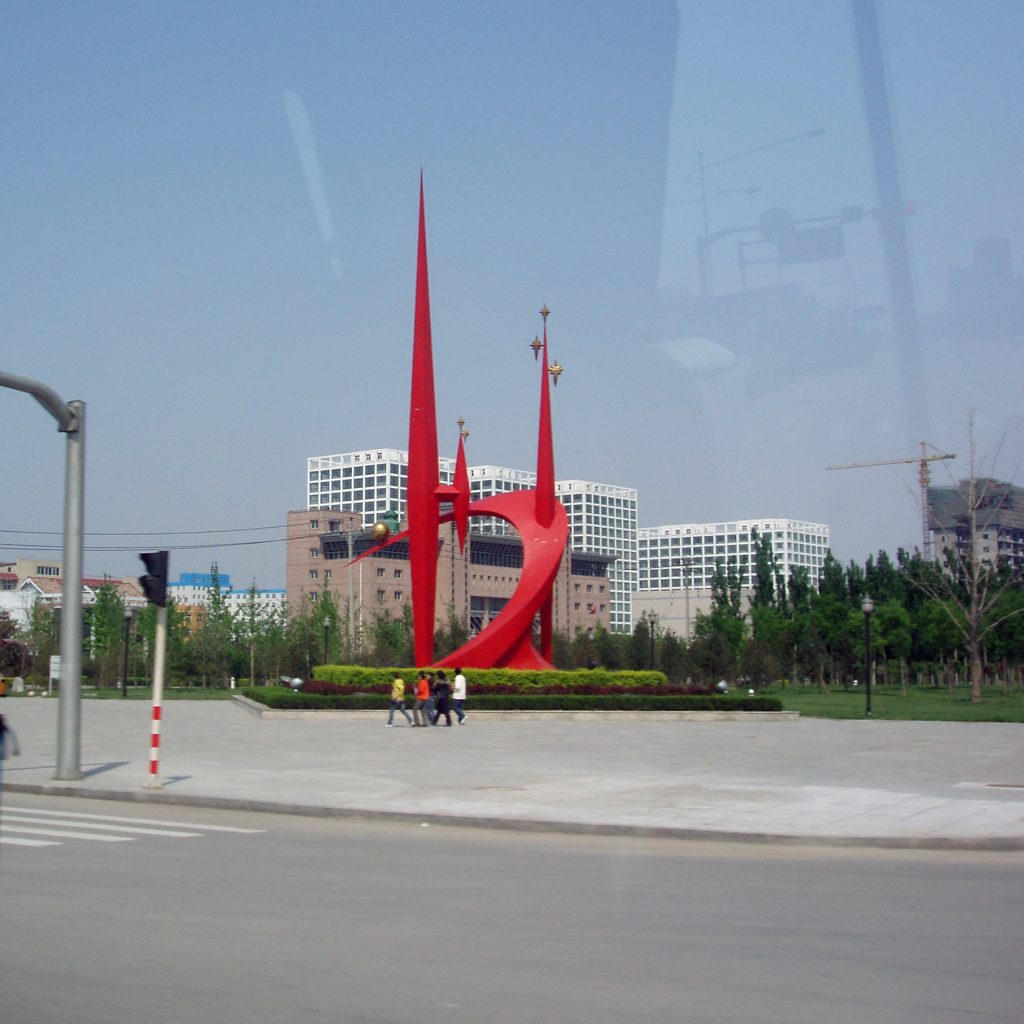
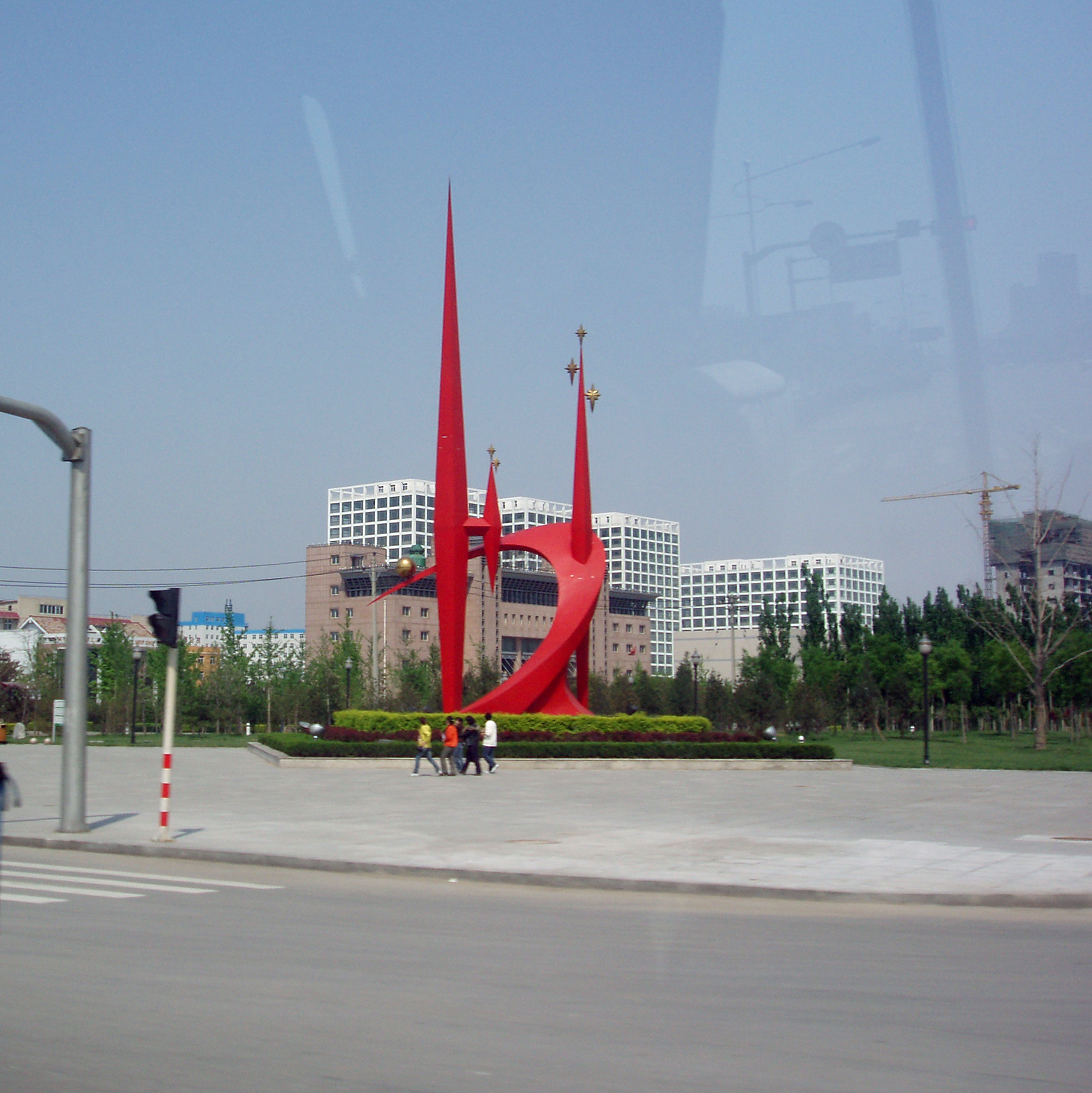
The bus rattles past a row of open-front noodle shops, steam curling into the damp morning air, and slows at a light where an elderly man on a three-wheeled cart loads crates of persimmons, their skins glowing like lanterns against the gray sky. Through the window, the skyline breaks into two distinct layers: a cluster of glass towers near the new high-speed rail station, and beyond them, the low, tiled ridges of the old city where the Zhao kings once walked. Handan does not announce its age with fanfare; it simply lets the centuries stack up along the same streets where commuters now swipe QR codes for a one-yuan ride.
Arriving without a plan
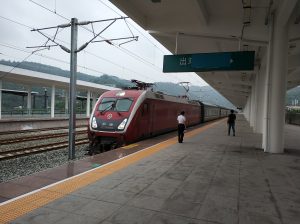
Most visitors step off a G-series train at Handan East, a cavernous hall of polished stone that feels interchangeable with any other new station in the north. From there, a taxi ride of twenty minutes drops you at the older Handan Railway Station, right in the dense grid where the bus network radiates outward. The city’s public buses are the cheapest way to orient yourself: a flat fare of one yuan, two if the air-conditioning is running, and routes that reach every site on the map. Taxis start at six yuan and are everywhere, but drivers rarely speak English. Have your destination written in characters on your phone, or better yet, learn to pronounce the two or three key names — Congtai, Nuwa, Xiangtangshan — so the driver nods and pulls into traffic without hesitation.
If you come by long-distance coach, the terminal sits next to the old train station. Tickets are not sold online; you show up ten minutes before departure, hand over cash, and squeeze aboard. The system rewards flexibility. I once missed a bus to a county town because I lingered over a bowl of beef soup, and the next one left twenty minutes later, half-empty, with a driver who played opera cassettes the whole way.
Walking the Zhao capital
The historic core clusters around Congtai Park, where the reconstructed Wuling Platform rises above a lake crossed by arched bridges. This is where King Wuling of Zhao once reviewed his cavalry, the first Chinese ruler to adopt nomadic trousers and horseback archery. The current tower is a 20th-century rebuild, but the stones at its base are genuine Warring States rubble, and the park’s older residents practice tai chi on the same rammed-earth foundations that once supported palace halls. Early morning is the hour to be here — before the tour groups arrive, when the only sound is the slap of slippers on stone and the occasional crack of a whip from a kite flyer testing the wind.
A ten-minute walk north brings you to the ruins of the Zhao capital’s eastern wall, now a grassy berm threaded with walking paths. Locals fly kites shaped like centipedes and dragons from the crest, the strings humming in the spring breeze. There are no barriers, no ticket booths, just a few interpretive signs in Chinese. If you follow the berm eastward, you pass a cluster of unmarked mounds — tombs of minor nobility, their burial goods long since looted or excavated. Archaeologists still dig here in autumn, their trenches marked by blue tarps and the clatter of sieves.
Stone caves and iron memory
Xiangtangshan Grottoes sit thirty kilometers west of the city, carved into a limestone cliff above the Zhang River. The Northern Qi dynasty began the work in the sixth century, and the Tang added to it. Many of the finest heads and hands were sawn off and sold abroad a hundred years ago; what remains are hollow niches and the ghost outlines of bodhisattvas. Yet the site still holds power. In the central cave, a colossal seated Buddha survives, its face softened by centuries of incense smoke and the touch of pilgrims’ fingers. Monks chant in a side hall at dawn, and the sound carries through the empty galleries.
Back in the city, the Handan Museum on Zhonghua Avenue displays the iron-casting legacy that made the Zhao state wealthy. The star exhibit is a set of bronze ritual vessels inlaid with gold and silver, their cloud patterns so fine they look embroidered. A separate hall traces the evolution of blast-furnace technology from the Spring and Autumn periods through the Han. You can spend an hour here without seeing another foreign face. The captions are bilingual, but the deeper context — how iron tools changed agriculture, how the state monopolized salt and iron to fund wars — is left for you to piece together.
Nuwa’s festival and the rhythm of the lunar year
Fifty kilometers south, in She County, the Nuwa Palace complex climbs a forested slope. Nuwa, the goddess who patched the sky with five-colored stones, is Handan’s patron deity. The main hall dates to the Ming, but the foundation stones are Song. During the third lunar month, the mountain fills with pilgrims. They climb the thousand-step staircase on their knees, carrying red ribbons to tie on the ancient ginkgo trees. Vendors sell paper effigies of household goods — tiny televisions, miniature cars — to burn for ancestors. The air thickens with smoke and the smell of roasted corn.
If you visit outside the festival, the compound is quiet. A Daoist priest may invite you to sip tea in a side courtyard, where he keeps a ledger of donors written in brush script. He does not ask for money. He asks where you are from, and when you answer, he nods as if the distance means nothing. This is the rhythm of Handan: the sacred and the ordinary share the same stairwell.
Eating where the locals eat
Handan’s cuisine leans salty, vinegary, and heavy on wheat. The signature dish is Handan guoba cai — a bowl of millet porridge thickened with cornmeal, topped with shredded tofu skin, gluten curls, chili oil, and a splash of aged black vinegar. It arrives steaming in a blue-enamel bowl, the surface rippling with oil. You eat it with a flat spoon, scooping the crust from the bottom where the grains have caramelized against the metal. A side of pickled radish and a steamed bun complete the breakfast.
- Millet, rinsed and soaked two hours
- Cornmeal, whisked into cold water
- Dried tofu skin, rehydrated and sliced
- Wheat gluten, torn into bite-sized pieces
- Aged black vinegar (Shanxi or local)
- Chili oil, homemade if possible
- Pickled radish, for serving
- Bring millet and water to a boil in a heavy pot, then simmer twenty minutes, stirring.
- Drizzle in the cornmeal slurry while whisking until the porridge thickens to a glossy sheen.
- Add tofu skin and gluten; cook five minutes more.
- Ladle into bowls. Top each with a spoonful of chili oil and a dash of vinegar.
- Serve immediately with pickled radish on the side.
Restaurants near Congtai Park cater to tourists and tone down the vinegar. For the real version, follow the delivery electric bikes at 7 a.m. to a storefront with plastic stools and a handwritten menu. Order by pointing. The owner will not bring a check; you pay at the counter when you leave, usually around eight yuan.
Another staple is shaobing stuffed with braised pork and fermented bean curd. The flatbread is baked against the inner wall of a clay oven, its crust blistered and smoky. Vendors slice it open, smear the salty-sweet paste, and tuck in slices of cold pork belly. Eat it standing at the counter, grease warming your fingertips. Beginners ask for extra sauce and drown the bread; locals know the paste is potent enough that a thin layer sings.
Missteps and quiet corrections
First-time visitors often allocate a single day, ticking off Congtai, the museum, and a quick taxi to Xiangtangshan before the last train. They miss the texture of the place — the way the old men in the park debate chess moves in a dialect that swallows final consonants, the way the night market on Zhonghua Road sets up at dusk and vanishes by midnight, leaving only the scent of cumin and charcoal. They also underestimate the distances between county-level sites. Nuwa Palace, the grottoes, and the Daming Cathedral (a Gothic brick church built by French missionaries in the early 1900s) each demand half a day, and the rural roads between them slow to a crawl during harvest.
Another error: assuming English signage exists beyond the museum. It does not. Carry a translation app that works offline, and photograph the Chinese names of your hotels and destinations before you leave the station. Learn the phrase wǒ yào qù… (I want to go to…) followed by the place name. Drivers appreciate the effort and often reply with directions to a better noodle shop than the one you asked for.
Finally, do not expect a polished tourist infrastructure. Handan preserves its past by living on top of it. The city walls are not a park; they are a backdrop for morning exercises. The grottoes are not a museum; they are an active temple. If you move slowly, eat at the plastic stools, and let the bus take you where it goes, the three thousand years settle around you like dust on a bronze vessel — present, palpable, and entirely unforced.