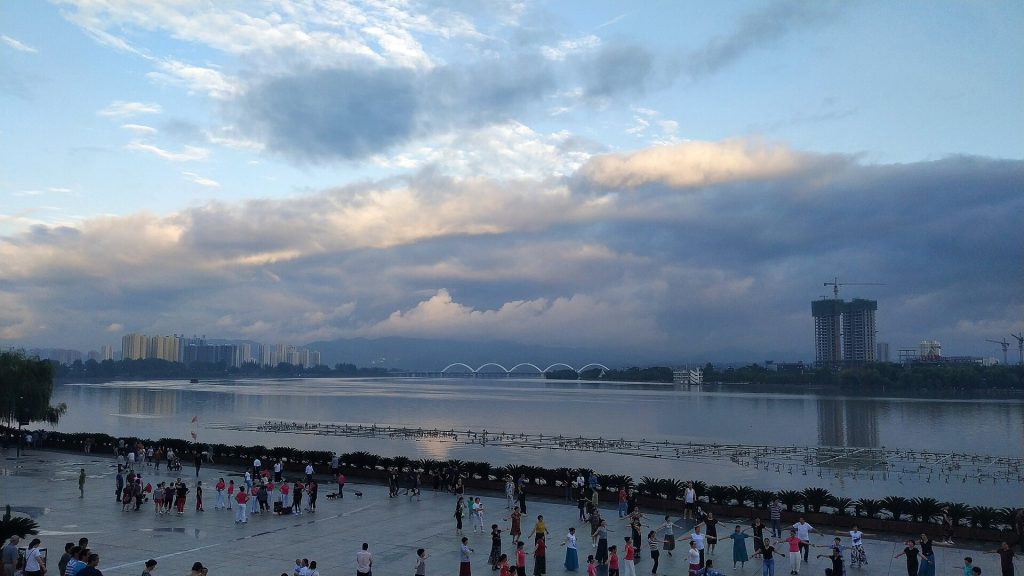
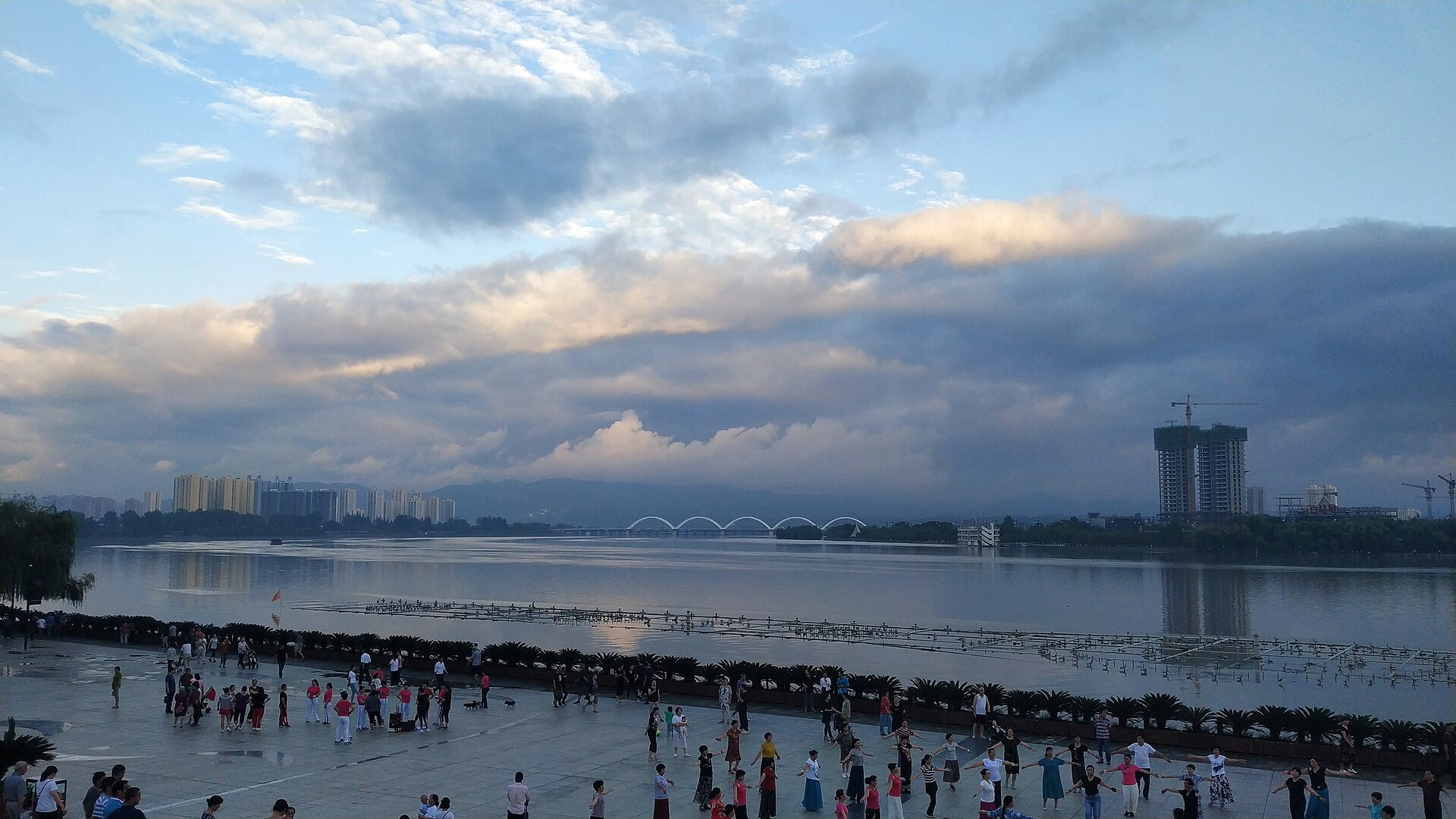
The minibus rattles to a halt on a gravel pull-off just outside the Wuhou Shrine gates. Steam rises from a vendor’s iron wok where thick wheat noodles tumble in chili oil, and the scent of fermented bean paste cuts through the cool mountain air. An elderly woman in a blue Mao suit waves a bamboo fan, shouting prices for shadow-puppet keychains. Beyond the stone archway, cypress trees older than the Ming dynasty filter sunlight onto mossy flagstones. This is Hanzhong in late autumn — persimmons drying on farmhouse eaves, the Han River flashing silver between the Qinling and Bashan ridges, and a sense that the Three Kingdoms never really left.
Getting There and Moving Around
High-speed rail now stitches Hanzhong to Xi’an in ninety minutes and to Chengdu in just over two hours. The station sits on the city’s northern edge; a taxi to the old town costs roughly thirty yuan and takes fifteen minutes if traffic cooperates. Long-distance buses still rumble in from Ankang, Bazhong, and the mountain counties — cheaper but slower, and the mountain roads can turn slick when the autumn rains settle in. Inside the city, the numbered bus routes (1, 9, 16, 22) connect the railway station, the South Lake park, and the major shrine sites. For the outlying scenic zones — Dingjun Mountain, the Ancient Plank Road, the Crested Ibis Reserve — hiring a driver for the day is simpler than stitching together rural buses. Most guesthouse owners keep a trusted driver’s WeChat; ask at check-in and you’ll have a phone number before breakfast.
Where to Sleep: Old Town Lanes vs. Riverside Calm
The most atmospheric beds hide in the alleyways behind Dongguan Street. Courtyard guesthouses converted from Qing-era merchant homes have wooden lattice windows, heated kang platforms, and owners who brew tea from local Xianhao leaves at dawn. Prices climb during the spring peach-blossom festival and the autumn chrysanthemum show, so book a week ahead if your dates are fixed. If you prefer modern quiet, the hotels along the Han River’s south bank face the water and the illuminated pagoda across the way. They lack courtyard charm but deliver reliable hot water, soundproof windows, and underground parking — handy if you’re driving the loop into the mountains.
Three Days on the Ground
Day One — History in the City Center. Start at the Wuhou Shrine when the gates open. The main hall houses a statue of Zhuge Liang carved from a single block of nanmu; the side corridors display rubbings of his “Chu Shi Biao” memorial. Allow two hours to wander the stele forest and the rear garden where a ginkgo drops golden fans in November. Walk ten minutes east to the Hanzhong Museum — its bronze chariot fittings and Han-dynasty bamboo slips explain why this basin fed armies for centuries. Lunch at a hole-in-the-wall on Beijie: hand-rolled cold skin noodles (liangpi) splashed with vinegar, garlic water, and chili oil, plus a bowl of rice tofu stewed with pickled mustard greens. Afternoon ferry across the Han River to the South Lake Scenic Area. Rent a paddle boat, circle the island pagoda, then climb the lakeside pavilion for the sunset shot of the Qinling peaks mirrored in water.
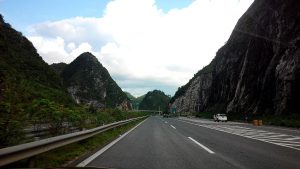
Day Two — Dingjun Mountain and the Ancient Plank Road. Leave by 7:30 a.m. with a packed breakfast of steamed buns and a thermos of barley tea. The drive winds through terraced tea gardens; in spring the hills glow with rapeseed flowers, in autumn they burn red with maple. At Dingjun Mountain, the trail to the summit takes ninety minutes at a steady pace. Stone tablets mark the camps where Huang Zhong defeated Xiahou Yuan; locals still burn incense at the small shrine halfway up. Descend by noon, then head west to the Shimen Plank Road. The reconstructed wooden walkway clings to a limestone cliff above the Bao River — vertigo-inducing but solid underfoot. Wear grippy shoes; the boards get slick from mist. Return to town before dark; the mountain roads have no streetlights.
Day Three — Crested Ibis Reserve or Tea Village. Option A: Book the morning shuttle to the Yangxian Crested Ibis National Nature Reserve (reserve seats the night before). The birds forage in rice paddies at dawn; guides carry spotting scopes and know which dikes the flock favors. Option B: Stay low and visit a tea farmer in Mianxian County. Many families process Xianhao green tea in courtyard workshops — you can watch the wok-firing, roll the leaves yourself, and leave with a vacuum-sealed brick that travels well. Either way, finish with a late lunch of Hanzhong hot rice noodles (reganmian) topped with braised pork, bean sprouts, and a spoonful of the city’s signature chili paste.
Seasons and the Rhythm of the Basin
Spring arrives early here — peach blossoms burst in the second lunar month, weeks before Xi’an wakes up. The peach-blossom festival draws tour buses from across the province; accommodation doubles in price and the narrow lanes clog with selfie sticks. Summer brings heat and the plum rains; the river swells, the plank road drips, and the cicadas drown conversation. Autumn is the sweet spot: clear skies, cool nights, persimmons turning orange on every village tree, and the chrysanthemum exhibition at South Lake. Winter is quiet, dry, and cold enough for a down jacket; the shrines empty out, and you can have the stele forest to yourself. If you chase the crested ibis, aim for the weeks around the Qingming solar term — the birds nest then, and the paddies flood into mirrors.
Eating Like a Local
Hanzhong cuisine sits at the crossroads of Sichuan fire and Shaanxi wheat. The staple breakfast is reganmian — thick alkaline noodles blanched, tossed in sesame paste, soy sauce, vinegar, chili oil, and a mountain of crushed peanuts. Street carts serve it in blue enamel bowls from 6 a.m. until the dough runs out. For lunch, hunt down a shop making guokui: a fist-sized wheat cake baked against the clay oven wall until the crust blisters, then split and stuffed with braised beef, cilantro, and pickled radish. Dinner often means a communal hot pot built around the local rice wine broth — mild, slightly sweet, loaded with river fish, tofu sheets, and wild mushrooms foraged from the Qinling slopes.
- Must-try dish: Hanzhong liangpi — cold skin noodles made from wheat starch, served with gluten cubes, bean sprouts, cucumber ribbons, and the soul of the bowl: a chili oil infused with star anise, Sichuan pepper, and toasted sesame.
- Snack to pack: Xianhao tea bricks — vacuum-sealed, light, and accepted through customs in most countries.
- Drink: Hanzhong rice wine (mijiu), low alcohol, served warm in tiny porcelain cups.
What Newcomers Get Wrong
First, they underestimate the mountain weather. A sunny morning in the basin can become a hailstorm on Dingjun Mountain by noon. Carry a packable rain shell and a fleece even in May. Second, they assume every site takes cards or mobile pay. The plank road ticket booth, the ibis reserve shuttle, and most noodle stalls still prefer cash — small denominations, because change for a hundred-yuan note can be scarce. Third, they rush the shrines. The Wuhou complex rewards slowness: the calligraphy on the back of a stele, the lichen pattern on a stone tortoise, the old man practicing sword forms in the side courtyard at 7 a.m. Give it three hours, not forty minutes. Fourth, they skip the night market on Dongguan Street. After 8 p.m. the lanterns rise, the grills smoke, and the air fills with cumin-dusted lamb skewers, grilled tofu skins, and the chatter of families eating outdoors. That’s the Hanzhong the guidebooks miss.
Practical Details to Slip in Your Pocket
- Language: Mandarin with a strong local accent; few English signs outside major hotels. Download offline maps and a translation app with photo mode.
- Cash: Keep two hundred yuan in tens and twenties for tickets, snacks, and toilet paper (public restrooms rarely stock it).
- Connectivity: 4G works in town; signal drops in the deep valleys of the plank road and the ibis reserve. Tell your driver your expected return time.
- Health: Altitude in the basin is low (around 500 meters), but Dingjun summit pushes 2,000. Hydrate, pace the climb, and carry glucose tablets if you’re prone to headaches.
- Etiquette: At shrines, step over the threshold — never on it. Incense is bought outside; three sticks, lit with the left hand, bowed three times toward the main hall. Photography inside the main halls is often prohibited; watch for the red crossed-camera signs.
The last bus from the South Lake parking lot pulls away as the lanterns flicker on along the river promenade. You walk back through the old town, past the courtyard where the tea farmer’s cat sleeps on a stack of Xianhao crates, past the noodle cart where the broth has simmered since dawn. The Qinling ridges swallow the last light. Hanzhong doesn’t perform for visitors — it simply continues, layered and patient, waiting for the next hand to trace a stele rubbing or lift a steaming bowl of reganmian.