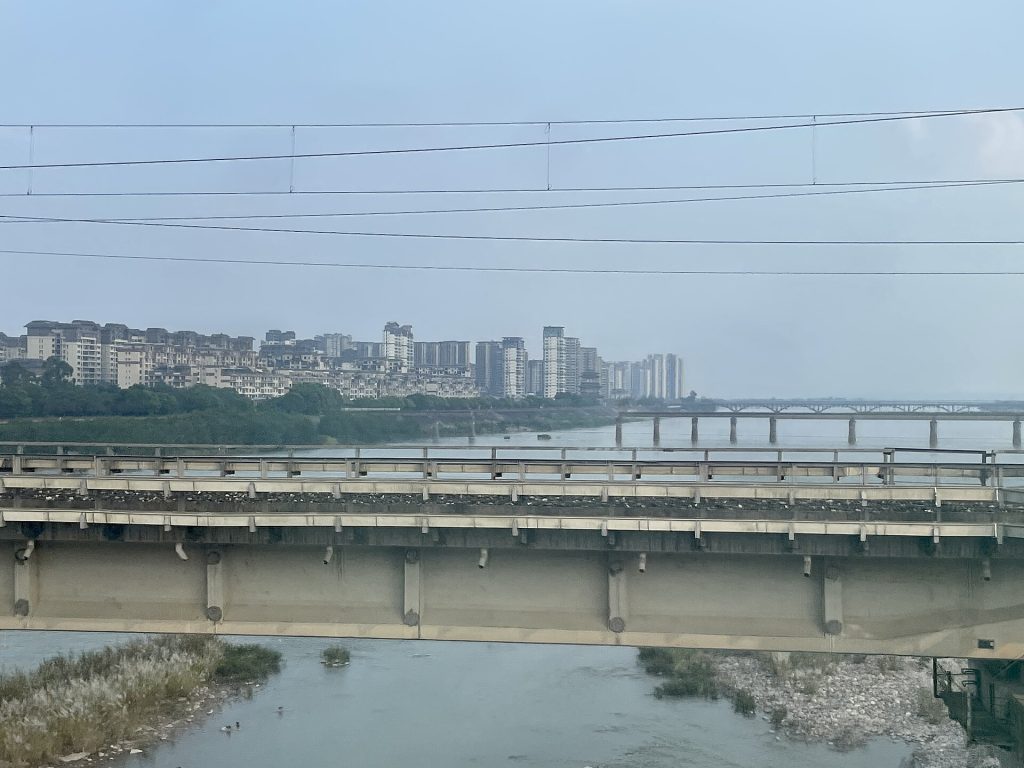
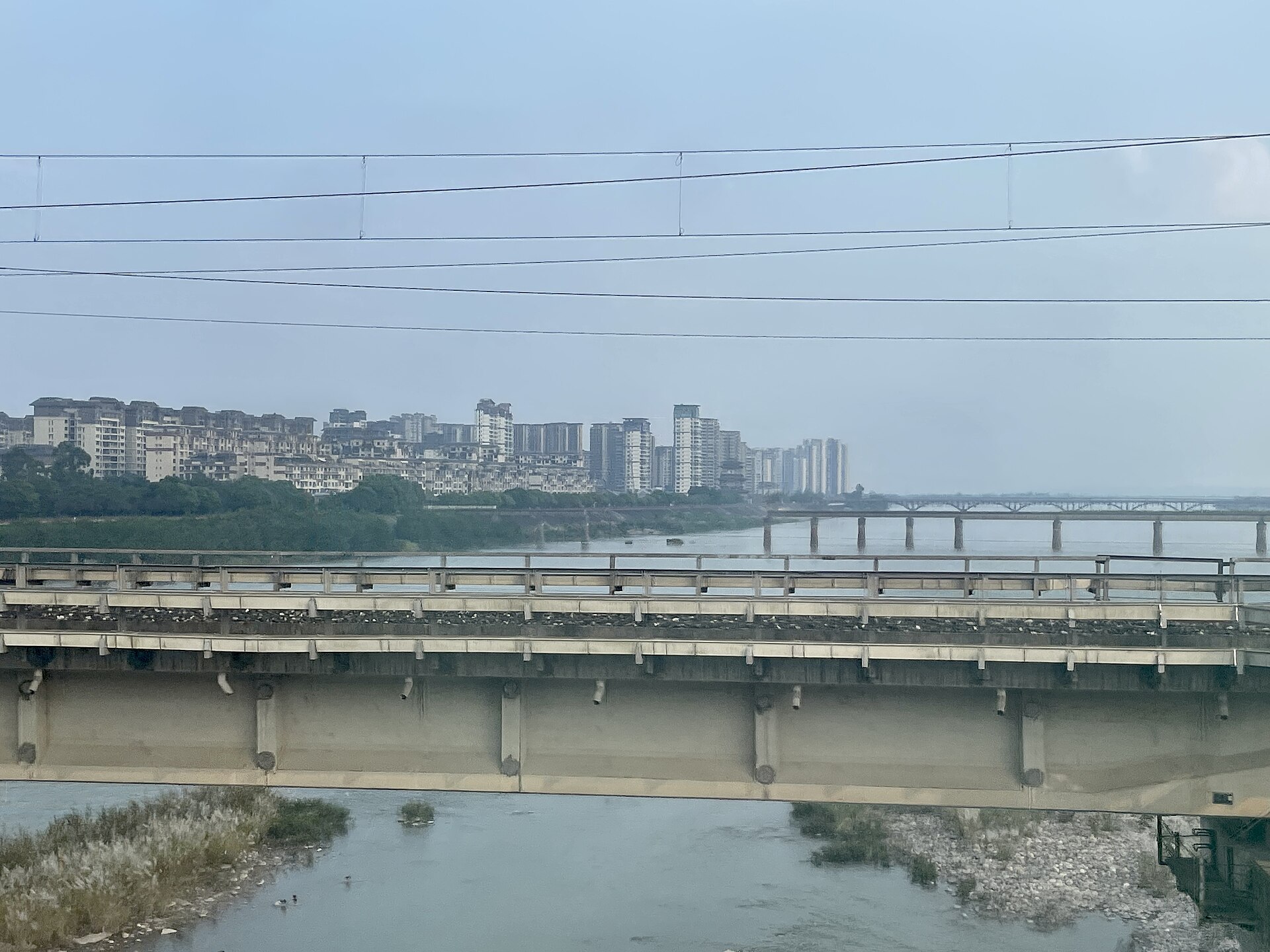
The minibus from Leshan North Station smelled of dried chili and engine oil. I wedged my pack between sacks of rice on the floor, and forty minutes later the driver shouted “Jiajiang” over his shoulder. The county seat sits in a fold of the Min River valley, gray-tile roofs stepping down to water the color of weak tea. No tour buses idled at the curb, just a row of electric three-wheelers waiting for factory workers. That quiet arrival told me everything: this place feeds itself first, visitors second.
Getting there without a schedule
High-speed trains from Chengdu East terminate at Leshan North. The ride takes ninety minutes and costs roughly sixty yuan. Only a handful run each day, so check the app the night before and book a seat. From the station forecourt, city bus 305 or 307 drops you at Jiajiang’s main intersection in fifty minutes for five yuan. If the timetable clashes, shared vans line the parking lot — drivers yell “Qianfo” when they have four passengers. Forty yuan per person, door to door.
Driving yourself? Take the Chengdu–Leshan Expressway to the Jiajiang exit, then follow S306 along the river. The road hugs cliffs where swifts nest in spring; allow two hours from Chengdu with a tea stop. Parking at the Thousand Buddha Cliff scenic lot costs ten yuan per day, unguarded but safe.
Moving around the county
Jiajiang’s urban core is walkable — twenty minutes from the bus station to the river park. Green city buses numbered 1, 3, and 5 connect the museum, the paper village, and the cliff entrance. Fares are two yuan, exact change only. Taxis cluster near the government compound; a cross-town ride runs twelve to fifteen yuan. For the cliff site, hire a driver for the half day. Negotiate eighty to one hundred yuan round trip, including wait time. The last kilometer from the parking area to the caves is a steep stone stair; no pedicab will take it.
Thousand Buddha Cliff: early light, empty galleries
Arrive at 8 a.m. when the ticket window opens. Morning sun strikes the west-facing niches, gilding Tang dynasty faces that have watched the river for twelve centuries. The main gallery holds over two thousand figures — bodhisattvas with lowered eyes, monks clutching sutra scrolls, a laughing Maitreya whose belly has been polished smooth by generations of fingers. Incense smoke curls from a censer at the base of the central Buddha; an old woman presses forehead to stone, murmuring for her grandson’s exams.
Follow the plank path north past the waterfall cave. Few tourists climb this far. Moss cushions the steps, and the roar of the Min drowns the occasional tour group. Bring a headlamp for the rear chambers — electricity is sporadic. Allow two hours minimum. Wear grippy shoes; the stone wears slick after rain.
Paper village and the museum
Fifteen minutes by bus 3 from the county center, the village of Huangtu still makes xuan paper by hand. Courtyards smell of bamboo pulp and lime. In a open-sided shed, a master lifts a dripping screen from the vat, shakes it once — *hua* — and a translucent sheet forms. You can try the dip yourself for twenty yuan; the wet sheet goes home in a cardboard tube, drying flat under your hotel mattress.
The county museum sits behind a lotus pond on Wenhua Road. Two floors: Han dynasty bronze drums upstairs, Qing dynasty calligraphy downstairs. Labels are Chinese only. Spend forty minutes. The caretaker unlocks the side room with Song dynasty rubbings if you ask politely and sign the visitor book.
Eating where the river bends
Lunch at a riverside stall: bowls of *jiangshui* noodles, sour broth fermented from rice water, topped with minced pork, pickled mustard greens, and a spoonful of chili oil that blooms red on the surface. The noodles have the chew of cold dough. A side of smoked tofu, black-skinned and custard-soft inside. Wash it with a bottle of local pear soda, sweet and gritty.
Dinner in the night market behind the bus station. Order by pointing: skewers of beef heart dusted with cumin, whole garlic bulbs roasted in foil, lotus root slices battered and fried until the holes turn lace. Plastic stools, communal chili paste in a stainless trough. Pay when you leave — the owner remembers every hand.
Sleeping and small courtesies
Three business hotels cluster near the government square — clean rooms, hot water, Wi-Fi that drops at midnight. One hundred twenty yuan for a double. Family guesthouses in the paper village offer kang beds heated by the kitchen stove; eighty yuan including breakfast of steamed buns and millet porridge. Book by WeChat the day before; English is rare.
Carry small bills. Vendors and drivers rarely break a hundred. Learn “duoshao qian” and the hand numbers for one through ten. At the cliff, speak low — this is still a prayer site. Don’t climb the statues for photos; a warden’s whistle carries far. Take your trash down the mountain; no bins exist on the path.
Seasonal rhythm and the mistakes newcomers make
Spring brings pear blossoms along the riverbanks and the Paper Culture Festival in the third lunar month — demonstrations, auctions, crowds. Summer heat presses into the valley; the cliff stairs radiate warmth at noon. Autumn is the sweet spot: clear skies, cool mornings, persimmons drying on racks outside every farmhouse. Winter is quiet, some stalls shuttered, but the Buddha faces catch a pale gold light that feels deliberate.
Newcomers try to squeeze the cliff, the village, and the museum into a half day from Leshan. They miss the morning light on the carvings, the master’s shake of the screen, the old woman’s prayer. Stay one night. Walk the river park at dusk when square dancers unfold fans and the Min reflects the bridge lights. That rhythm — not the sights — is what stays.