The minibus rattles past a row of shuttered storefronts in Shangjiangxu, the first town the bus hits after leaving the station. Through the grimy window I see a woman squatting beside a wok of oil, dropping dough twists that puff instantly into golden pillows. The driver shouts something in a dialect that isn’t quite Mandarin and isn’t quite anything else. I grip the plastic seat, realizing the Nüshu museum is still twenty minutes away and I have no idea how to ask for the stop.
Getting There Without a Meltdown
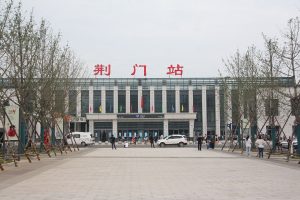
Jiangyong sits in the far south of Hunan, tucked against the Guangxi border. The high-speed station bears the county name but squats in open fields southwest of the actual town. If you arrive from the north—Changsha, Wuhan, Guangzhou South—the train pulls in before Yongzhou. From the south—Guilin, Liuzhou—it’s the next stop after Yongzhou. Either way, do not expect a taxi queue. At midday you might find a driver idling by the exit; at night the forecourt is empty.
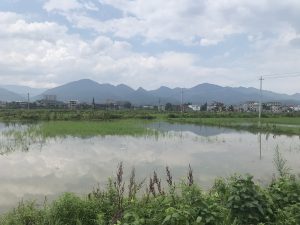
- Bus: Walk out the station doors, turn left, follow the sidewalk fifty meters to a faded blue sign reading “县城班车” (county shuttle). Costs pocket change, runs every twenty minutes until dusk. The ride takes twenty-five minutes past rice paddies and the Shangjiangxu market.
- Taxi: Negotiate before the door closes. Forty to fifty yuan is fair for the county seat; more if you’re headed straight to the museum or a riverside guesthouse. Drivers rarely speak English. Show the Chinese name: 江永县城 or 女书博物馆.
- DiDi: Works if you have a Chinese phone number and the app. Pin the drop point carefully—address search often drops the pin at the government compound instead of your hotel.
Moving Around the County
The county seat is walkable in the sense that a determined person can cross it in forty minutes. But the sights—Nüshu museum, Huangdu Dong village, the marble cliffs of Tianhu—sit on spokes radiating outward. Public buses exist but run on village time: when the driver’s tea is finished, the bus leaves. Renting an electric scooter from a shop near the bus station (look for rows of silent two-wheelers charging under awnings) gives you freedom. Bring your passport; the owner photographs the photo page. Helmets are theoretical—ask for one anyway. If you prefer four wheels, hire a driver for the day. Two hundred yuan covers the main loop: museum, Huangdu, lunch by the Xiao River, back before dark. Agree on the route before the engine starts.
The Nüshu Museum: What You Actually See
The museum sits beside a lotus pond in Pumei village, ten kilometers from the county seat. The building is modern—gray brick, glass corridors—but the exhibits feel intimate. Glass cases hold folded fans, handkerchiefs, and cloth shoes stitched with the slanted, thread-like characters women invented to sing their sorrows. You’ll see “Third Day Books” (三朝书), cloth booklets given to a bride three days after marriage, pages dense with advice and lament in a script men never learned. Audio stations play recordings of elderly women singing Nüshu songs; the melodies are high, nasal, and strangely catchy. Allow ninety minutes. The curator sometimes offers a short calligraphy demo—ask at the ticket window. If she’s free, she’ll hand you a brush loaded with ink and guide your wrist through the first character: “woman” (女), a single stroke that leans like a bamboo in wind.
- Open: 9:00–17:00, closed Monday.
- Ticket: modest, cash or WeChat Pay.
- Bus from county seat: ask for “女书馆” at the west station; minibus leaves when full.
- Taxi: thirty minutes, negotiate return pickup or the driver waits.
Huangdu Dong Village: Evening Smoke and Drum Towers
Forty minutes north on a two-lane road that hugs the Xiao River, Huangdu spreads beneath a drum tower whose eaves curl like claws. The village is Dong, not Yao, though the county is majority Yao. That distinction matters: the songs, the rice wine, the embroidery patterns differ. Arrive an hour before sunset. The tour groups have left. Old men sit on the drum tower’s stone steps, smoking pipes, playing a reed instrument called a lusheng. Women sort chilies on bamboo trays, fingers moving fast. You can sleep here—several families run guesthouses in stilted wooden houses. The room is a tatami mat, a mosquito net, a shared bathroom down the hall. Dinner arrives on a round table: sour fish soup (酸汤鱼), oil-tea (油茶) popped with puffed rice and peanuts, pickled green beans, a plate of fried river shrimp. The host pours rice wine from a ceramic jar into tiny bowls. You drink with the elders. They sing. You don’t understand the words. It doesn’t matter.
- Stay: book through a WeChat contact the museum staff can share, or show up and ask at the drum tower.
- Bring: cash, a flashlight (streetlights are few), warm layers—nights drop ten degrees below the county seat.
- Morning: wake to roosters and the smell of woodsmoke. Walk the stone lanes before breakfast; mist clings to the rice terraces.
Eating in Jiangyong: The Oil-Tea Ritual
Oil-tea isn’t a drink. It’s a meal, a ceremony, a reason to sit. Every morning, stalls along Renmin Road fire woks. The vendor tosses tea leaves, ginger, garlic, chili, and puffed rice into hot oil, then ladles boiling water over the froth. She hands you a bowl and a spoon. You sip, chew the crunchy bits, feel the heat bloom in your chest. Locals add salted soybeans, scallions, a spoonful of chili paste. Try it once plain, once loaded. Pair with a steamed bun stuffed with pickled mustard greens and minced pork.
For lunch or dinner, find a riverside restaurant with tanks of live fish. Order sour fish soup: the broth is clear, sharp with fermented tomatoes and wild pepper, the fish sliced paper-thin so it cooks in seconds. Add tofu skin knots, enoki mushrooms, lotus root slices. Dip each piece in a saucer of minced garlic, soy, and chopped bird’s-eye chili. Cold dishes arrive first—smoked pork ear, tossed cucumber, preserved radish. Eat slowly. The bill comes on a scrap of paper; pay at the counter.
- Oil-tea stall: look for a wok with a bamboo brush resting on the rim. Peak hour 7:00–9:00.
- Sour fish: restaurants with “酸汤鱼” in red characters on the sign. Avoid places with picture menus and English translations—they cater to tour buses.
- Vegetarian: ask for “素油茶” (no dried shrimp) and “清炒时蔬” (stir-fried seasonal greens). Most cooks understand Buddhist dietary terms.
What Newcomers Get Wrong
They book a chain hotel in the county seat and never leave. They expect English signage at the museum. They think “ancient script” means carved stone tablets—most Nüshu survives on paper and cloth, fragile, dimly lit. They arrive in summer wearing shorts, not realizing the river valleys trap humidity like a blanket. They try to pay a taxi driver with a hundred-yuan note at 6 a.m.; he has no change. They photograph an old woman singing without asking; she covers her face. They assume the drum tower performance at 8 p.m. is for tourists—it’s for the village, and you’re a guest. They rush. Jiangyong rewards the opposite: a second bowl of oil-tea, a slow walk along the Xiao River at dusk, the patience to wait for the minibus that leaves when it’s full.