The river mist clung to the Jiangyin Yangtze Bridge cables as I walked the pedestrian path at dawn, the steel ribs disappearing into white. Below, a container ship pushed a brown V through the current, its horn a low cello note that vibrated in the guardrail. On the south bank, the city was waking — steam rising from a baozi stall near the bus depot, an old man shaking out a tai chi sword in Binjiang Park, the smell of river mud and diesel and frying dough twisting together. This is Jiangyin: a working port that still remembers how to feed you.
Getting There and Getting Around
High-speed rail is the easiest entry. The station sits on the northern edge of the urban core, a twenty-minute taxi ride from the riverfront. Trains from Shanghai Hongqiao take just over an hour; from Nanjing South, about forty minutes. If you are coming from Wuxi or Suzhou, the intercity bus from the long-distance station runs every twenty minutes and drops you at Chengjiang Bus Terminal, right in the thick of the old streets.
Inside the city, the public bus network is dense and cheap — two yuan air-conditioned, one yuan non-air. Download the “Jiangyin Bus” mini-program on WeChat; it shows real-time arrivals in English. Taxis start at eight yuan and most drivers know landmarks by name rather than address. For the industrial zones along the river, ride-hailing apps are faster than waiting for a bus that loops through factory gates. I rented a shared e-bike for three days using the Meituan QR code; the battery lasted a full afternoon of hopping between the bridge park, the old town, and the mountain.
Riverfront and Bridge Views
The Jiangyin Yangtze River Bridge is the city’s spine. The pedestrian walkway opens at six in the morning and closes at nine at night. Go early — before the tour buses from Shanghai unload — and you share the rail with joggers and fishermen casting from the maintenance platforms. The view upstream catches the Huangshan Mountain peninsula jutting into the water; downstream, the port cranes line up like steel giraffes. There is a small museum inside the bridgehead on the south side. It explains the cable-spinning process with a cutaway model you can touch. Allow forty minutes.
Binjiang Park stretches three kilometers along the dike. Locals fly kites shaped like centipedes and dragons on weekend afternoons. The paved path is wide enough for two-way bike traffic. Halfway down, a floating stage hosts free Yue opera on summer evenings — plastic stools, paper fans, the smell of grilled squid from a cart nearby. If you walk to the western end near the ferry terminal, you find a quiet stretch where elderly men play Chinese chess on folding boards, unbothered by selfie sticks.
Old Streets and Temples
Chengjiang Street’s historic core sits behind the modern shopping mall, a maze of lanes paved with worn blue brick. The main drag, Renmin Road, has been pedestrianized. Shops sell copper teapots, hand-stitched cloth shoes, and jars of fermented tofu that smell like old socks but taste like umami butter. Turn left at the stone archway marked “Zhongshan Park” and you slip into a residential alley where laundry hangs over head-height walls and the sound of a radio playing Suzhou pingtan drifts from an open window.
Zhongshan Park itself occupies the former private garden of a Qing dynasty salt merchant. The rockery is a pile of Taihu stones, each perforated like Swiss cheese, arranged around a lotus pond. In the sixth lunar month, the lotus blooms pink and white; locals come at six a.m. to photograph the dew on petals. The park’s back gate opens onto a canal where wooden tour boats punt tourists past whitewashed walls. Skip the boat. Walk the towpath instead — it leads to the former residence of Xu Xiake, the Ming dynasty travel writer. His study holds a replica of his walking staff and a map of his routes carved into a stone slab. The courtyard house is quiet; most tour groups stop at the bridge.
Huangshan Mountain (Not That Huangshan)
Jiangyin’s Huangshan is a peninsula hill on the river’s edge, not the famous peaks in Anhui. The cable car climbs from the riverside ticket booth to the summit in six minutes. At the top, a Song dynasty pagoda leans slightly — stabilized by steel cables you can see through the lattice windows. The view takes in the bridge, the port, the city grid, and on a clear day, the Shanghai skyline as a gray smudge on the horizon. Monkeys live in the woods behind the pagoda. They are bold. Keep your phone in a zipped pocket and do not eat in front of them. I watched one unzip a backpack, extract a peach, and peel it with thumbs while the owner shouted.
A stone stair path descends the north face to a riverside temple complex. The halls smell of sandalwood and candle wax. An old nun sells red string bracelets for ten yuan; she ties them on your wrist with a knot that requires two hands to undo. The path continues to a small beach of gray sand where the river laps gently. Fishermen cast nets from rubber dinghies. It is a good place to sit with a bottle of iced green tea and watch the bridge lights come on at dusk.
Where to Sleep
Three zones make sense depending on your rhythm. The riverfront near the bridge has two international-chain hotels with floor-to-ceiling windows facing the water. Rooms are quiet, breakfasts are standard Western-Chinese buffets, and you pay a premium for the view. I stayed here one night; the pillow menu was the highlight.
The Chengjiang old town area has boutique guesthouses in renovated courtyard houses. Mine had a tiled roof, a koi pond in the central yard, and a host who made hand-pulled noodles for breakfast at seven sharp. No elevator. Stairs are steep. The neighborhood is alive at six a.m. with vegetable vendors and breakfast crowds. If you want silence after ten, ask for a room facing the interior courtyard, not the lane.
Near the high-speed rail station, business hotels cluster around a shopping complex. They are functional, clean, and half the price of the riverfront. Good if you have an early train. The area feels sterile after dark — wide roads, glowing logos, no street food. Grab dinner before you check in.
Eating: What Arrives on the Table
Jiangyin cuisine sits on the sweet side of Su cuisine — sugar in the braise, vinegar in the dip. The signature dish is Huangshan chicken: a whole bird poached in master stock, chilled, chopped through the bone, served cold with a ginger-scallion oil that sings. The skin should be gelatinous, the meat pulling clean from the bone. Order it at any restaurant with a red lantern and a handwritten menu on the wall.
River shrimp come two ways. Drunken shrimp are alive in a bowl of high-proof huangjiu, legs kicking; you pop the head, suck the juice, peel the shell. Steamed shrimp arrive in a bamboo steamer, shells bright red, flesh sweet as corn. Dip in Zhenjiang vinegar with shredded ginger. Do not overcook — three minutes in steam is the limit.
Braised pork belly (hongshao rou) here uses rock sugar and soy until the sauce is a glossy lacquer. The fat melts; the lean stays tender. A side of steamed buns (mantou) is mandatory for mopping. For breakfast, hunt down a stall selling crab roe soup dumplings (xiehuang tangbao). The wrapper is thin as paper, the broth hot enough to blister, the roe orange and rich. Eat in three bites: nibble the pleat, sip the soup, swallow the rest.
- Huangshan chicken — whole bird, master stock, chilled, ginger-scallion oil
- Drunken river shrimp — live, huangjiu, peel and suck
- Steamed river shrimp — bamboo steamer, three minutes, vinegar-ginger dip
- Braised pork belly — rock sugar, soy, glossy sauce, mantou for mopping
- Crab roe soup dumplings — thin wrapper, hot broth, orange roe, three-bite method
Ordering in Restaurants and Market Stalls
In a sit-down restaurant, the menu is often a laminated sheet with photos. Point at the picture of the chicken; say “liang ban” for cold, “re chao” for hot stir-fry. If you want less sugar, say “shao tang” — the chef will still add some, but less. Rice is not automatic; order “mi fan” separately. Tea is free, usually a rough green leaf in a glass pot. Napkins are not on the table; grab a pack from the dispenser near the cashier.
At the night market near the Confucius Temple, stalls specialize in one thing. The grilled oyster lady shucks them onto a charcoal grill, brushes garlic-chili paste, sprinkles scallions. Six for twenty yuan. The stinky tofu vendor deep-fries blocks until the crust crackles, then splits them and stuffs pickled cabbage and chili sauce inside. Eat standing, skewer in one hand, wet wipe in the other. Cash works everywhere; WeChat Pay and Alipay QR codes are taped to every cart. If your phone dies, the oyster lady has a power bank for rent — five yuan an hour.
Home Kitchen: Huangshan Chicken (Simplified)
You need a heavy pot, a whole chicken (about 1.5 kg), and patience.
- Master stock: 2 liters water, 60 g rock sugar, 60 ml light soy, 30 ml dark soy, 3 slices ginger, 2 scallion knots, 1 star anise, 1 cinnamon stick, 2 bay leaves, 5 Sichuan peppercorns. Simmer twenty minutes.
- Lower chicken breast-down. Bring to a bare bubble — one bubble per second. Cook twelve minutes.
- Kill heat. Cover. Let sit forty minutes. Do not lift the lid.
- Remove chicken. Plunge into ice water five minutes. This tightens the skin.
- Chop through bone into bite pieces. Arrange on a plate.
- Sauce: 3 tbsp hot master stock, 2 tbsp minced ginger, 2 tbsp minced scallion, 1 tsp salt, 2 tbsp hot oil poured over aromatics. Spoon over chicken.
The stock freezes well. Reuse it three times, adding fresh sugar and soy each round. By the third bird, the stock is liquid gold.
Mistakes Newcomers Make
Assuming the bridge walkway is open all night. It closes at nine. I arrived at nine-fifteen my first evening and argued with a security guard in bad Mandarin for ten minutes before accepting defeat. Check the gate sign for seasonal hours.
Ordering “kung pao chicken” or “sweet and sour pork” in a local restaurant. Those are Cantonese or Sichuan dishes. The kitchen will make them, but badly. Stick to the river shrimp, the braised pork, the cold chicken. Ask the waiter “ni men you shen me te se” — what is your specialty — and order that.
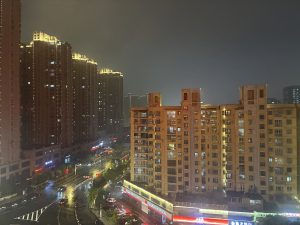
Staying only in the new district near the station. The wide roads and glass towers look modern, but the soul of Jiangyin lives in the lanes behind Renmin Road, in the smell of fermented tofu at seven a.m., in the sound of mahjong tiles clicking in the park pavilion at noon. Take the bus across the city once. Get off at a stop you cannot pronounce. Walk until you find a plastic stool and a bowl of noodles. That is the city.
Ignoring the lunar calendar. The sixth lunar month brings lotus blooms at Zhongshan Park and the River Lantern Festival on the water. The eighth month brings the crab season — hairy crabs from Yangcheng Lake appear in every market, steamed with ginger and vinegar. The twelfth month brings cured meat hanging from eaves in the old lanes, the air thick with smoke and salt. Plan around one of these, and the city opens its kitchen to you.