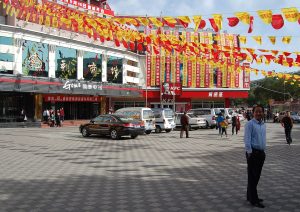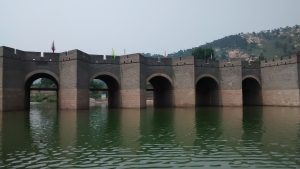
The minibus from Quanzhou’s new station rattles across the Luoyang Bridge just as the tide turns, salt spray hitting the windshield. Twenty minutes later the driver shouts “Jinjiang!” and drops you beside a row of betel-nut stalls where the air already smells of fried oyster omelets and diesel. This is not a postcard town. It is a working city of two million people where sneaker factories hum beside thousand-year-old temples, and the best meals happen on plastic stools under fluorescent tubes.
Getting Oriented
Jinjiang sits on the south bank of the Jin River, directly across from Quanzhou’s old town. Most visitors arrive by high-speed train at Jinjiang Station, a modern glass box ten minutes by taxi from the historic center. If you come from Xiamen, the bullet train takes thirty-five minutes; from Fuzhou, just over an hour. Local buses numbered 11, 19, and K602 connect the station to the old streets, but drivers rarely speak English. Have the Chinese name of your destination written on your phone. Taxis start around ten yuan and most rides inside the city stay under thirty.
The city spreads along two main axes. The older neighborhoods cluster around Qingyang and Yinglin, where narrow lanes open onto ancestral halls and morning markets. Newer districts like Lingyuan and Anhai stretch toward the coast, lined with footwear headquarters and logistics parks. A shared bicycle app works well in the flat central areas, but batteries die fast in the summer heat. Carry water.
Where to Walk First
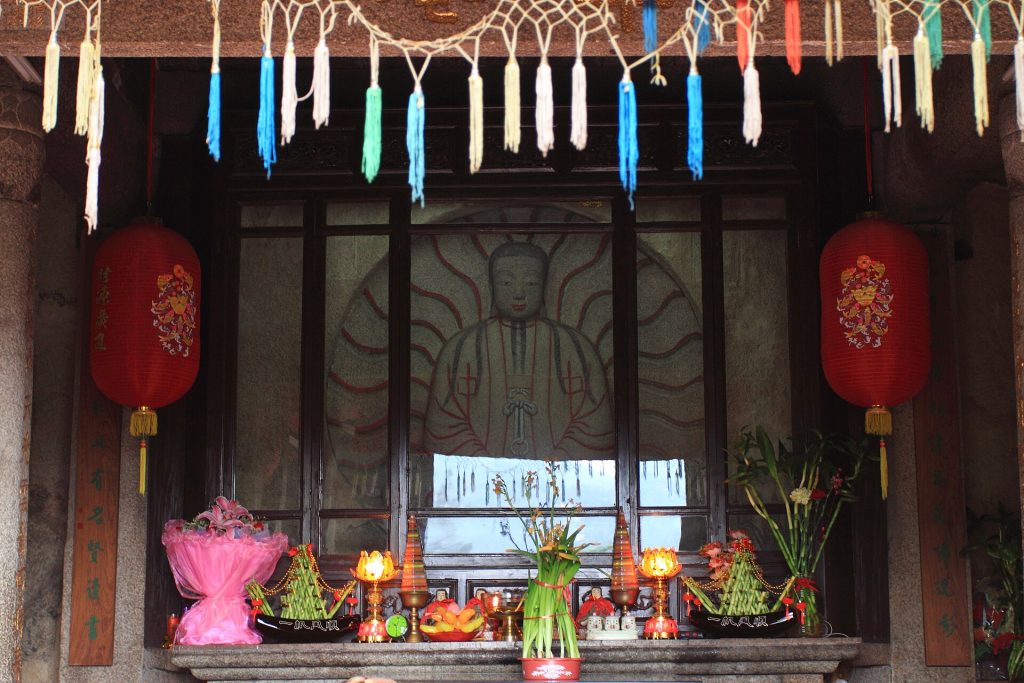
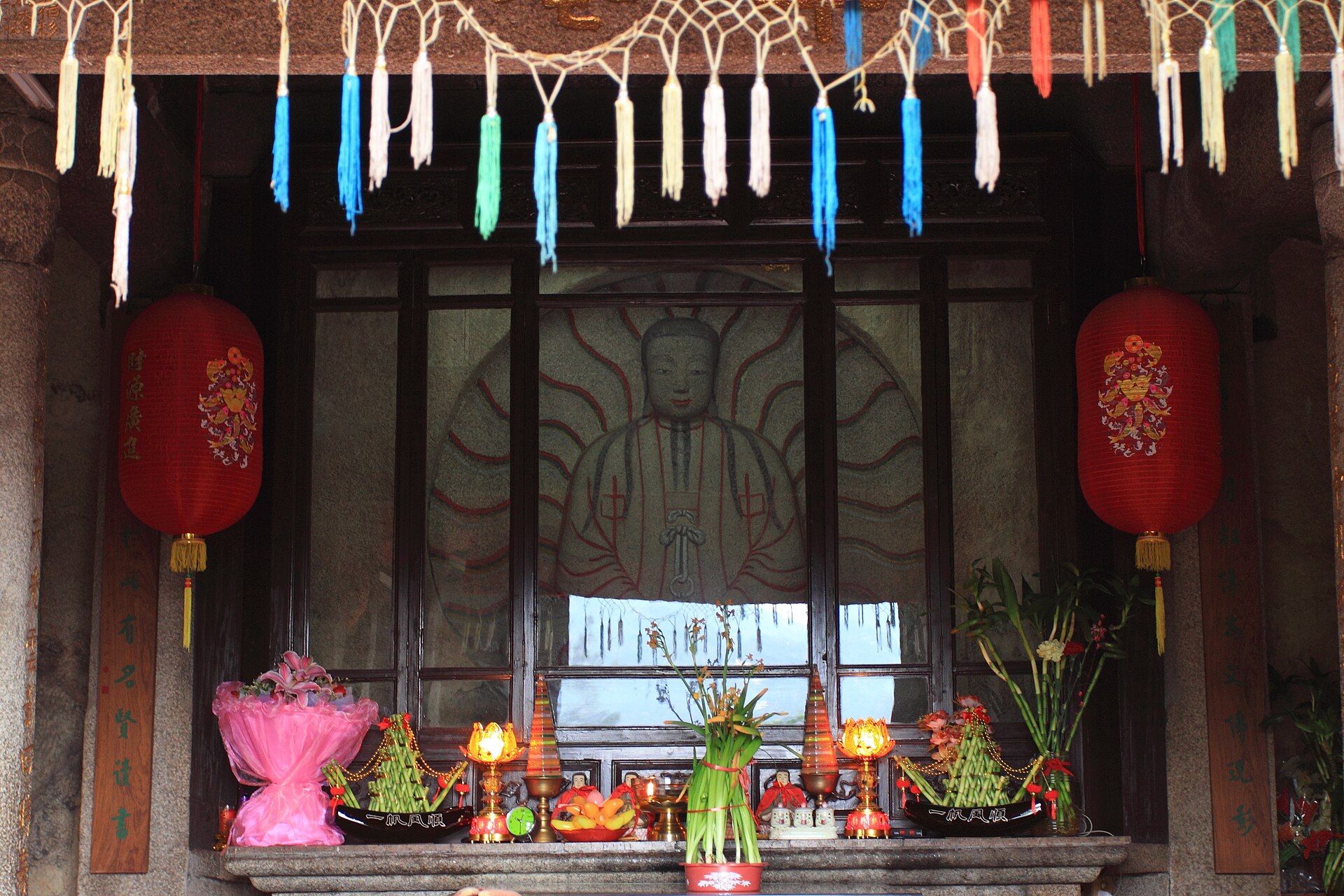
Start at the Cao’an Manichaean Temple on Huabiao Hill. The stone statue of the Prophet Mani carved into the cliff face is the only one of its kind left in the world. Monks still light incense before it at dawn. The climb takes fifteen minutes up stone steps shaded by banyan roots. From the platform you see the whole river delta: container cranes to the east, tiled roofs to the west, the Taiwan Strait a gray line on the horizon.
Descend into the back lanes of Qingyang. The Chen Family Ancestral Hall sits behind a high wall, its roof ridges curled like swallow tails. Inside, the wood carvings depict operas nobody performs anymore. An elderly caretaker may unlock the side chamber if you ask politely in Mandarin or Minnan. No ticket, no crowds, just the smell of camphor wood and old paper.
Walk north along the river promenade at dusk. Retirees fly kites shaped like centipedes, couples share roasted sweet potatoes from a cart, and the factory lights flicker on across the water. This is the rhythm Jinjiang keeps.
Eating: What Arrives on the Table
Jinjiang cuisine leans salty, sweet, and umami all at once. Seafood dominates, but the inland hills send down bamboo shoots, wild herbs, and free-range chickens. Portions are family-style. Order three dishes for two people and you will still take leftovers home.
- Oyster omelet (蚵仔煎): fresh oysters folded into sweet potato starch batter, fried until the edges lace crisp, topped with cilantro and a chili-garlic sauce that burns clean.
- Worm jelly (土笋冻): boiled sandworms set into a translucent gray block, served cold with vinegar, garlic, and shredded ginger. Slippery, briny, addictive.
- Five-spice roll (五香卷): minced pork, dried tofu, carrot, and shiitake wrapped in beancurd skin, deep-fried golden, then steamed so the wrapper absorbs the sauce.
- Rice vermicelli soup (米线糊): thin rice noodles in a milky broth boiled from pork bones and dried scallops, topped with fried shallots and a spoonful of chili oil.
- Peanut soup dessert (花生糊): peanuts ground until the oil emulsifies, sweetened with rock sugar, served steaming in a porcelain bowl.
A home-style version of the oyster omelet uses half the starch so the oyster flavor stays forward. Heat a cast-iron pan until a drop of water dances. Swirl in lard, pour a thin layer of batter, scatter shucked oysters, crack an egg over the top, flip once. The edges must crunch like potato chips.
Restaurant Ordering and Market Stalls
For a sit-down meal, head to the alley behind the Qingyang Police Station. A row of open-kitchen eateries shares a single menu painted on the wall. Point at the characters for “stir-fried clams with basil” and “braised pork belly with preserved mustard greens.” The boss will shout the order to the wok line. Beer comes warm; ask for “bing de” if you want it cold.
Breakfast happens at the wet market on Zhongshan Road before eight. Plastic tables fill with workers eating rice dumplings wrapped in bamboo leaves, bowls of congee topped with century egg and pork floss, and steamed buns stuffed with brown sugar and sesame. Grab a stool, hold up fingers for quantity, pay when you leave. Nobody rushes you.
Night snacks cluster around the Anhai waterfront after nine. Grilled squid brushed with fermented bean paste, skewers of pork intestine coiled around green onion, bowls of herbal jelly with crushed ice. The smoke from charcoal grills hangs low. Order by the stick, eat standing, wipe fingers on the paper napkin provided.
Beginner Mistakes
First-timers often book a hotel near the high-speed rail station and spend forty minutes each way in traffic. Stay in Qingyang or Yinglin instead. You walk to temples, markets, and the river.
Another error: assuming Mandarin works everywhere. Older vendors speak Minnan. Learn three phrases — “tsia̍h-pá-bōe” (have you eaten), “to-siā” (thank you), “m̄-sī” (no/not) — and the atmosphere shifts. Prices don’t change, but you get the better cut of fish.
Do not visit the Cao’an Temple at midday in the seventh lunar month. The ghost festival brings thousands of worshippers; the hill becomes a slow-moving queue. Go at first light or wait until the autumn equinox when the crowds thin.
Finally, do not expect English menus or credit cards in the back lanes. Carry small bills. A hundred-yuan note breaks the flow at a five-yuan noodle stall.
Day Trips That Don’t Feel Like Day Trips
Take bus K602 to Anhai, then a local ferry to Weitou Bay. The fishing village keeps its stone houses and tidal weirs. Women mend nets on the seawall, their voices carrying Minnan songs. Eat a bowl of hand-pulled noodles at the harbor shack where the broth remembers every hand that stirred it. Return on the last ferry before the sky turns purple.
If you have a car, drive the coastal road toward Shishi at low tide. The exposed mudflats attract egrets and herons. Stop at a roadside shed selling steamed mantis shrimp — shells soft enough to eat whole, meat sweet as lobster. The owner will crack a beer for you without asking.
Jinjiang does not perform for tourists. It feeds you, shows you its temples, lets you hear the looms and the lathes. Stay long enough to learn the rhythm of the tide, and you leave with salt under your fingernails.