The wind coming off the Qilian Mountains carries a particular grit, fine as flour, that settles on your eyelashes before you even step off the platform at Jiuquan South. I arrived on a high-speed train from Lanzhou just as the sun was dropping behind the dunes, painting the station’s steel ribs in a bruised purple. There is no fanfare here, no tourist welcome center—just a long taxi queue and the smell of lamb fat sizzling on a grill across the forecourt. This is a city that builds rockets, not resorts, and it wears its industrial muscle quietly.
Getting There and Moving Around
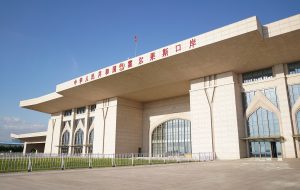
Most visitors fly into Jiayuguan Airport, a forty-minute drive northeast. The airport shuttle drops you at the Jiayuguan bus station, where you catch a local bus—number 1 or 11 usually—that trundles the expressway linking the two cities in twenty minutes. If you are riding the rails, pay attention to the station name on your ticket. Jiuquan Railway Station sits in the older western district, handling the slow overnight sleepers from Xi’an or Xining. Jiuquan South is the modern high-speed hub on the eastern edge, convenient for the express lines from Lanzhou and Urumqi. Taxis cluster at both exits; a ride across the urban sprawl to the Drum Tower area costs roughly thirty yuan. For shorter hops, the public bus network is reliable if you can read the Chinese characters for the stops. Buses 1, 8, and 9 connect the south station, the old train station, and the central Drum Tower intersection in a loose triangle.
Arrive at Jiayuguan Airport → take airport shuttle to Jiayuguan Bus Station → transfer to local Bus 1 or 11 for Jiuquan (20 min).
High-speed rail: alight at Jiuquan South Station (Gaotie East Road). Taxi or Bus 9 to city center.
Conventional rail: alight at Jiuquan Station (Jiefang Road, Xidong Town). Bus 19 or taxi to center.
Inner-city: Buses 1, 3, 5, 8, 9, 10, 12, 21, 22, 25, 27 loop the main sights. Cash or transport card accepted.
The Drum and Bell Tower: The City’s Beating Heart
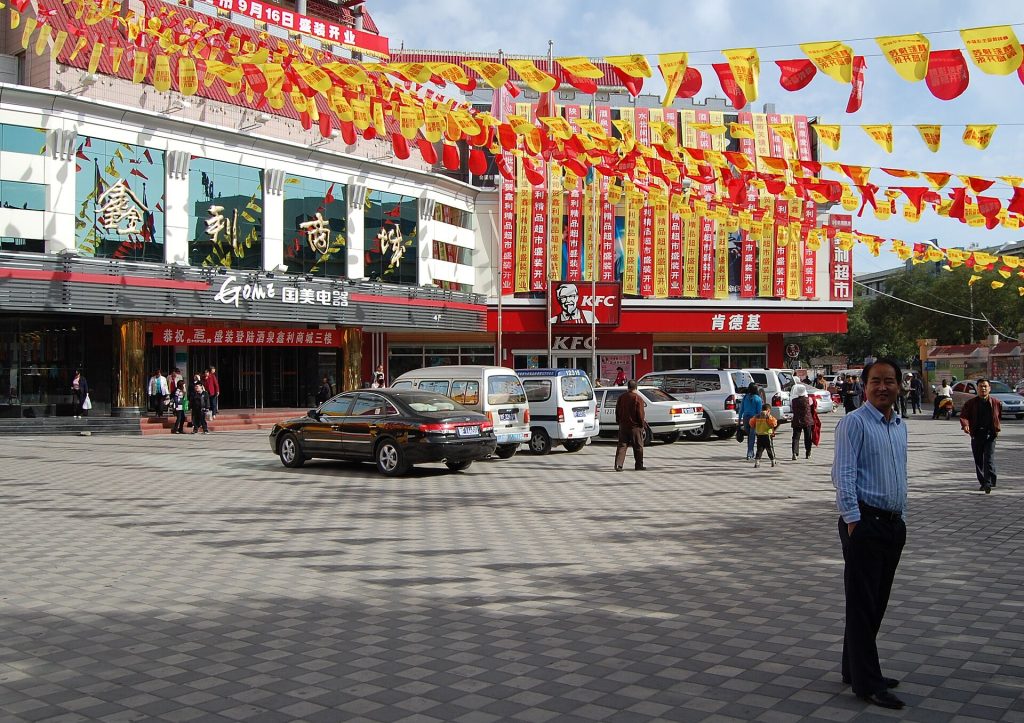
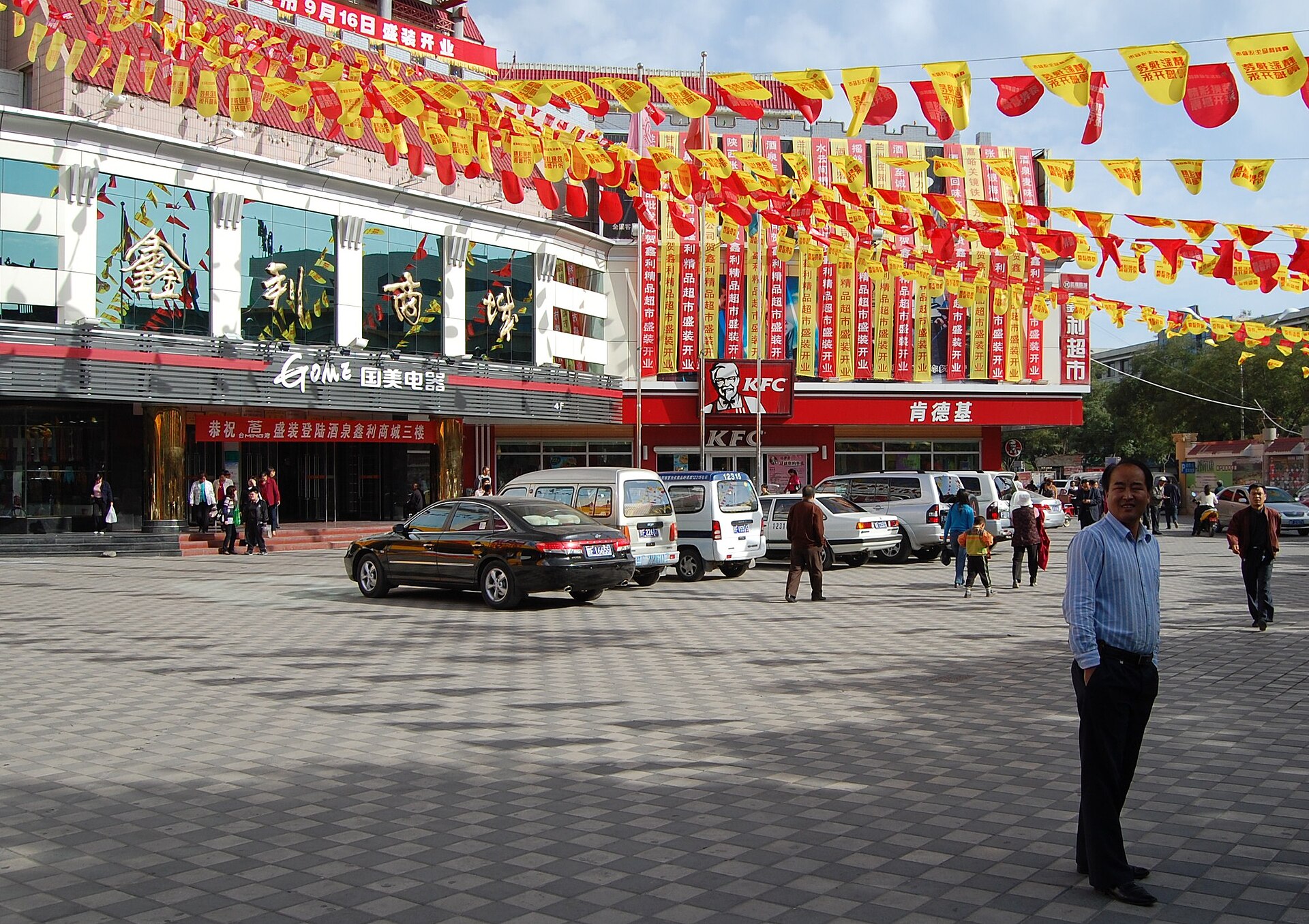
The Drum and Bell Tower sits exactly where the old Silk Road caravans once turned their horses toward the Hexi Corridor. Today, it anchors a chaotic roundabout where Dongda Street meets Beida Street. The structure itself is a Ming Dynasty reconstruction—red pillars, green glazed tiles, a heavy hip roof—but the life happens on the pavement around it. In the early morning, before the tour groups from the satellite center arrive, elderly men practice tai chi in the shadow of the bell, their movements slow enough to match the traffic light cycle. By noon, the square fills with the steam from hand-pulled noodle stalls. Vendors sell skewers of cumin-dusted lamb, flatbreads baked in clay urns, and plastic cups of sour mare’s milk from Subei County. Climb the narrow wooden staircase to the second floor if the gatekeeper allows it; the view stretches past the rooftops to the launch pads shimmering on the horizon, a juxtaposition of ancient timber and vertical steel that defines the place.
Space Dreams and the Satellite Launch Center
You cannot visit the Jiuquan Satellite Launch Center. It is a restricted military zone, closed to foreigners and most Chinese citizens without clearance. But the gravity of the place pulls at the city anyway. The Aerospace Museum on Yingbin Road offers the closest legal look. Inside, a full-scale model of the Shenzhou re-entry capsule sits beside a scorched heat shield from an actual mission. Glass cases hold the meal packets astronauts eat—freeze-dried kung pao chicken, lotus seed paste, tubes of tea. The gift shop sells patches embroidered with the Long March rocket silhouette. If your timing aligns with a crewed launch, usually in the autumn months when the Gobi winds die down, the city stops. Hotels fill with engineers and journalists. Locals gather on rooftops or the riverbank park with thermoses of hot water, craning necks for the white pillar of flame that climbs faster than sound. Ask your hotel receptionist weeks ahead; they sometimes know the window before the official announcement.
Day Trips: Subei Mongol Autonomous County and the Dunes
Seventy kilometers south, the administrative map reads Subei Mongol Autonomous County, but the landscape reads open sky. The drive crosses the Heihe River bridge, then the asphalt thins to a two-lane ribbon between gravel plains. Yurts appear beside the road in summer, their chimneys puffing dung smoke. Families here herd Bactrian camels and fat-tailed sheep. If you hire a driver for the day—negotiate around 400 yuan round trip from the Drum Tower—you can reach the Singing Sand Dunes near Dunhuang’s border before lunch. The sand here doesn’t sing so much as groan, a low bass note triggered when you slide down the leeward face. Mongol herders may offer you a bowl of salty milk tea and a handful of air-dried curd beads hard as pebbles. Eat them slowly; they soften in the cheek. Do not photograph people inside their yurts without a nod and a smile. The county seat, Mazongshan, has a basic guesthouse and a night market where traders sell jade from the Altyn Tagh and melatonin gummies labeled in Cyrillic for the truck drivers crossing to Mongolia.
Eating in the Shadow of Rockets
Jiuquan’s cuisine leans heavy on wheat and mutton, fortified for winter winds. The signature dish is *yangrou chuan*—lamb skewers grilled over charcoal until the fat caramelizes into a lacquer. Order them by the *jin* (half-kilo) at the night market behind the Drum Tower. Another staple is *guokui*, a fist-sized flatbread baked slapped against the inner wall of a clay oven; the crust blisters black, the interior stays steam-soft. Break it open, stuff it with pickled garlic shoots and chili oil, and eat it standing at a plastic stool. For a sit-down meal, look for a place advertising *niangpi*—cold wheat gluten noodles tossed with vinegar, chili, gluten curls, and bean sprouts. The best version I found was at a nameless stall near the old train station, run by a Hui woman who slices the gluten by hand with a cleaver the size of her forearm.
Yangrou chuan: lamb cubes, cumin, chili flakes, salt. Grill over high heat 3–4 min per side until fat renders.
Guokui dough: high-gluten flour, water, yeast, pinch of salt. Rest 1 hr. Shape rounds. Slap onto 250 °C clay oven wall. Bake 4 min.
Niangpi: wheat starch sheets, gluten curls, bean sprouts, cucumber matchsticks. Dress with black vinegar, chili oil, garlic water, soy sauce. Toss cold.
Sleeping and Practical Mistakes
Business hotels cluster around Jiuquan South Station—clean, quiet, 200 to 300 yuan for a standard room. The older guesthouses near the Drum Tower have character but thinner walls; you will hear the 5 a.m. call to prayer from the mosque on Xidong Street. Book a room with a bathtub if you plan a day in the dunes; the grit works into pores no shower can reach. A common rookie error is assuming the launch center is a day trip. It is not. The nearest viewing point is still thirty kilometers from the pad, behind a checkpoint. Another mistake: showing up in the depth of winter without a down coat rated for minus twenty. The wind off the Gobi does not negotiate. Finally, carry cash. The noodle stall, the yurt tea, the taxi driver waiting at the dunes—none of them scan QR codes when the signal drops to one bar.
Seasonal Rhythms and Local Etiquette
Spring arrives late, usually around the third lunar month, when the apricot trees in the river valley burst white and the dust storms briefly pause. This is the window for comfortable travel—daytime highs near twenty degrees, nights cool enough for a light quilt. Summer brings the Naadam festival to Subei; horse racing, wrestling, and archery unfold on the steppe over three days. If you attend, stand at the edge of the track, never cross the finish line, and accept a snuff bottle with both hands if offered. Autumn is launch season. The air clears, the poplars turn gold along the Heihe, and the city holds its breath for the countdown. Winter is brutal but honest: the night market shrinks to a few brave skewer grills, and the Drum Tower bell rings muffled through ice. Whenever you go, learn two phrases: *sain bain uu* (Mongolian greeting) and *ni hao* (Mandarin). Use the first in Subei, the second in town. It marks you as someone who notices where they are.