The minibus from Xining shudders to a halt on the single paved strip that passes for Kanbula’s main street. Dust settles around tires still warm from the climb out of the Yellow River valley. It is barely six in the morning, the sky a pale wash over the Danxia cliffs, and the driver is already waving a hand toward the parking lot—last ride back to the city leaves in thirty minutes. I stand with a backpack and a paper map that shows the park entrance seven kilometers north, a distance that looks walkable on screen but feels different when the altitude sits at 2,800 meters and the air thins with every step. A taxi driver leans against a red sedan, smoking, quoting three hundred yuan for the return run. The math is simple: walk now, or pay later. I start walking.
Getting There Without Getting Stranded
The bus from Xining’s long-distance station near the train depot runs early, usually departing around 7:30 a.m. and again mid-morning. The ride takes two and a half hours, climbing through tunnels and along the river until the red sandstone walls of the park appear on the horizon. The bus drops passengers at the town crossroads, not the park gate. From there, the entrance is a seven-kilometer stretch of winding two-lane road with no shoulder. Walking it takes ninety minutes uphill; a local taxi asks twenty to thirty yuan for the same hop. The real trap is the return. The southbound bus back to Xining pulls through town once, often before dawn—around 6:30 a.m.—and does not wait. Miss it, and the only options are chartering a private car for the full distance or catching a taxi to the next township, Guide, where schedules are more frequent. If you plan a day trip, confirm the return time with the driver when you board in Xining, and stand at the roadside ten minutes early.
Reading the Danxia: What the Cliffs Actually Look Like
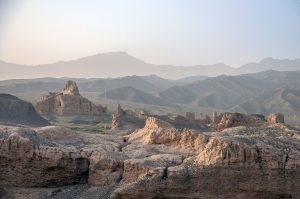
Kanbula’s signature is the Danxia landform—layers of red sandstone and conglomerate uplifted, folded, and carved by wind and water into blades, towers, and amphitheaters. Up close, the rock feels gritty, stained by iron oxide that bleeds rust-orange after rain. The most photographed stretch sits along the reservoir shore, where the Yellow River was dammed to form Longyangxia. Here the cliffs drop vertically into water the color of cold tea, and the reflection doubles the height. Morning light hits the east faces first, turning them the color of dried chili; late afternoon gilds the west walls. Midday flattens everything into a glare. If you have a choice, enter the park at opening, hike the ridge trail while the air is cool, and save the lakeside boardwalk for the golden hour before the last shuttle leaves.
Hikes That Don’t Require a Guide
The park runs electric shuttles between the main gate, the reservoir pier, and the upper viewing platform. A single ticket covers unlimited rides for the day. Three trails are marked and maintained enough to follow without a local guide.
Ridge Trail (Gate to Viewpoint) — 4.2 km one way, 350 m elevation gain. Stone steps and packed dirt. Starts behind the ticket office, climbs through juniper scrub to a saddle with a 270-degree panorama of the reservoir fingers. Allow two hours up, ninety minutes down. Water only at the start.
Lakeside Boardwalk (Pier to Fishing Village) — 3 km flat, boardwalk and gravel. Follows the shoreline past eroded caves where swallows nest. Ends at a small Tibetan hamlet where families dry yak meat on racks. Good for a sunset stroll; the shuttle stops here.
Canyon Loop (Upper Platform Descent) — 2.5 km loop, steep in sections. Drops from the platform into a narrow slot canyon with walls close enough to touch both sides. Metal ladders bolted to rock in two spots. Not for anyone uneasy with exposure. One hour round trip.
Carry at least two liters of water, a wind layer, and snacks. There are no vendors on the trails. Toilets exist only at the gate, the pier, and the upper platform. Phone signal is spotty; download offline maps the night before.
On the Water: Boats, Kayaks, and the Fishing Crowd
The reservoir stretches thirty kilometers upstream, narrow and fjord-like. Motor launches leave the pier every forty minutes for a forty-minute round trip that hugs the base of the tallest cliffs. The commentary is in Mandarin only, but the geometry speaks for itself—vertical folds, horizontal bedding planes, the occasional golden eagle riding thermals. For a quieter angle, rent a sit-on-top kayak from the kiosk beside the pier. Single boats go for roughly eighty yuan an hour; doubles one-twenty. Paddle early, before the tour boats churn the surface. The water is cold year-round, fed by snowmelt; wear a windbreaker even in summer. Fishing is tolerated along the banks—locals set up small tents and cast for carp and the occasional schizothorax. No permit is checked, but clean your spot and pack out the line. Camping overnight on the shore is a gray area; rangers sometimes turn a blind eye, sometimes issue fines. If you want to sleep under the cliffs, book the park’s basic dormitory rooms at the gate instead.
Food Stops Between Hikes
Inside the park, the only hot food is at the pier restaurant—a steam table of hand-pulled noodles in beef broth, stir-fried potato shreds with green pepper, and boiled dumplings stuffed with yak meat and scallion. Portions are large, oil is heavy, and the broth remembers every hand that stirred it. Eat here if you need calories fast. Better flavor waits back in Kanbula town. A family-run courtyard place two doors down from the bus stop serves suantang noodles: thin wheat strands in a sour fermented barley broth, topped with cilantro, chili oil, and a spoonful of pickled radish. The acidity cuts the altitude headache. Order a side of cold yak tongue, sliced paper-thin and tossed with garlic and vinegar. Wash it down with a bowl of sweet milk tea, salted and churned. Prices run twenty to forty yuan a bowl. Cash only; the QR code sticker on the wall often fails.
Day Trip to Qinghai Lake: Logistics and Reality Check
Guidebooks suggest pairing Kanbula with Qinghai Lake in a single day. The math looks clean on paper—sixty kilometers west on the S204, two hours by car. In practice, the road climbs past 3,200 meters, crosses a pass that collects fog and ice even in late spring, and narrows to a single lane where herds of yaks ignore honking. A private driver from Kanbula charges six to eight hundred yuan round trip, waiting included. The lake’s main tourist zone at Erlangjian charges separate entry, shuttle, and boat tickets that push the per-person cost above three hundred yuan. You gain a walk on a boardwalk over saline mudflats, a view of Bird Island in the distance, and a wind that bites through fleece. If you have only one day, stay at Kanbula. The Danxia light on water is more distinctive, the hiking is real, and you avoid six hours in a car for a shoreline you can see from the highway pullout. Save Qinghai Lake for a night in Heimahe, where the sunrise over the water justifies the distance.
What Locals Expect and What Trips Up Newcomers
Tibetan families in the park’s peripheral villages herd yaks, collect caterpillar fungus in early summer, and run the shuttle buses. They are used to Han tourists and foreign faces, but the rhythm is theirs. Greet elders with a slight bow and “tashi delek”; do not step over cooking fires or touch prayer wheels counterclockwise. Photography inside home shrines is forbidden; ask before pointing a lens at people. The biggest mistake visitors make is treating the park as a viewpoint checklist—snap the gate, ride the boat, leave. The place rewards slowness: sitting on a boulder above the reservoir while a lammergeier circles, sharing a thermos of butter tea with a ranger on break, watching the cliff color shift from rust to crimson to purple as the sun drops behind the Nianbo Yuzhe peaks. Stay for the last shuttle. Walk the boardwalk in the dimming light. The town’s single street will still be there when you return, the taxi driver still leaning against his red sedan, the early bus still waiting for the few who knew to be ready.