The taxi hits the G216 highway and the Gobi stretches flat to the horizon, pale gravel and scrub brush broken only by the occasional pumpjack nodding slow and steady. Three hours out of Urumqi the air clears, the road widens, and the city rises like a mirage — broad boulevards, median strips thick with tamarisk and saxaul, not a scrap of litter in the gutters. Oil money built this place, and it shows in the width of the sidewalks and the shine on the streetlights.
Getting There
Most travelers arrive from Urumqi. A shared taxi from the north station leaves when four seats fill; the driver guns it across the desert and you roll into Karamay in about three hours. The bus takes an hour longer but costs half as much and runs on a fixed schedule from the same lot. If you are short on time, a forty‑minute flight connects the two cities daily; the airport sits twenty minutes north of town and a pre‑booked car waits at arrivals.
- Shared taxi: flag down at Urumqi North Passenger Station, expect ¥100 per seat.
- Long‑distance bus: buy a ticket at the counter, departs hourly, four hours door to door.
- Flight: book through the major carriers, land at Karamay Guhai Airport, taxi into the center.
Moving Around the City
Karamay’s grid is forgiving. Numbered avenues run east‑west, named streets north‑south, and every intersection has a bilingual sign. Public buses are clean, air‑conditioned, and cost a flat fare; tap a transport card or drop exact change in the box. Taxis swarm the main roads — green sedans with meters that start at a low flag‑fall. For the desert sites outside the ring road, hire a driver for the day; the hotel front desk usually has a reliable contact who knows the unmarked tracks to the rock fields.
- Bus routes 1, 2, and 101 cover the central districts and the oil‑field museums.
- Taxi meter starts around ¥8; a cross‑town ride rarely exceeds ¥30.
- Day‑hire driver: negotiate ¥300‑400 for eight hours, including fuel and waiting time.
What to See in Town
Jiulongtan Park sits at the end of Century Avenue. The name means Nine Dragon Pools, but you will find a chain of artificial lakes fed by recycled industrial water, bordered by sculptures carved from black Gobi stone. Locals bring kites in the late afternoon; the wind off the desert keeps them aloft until dusk. Walk the loop path past the open‑air geological museum — core samples, drill bits, a cutaway wellhead — then climb the viewing platform for a panorama of the city’s green belt pushing back the sand.
- Enter through the south gate; the north gate locks after sunset.
- Bring water — shade is sparse on the western ridge.
- Weekend evenings: amateur erhu players gather near the lotus pond.
Mogui Cheng — The Devil’s City
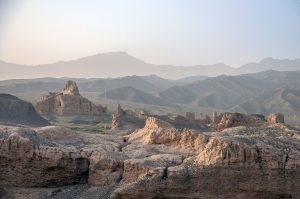
One hundred kilometers north, the highway degenerates to a graded gravel track. The formations appear suddenly: yardangs sculpted by centuries of wind into towers, arches, and corridors that whistle when the gusts rise. The Uyghur name translates to “Devil’s City” because the night wind sounds like screaming. Go in late autumn when the heat has broken but the sandstorms have not yet started. Arrive two hours before sunset; the light rakes the ridges gold and the shadows stretch long enough to walk inside.
- Hire a 4WD in Karamay; sedans bottom out on the washboard sections.
- Pack a windproof jacket, wide‑brim hat, and at least two liters of water per person.
- No facilities on site — use the toilet at the last service station before the turnoff.
- Stay on the marked trails; the crust cracks easily and the soft sand beneath swallows boots.
Eating and Drinking
The oil workforce brought tastes from every province, so the night market on Xinhua Road runs the gamut: Xinjiang lamb kebabs brushed with cumin and chili, hand‑pulled noodles in beef broth, Sichuan hot‑pot booths steaming beside Uighur nan ovens. Sit on a plastic stool, order a tray of yangrou chuan and a bowl of laghman, wash it down with a bottle of ice‑cold Wusu beer. For a quieter meal, the canteen at the Petroleum University serves a decent dapanji — chicken stewed with potatoes, peppers, and wide belt noodles — at student prices.
- Night market peaks after 8 p.m.; arrive early for a seat.
- Ask for “bu la” if you want the chili toned down.
- Wusu beer is the local lager; a 600 ml bottle costs ¥5‑7 at street stalls.
Where to Sleep
Business hotels cluster around the municipal government compound — clean rooms, reliable Wi‑Fi, English‑speaking front desk staff. A standard double runs ¥200‑300 in the off‑season. If you prefer something quieter, the guesthouses in the old petroleum compound have courtyard layouts with grape arbors; the owners often speak Russian or Kazakh and can arrange a driver for Mogui Cheng. Book ahead during the spring oil‑conference weeks; rooms vanish fast.
- Check for “24‑hour hot water” — some older places still run on a schedule.
- Ask whether breakfast includes naan and yogurt; it’s a good sign of a local kitchen.
- Keep your passport handy; registration is automatic at check‑in.
Common Mistakes
First‑timers underestimate the desert sun. Even in early autumn the UV index spikes at noon; a cotton shirt and sunscreen are not optional. Another error is treating Mogui Cheng as a quick photo stop — the formations extend for kilometers, and the best shapes reveal themselves only after an hour of walking. Don’t rely on ride‑hailing apps past the city limits; drivers cancel when they see the destination. Finally, don’t expect late‑night dining in the residential districts — most restaurants close by ten, and the night market is the only reliable after‑hours option.
- Apply SPF 50 before leaving the hotel; reapply after two hours.
- Start the Mogui Cheng hike by 4 p.m. in autumn; the gate locks at dark.
- Confirm the driver’s return time before you set off into the yardangs.
- Carry cash — smaller stalls and taxis often don’t accept mobile pay.
Moving On
From Karamay the desert opens north to the Altai foothills and west toward the Junggar Basin. A night train links to Kuytun for connections to Yining and the Ili Valley. If you have a spare day, the Baiyang River wetland reserve lies two hours south by car — reed beds, migratory birds, and a boardwalk that disappears into mist at dawn. Fill the tank, stock water, and point the nose of the vehicle toward whichever horizon pulls you.