The minibus from Yining dropped me at a dusty lot where the road simply stops at a line of steel fencing. Trucks idled in a queue that stretched toward the horizon, their tarps flapping in wind that carried the smell of diesel and dry grass. Ahead, the blue-and-gold arch of the China–Kazakhstan friendship gate framed a stretch of no-man’s-land where the only movement was a border guard walking a German shepherd. My backpack felt heavier than it had in the mountains; here, the weight was paperwork and timing.
Getting Oriented: Two Towns, One Name
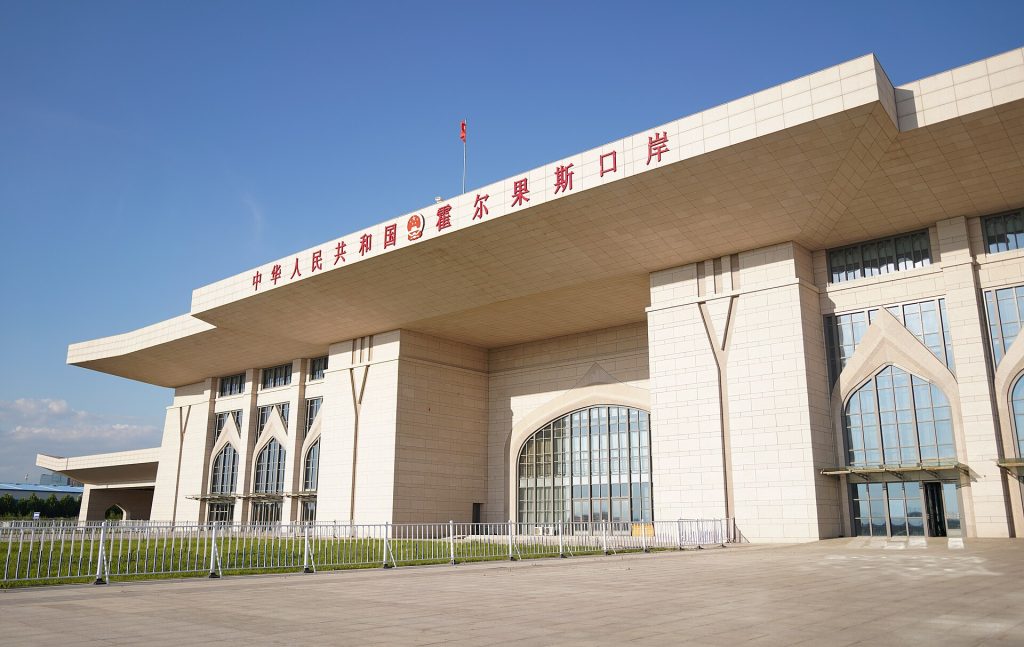
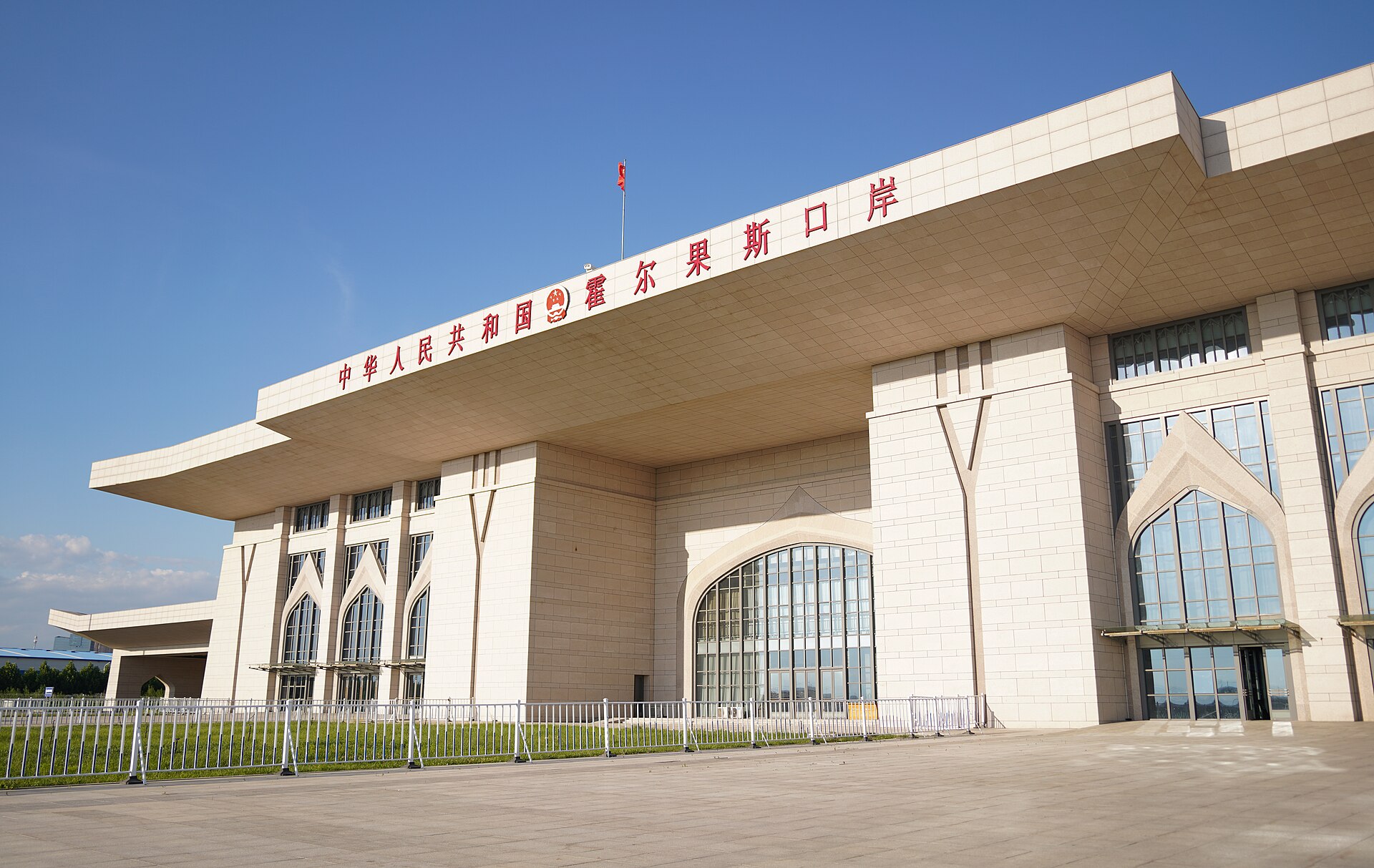
Khorgos is not a single place you can walk across in an afternoon. The railway station sits out on the steppe, a modern hall of glass and steel that feels built for a city ten times its current size. The actual border crossing — the pedestrian gates, the truck inspection sheds, the duty-free mall — clusters around the international cooperation center several kilometers west. Between them lies the “town,” a grid of wide avenues, logistics warehouses, and hotels catering to drivers who sleep in shifts. A taxi between the station and the border costs about thirty yuan and takes fifteen minutes if the convoy traffic isn’t backing up onto the highway. Budget an hour if it is.
Crossing on Foot: The Pedestrian Channel
Walkers use a dedicated lane that separates from the truck queue about five hundred meters before the Chinese exit hall. You present your passport and Chinese visa (or entry permit) at the first booth, slide your bag through an X-ray older than most smartphones, then step into a caged corridor open to the sky. The walk between the Chinese exit stamp and the Kazakh entry booth is roughly eight hundred meters of paved walkway. In summer the sun beats off the white concrete; in winter the wind cuts straight from the steppe. There are no benches, no water fountains, no shade. I watched an elderly woman with a wheeled suitcase stop three times to catch her breath while a guard shouted encouragement in Mandarin and Russian.
- Have your Kazakh visa (if required) printed — officers on the Kazakh side rarely accept phone screens.
- Carry a pen. The migration card handed out on the Kazakh side has tiny boxes that smear if you use a gel pen.
- Keep your Chinese entry stamp visible until you clear the Kazakh booth; you may be asked to show it again.
- No currency exchange in the corridor. Change yuan to tenge in Yining or at the duty-free mall before you enter the cage.
The Visa-Free Zone: Shopping Without a Stamp
If you hold a passport from a country on China’s visa-free transit list — currently over fifty nations — you can enter the Khorgos International Border Cooperation Center without a Chinese visa for up to thirty days. The zone is a massive indoor complex: duty-free halls selling Kazakh chocolate, Chinese baijiu, silk scarves, and electronics, plus a food court where hand-pulled noodles sit beside beshbarmak. You still pass through a security check and facial scan at the zone’s entrance, and your passport is registered in the system. You cannot leave the zone into the rest of Xinjiang without a full visa. I met a German cyclist who had ridden from Almaty, spent two nights in the zone’s capsule hotel, and flew out of the new Khorgos airport to Xi’an without ever technically entering China proper.
Silk Road Echoes: What Remains to See
Don’t come expecting caravanserais with intact frescoes. The ancient route here was a series of seasonal camps near water holes, most now buried under logistics parks. The best glimpse of the old road is at the Khorgos River wetland reserve, twenty minutes north by taxi. Wooden boardwalks cross reed beds where herons hunt; interpretive signs in Chinese, Kazakh, and English mark the spots where Tang-dynasty envoys watered horses. In late spring, wild tulips carpet the banks — red, yellow, and a striped variety locals call “fire flame.” The reserve closes at dusk; guards on electric scooters sweep the paths at six sharp.
Eating and Sleeping Between Borders
Hotels cluster near the bus terminal and the cooperation center. Rooms are functional: hard beds, hot water that runs brown for the first minute, Wi-Fi that drops when a freight train passes. A double with private bath runs 180 to 260 yuan. For food, follow the truck drivers to the row of canteens behind the fuel depot. Order laghman — thick hand-rolled noodles in mutton broth with radish, chili oil, and a dollop of yogurt — or manty steamed in a tiered metal pot, the dough thin enough to see the seasoned beef inside. Skip the “Silk Road set menus” advertised in English at the mall; they cost triple and arrive lukewarm.
Mistakes That Cost Time
- Arriving at the railway station and assuming you can walk to the border. You cannot. The fence is continuous and patrolled.
- Booking a train ticket to “Khorgos” thinking it drops you at the crossing. The station is a destination, not a transit point.
- Showing up during the May Day or National Day golden weeks without a pre-booked hotel. Every bed within twenty kilometers fills with domestic tourists visiting the duty-free mall.
- Assuming the border operates twenty-four hours. The pedestrian channel typically closes between 10 p.m. and 9 a.m. Beijing time, though truck lanes run longer. Confirm the seasonal schedule before you leave Yining.
- Leaving your power bank in checked luggage on the Chinese side. Security at the exit hall confiscates anything over 100 Wh without a printed label; they don’t return it.
When I finally cleared the Kazakh booth, the stamp still damp on the page, a marshrutka driver was already loading luggage into a dented white van bound for Zharkent. The road ahead unwound toward the Tien Shan foothills, apricot orchards giving way to alpine meadow. Behind me, the friendship gate glinted in the afternoon light, the same blue and gold I had seen from the other side. The crossing had taken three hours, two cups of instant coffee, and a conversation in broken Russian with a Kazakh trader hauling dried apricots. Worth every minute.