The minibus from Haikou West Bus Station drops you at the intersection of Jiangnan Road and Linmei Road before the driver has finished his second cigarette. Steam rises from a row of bamboo steamers outside a noodle shop. An old woman fans charcoal beneath a wok, tossing rice noodles with pickled mustard greens and a spoonful of chili oil. You eat standing at a plastic stool, the broth sharp and salty, while motorbikes weave around your elbows. That first bowl — slippery noodles, crunchy stems, heat that climbs the back of your throat — is Lingao’s welcome.
Getting There Without Losing Half a Day
Two main arteries reach the county. The bus is the practical choice. Coaches leave Haikou West Bus Station every thirty minutes or so, rolling west along the coastal expressway for about ninety minutes before pulling into Lingao Bus Station right in Lincheng’s grid. You step off the bus and you are already where the guesthouses, the market, and the ferry to the cape cluster.
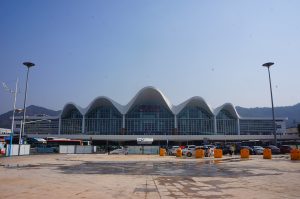
The high‑speed rail line stops at Lingao South Railway Station, but the platform sits in Bohou Town, sixteen kilometers southeast of the center. A taxi from the station to Lincheng costs roughly the same as the bus ticket from Haikou and takes twenty minutes on the G98. If you arrive by train with heavy luggage or a tight schedule, book a ride‑hailing car before you disembark. Otherwise, the bus station’s central location saves you the transfer.
Sleeping Where the Roosters Wake You
Lincheng has no international chains. What it has are family‑run inns above shophouses on Wenming Road and a handful of newer business hotels near the bus station. Rooms are clean, air‑conditioned, and usually come with a kettle and a thermos of tea. Ask for a floor above the third if you want to avoid the early‑morning clatter of delivery tricycles. In the dry season, a few homestays on the outskirts of Bohou open their courtyards to travelers who want a quieter night and a view of the star‑strewn sky over the rice paddies.
Cape Lingao and the Liberation Park
The cape juts into the Qiongzhou Strait, its lighthouse a white cylinder banded in red that has guided ships since the late Qing. A paved path climbs the headland past bunkers and a stone monument marking the 1950 landing. The wind off the water carries salt and the scent of dried fish from the nearby harbor. Mid‑morning light paints the rocks gold; late afternoon shadows stretch the inscriptions on the memorial wall. Allow two hours to walk the loop, pause at the viewing platform, and watch the fishing fleet return, their decks piled with silver scad and squid.
A small museum near the park entrance displays photographs, a rusted radio transmitter, and a replica of the wooden junks that ferried troops across the strait. Captions are in Chinese, but the images — soldiers wading through surf, villagers handing steamed buns to uniformed men — need no translation. The park is free, open from dawn until dusk, and bus number 3 runs from the station to the gate every forty minutes.
Eating Like a Local: From Market Stalls to Home Kitchens
Lingao cuisine leans on the sea and the coastal plain. The signature dish is Lingao suckling pig — skin lacquered to amber glass, meat so tender it falls from the bone — but everyday eating is simpler. Breakfast is rice noodle soup with pickled mustard greens, a drizzle of fermented bean curd sauce, and a handful of crushed peanuts. Lunch might be a plate of stir‑fried clams with garlic chives, eaten with fingers, shells discarded onto the tablecloth. Dinner often centers on a clay‑pot stew of sweet potato, dried shrimp, and pork belly, the broth thick and sweet from the tuber.
If you want to cook the pig at home — or at least understand what the chef does — here is the skeleton of the method:
- One suckling pig, about four kilograms, cleaned and patted dry
- Five‑spice powder, coarse salt, white pepper, fermented red bean curd, honey, dark soy sauce
- Bamboo skewers or metal hooks for hanging
- Charcoal grill or a very hot oven (250 °C)
- Rub the cavity and skin with salt and five‑spice; let rest uncovered in a cool place for six hours to dry the skin.
- Mix bean curd, honey, and soy into a glaze. Brush the skin, then hang the pig to air‑dry another hour.
- Roast over indirect heat, rotating every fifteen minutes, brushing glaze each turn, until the skin crackles and the internal temperature hits 70 °C.
- Rest ten minutes. Chop with a cleaver. Serve with steamed buns, sliced cucumber, and a bowl of garlic‑vinegar dip.
In a restaurant, order “Lingao kao su zhu” and ask for the skin to be sliced separately — some kitchens chop everything together, which ruins the texture. A whole pig feeds six to eight; half portions appear on menus during the off‑season. The common beginner mistake is drowning the meat in chili sauce. The pig’s own fat and the glaze carry enough flavor; a dip of light soy, minced ginger, and a splash of aged vinegar is all you need.
Markets, Temples, and the Rhythm of the Lunar Month
Every third, sixth, and ninth day of the lunar month, the open square behind the bus station swells into a periodic market. Farmers from the interior bring bitter melon, yard‑long beans, and bundles of fresh turmeric. Fishermen unload crates of mantis shrimp, their claws still snapping. Women in wide straw hats haggle over bolts of indigo cloth. The noise is a dialect thick with rolled vowels; Mandarin works for prices, but a smile and a calculator app close the deal faster.
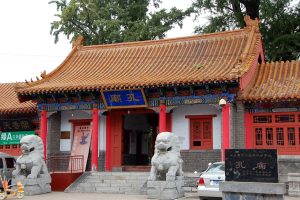
The Mazu Temple on Gangkou Road fills on the twenty‑third day of the third lunar month — Mazu’s birthday. Incense coils hang from the rafters, their smoke curling around statues of the sea goddess and her generals. Locals queue to offer steamed buns shaped like peaches, red paper money, and miniature paper boats. If you visit then, stand at the back, bow three times when the crowd does, and do not step on the threshold. The festival spills into the street with lion drums, a parade of children in embroidered vests, and a temporary stage for Hainan opera sung in a nasal, piercing register.
Outside festival days, the temple courtyard is quiet. An elderly caretaker sweeps fallen joss paper. He will point to the carved stone dragons on the front pillars and tell you they were hauled from a quarry near Danzhou by ox‑cart a century ago. Listen. The story is not in the guidebook.
Getting Around: Two Wheels, Four Wheels, and Your Own Feet
Lincheng’s core is walkable. The grid of Wenming, Jiangnan, and Linmei roads fits inside a twenty‑minute square. For the cape, the park bus is reliable. To reach the volcanic rock formations at Shiyang Bay or the hot‑spring village of Jinshan, you need wheels. Electric scooters rent for about thirty yuan a day from shops near the bus station; they hand you a helmet that has seen better days — bring your own if you are particular. A shared car to Shiyang costs ten yuan per seat and leaves when full from the lot beside the market. Taxis are scarce; ride‑hailing apps work but drivers may cancel if the destination is far from the center.
Fuel stations cluster along the G98 exit. If you rent a car in Haikou and drive down, fill the tank before you leave the expressway. The coastal road between Lingao and Chengmai has long stretches without services, and the sea wind drinks fuel faster than you expect.
What Newcomers Get Wrong
They assume the train station is convenient. It is not. They book a hotel near the rail platform and spend their vacation in taxis. They order the suckling pig “extra spicy” and wonder why the skin turns soggy. They visit the cape at high noon in the seventh lunar month, when the sun beats the rocks to white glare and the mosquitoes rise in clouds. They skip the periodic market because it looks chaotic, missing the only place where you can taste fresh turmeric root sliced thin and dipped in salt.
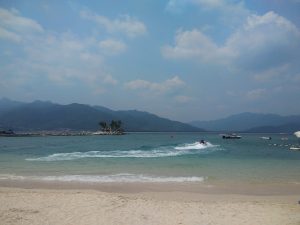
They also forget the tide. The beach below the lighthouse disappears at high water. Check a tide app — or ask the noodle‑shop auntie — before you plan the sunset walk. Low tide in the early evening during the dry season reveals tide pools full of hermit crabs and small octopus. That is the hour to linger, when the light turns the water to mercury and the lighthouse beam sweeps the horizon for the first time.