The minivan’s engine whined in a lower register as we crested the last pass, the air thinning until my fingertips tingled. Below us, Litang spread out in a grid of whitewashed walls and prayer-flagged rooftops, stitched into a valley floor so wide the horizon curved. Strings of yak meat hung from second-story balconies like cured banners, and the smell of woodsmoke and dung fires hit the open window before we even reached the main intersection. At 4,000 meters, the light doesn’t just illuminate the town; it presses down on it, bleaching the chipped paint on the monastery walls and turning the grasslands a sharp, improbable yellow.
Getting There and the Altitude Reality
Most travelers roll in from Kangding or Daocheng Yading on the Sichuan-Tibet Highway (G318). The road is paved the whole way now, but landslides in the rainy season can park you for hours. I took the early bus from Kangding—seven hours of switchbacks and tunnel dust—and still arrived with a headache that ibuprofen barely touched. If you fly into Daocheng Yading Airport, the drive down is shorter, but you drop from 4,400 meters to 4,000 meters in under two hours, which is its own kind of shock.
Do not treat Litang like a standard stopover. The elevation dictates the schedule. Plan your first day for zero exertion: check into a guesthouse with oxygen canisters at the front desk, drink butter tea until your stomach sloshes, and sleep with the window cracked. The second morning, if your head is clear, you can walk the kora circuit. If not, stay horizontal. I watched two fit hikers try to “push through” on day one; they spent day two on intravenous fluids at the county hospital.
Maoya Grassland and the Horse Festival Rhythm
Ten minutes west of town, the pavement ends and the Maoya Grassland opens up—mile after mile of turf stippled with yak herds and black yak-hair tents. In the seventh lunar month, the Litang Horse Festival turns this plain into a temporary city. Khampa men in crimson chubas gallop in formation, scooping silk scarves off the ground at full tilt. The racing is the spectacle, but the trading is the point: nomads bring cordyceps, matsutake, and live yaks to barter for motorbikes, solar panels, and thermos flasks.
Outside festival season, the grassland is quiet enough to hear the marmot whistles. You can hire a local driver with a 4WD to bounce out to a herder’s camp for lunch—usually hand-pulled noodles in yak broth, served in a wooden bowl that has seen generations. Bring small bills (tens and twenties) for the host family; they rarely have change for hundred-yuan notes. And never step over the stove legs inside the tent; walk behind the seated elders, not in front of them.
Changqingchunke Monastery: The Hillside Watchtower
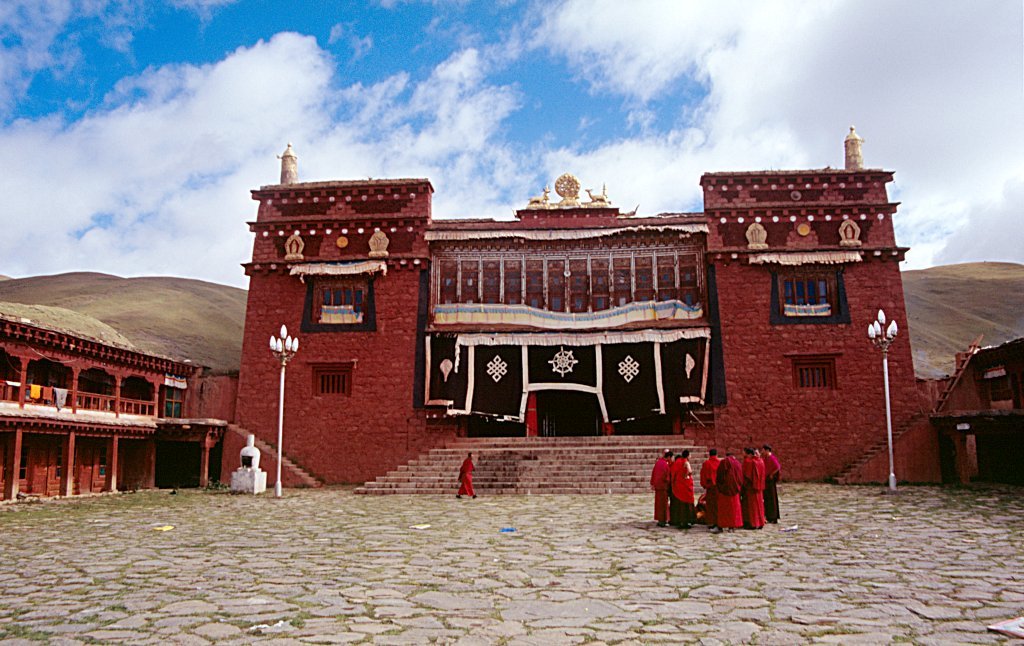
The monastery sits on the eastern slope, a cluster of maroon and gold buildings clinging to the hill like a second skin. It belongs to the Gelug sect, and the seventh and tenth Dalai Lamas were born in the valley below. Pilgrims circle the complex clockwise, spinning the row of brass prayer wheels until their palms shine. Inside the main assembly hall, the air is thick with yak butter lamp smoke and the low drone of monks memorizing texts.
Visit at 8 a.m. for the morning debate session in the courtyard—monks clapping hands, stomping feet, firing questions at each other in rapid-fire Tibetan. It looks like argument; it’s actually logic training. Photography is allowed from the perimeter, but keep your flash off and your voice down. The rooftop offers the best panorama of town: the new concrete blocks spreading west, the old stone lanes climbing east, the grassland bleeding into the sky. Leave a five-yuan note on the butter lamp tray if you light one; it’s not a fee, it’s merit.
Town Rhythms: Market Morning and Night Kitchen
The daily market behind the main bus station wakes at 7 a.m. Tibetan women in aprons lay out mats of dried cheese cubes (chura), ropes of dried yak jerky, sacks of tsampa flour, and bundles of wild mint. You’ll see nomads in leather boots negotiating for horse tack beside town aunties buying plastic washbasins. Try a steamed yak meat bun from the vendor with the bamboo steamer stack—juice runs hot down your wrist, the dough pillowy, the meat gamey and sweet.
After dark, the action shifts to the alley behind the People’s Hospital. Portable grills hiss with yak heart, liver, and fat cubes threaded on skewers. Order a plate of cold yak tongue sliced paper-thin, tossed with garlic, cilantro, and chili oil. Wash it down with a bottle of Lhasa Beer or a thermos of sweet milk tea from the corner shop. Tables are plastic stools; napkins are tissues you bring yourself. The crowd is half locals, half truck drivers on the G318 loop. Nobody speaks English. Point, nod, pay cash.
Practical Logistics: Sleep, Money, Connectivity
- Sleep: Family-run Tibetan guesthouses in the old east quarter (near the monastery path) cost 80–150 yuan for a private room with shared squat toilet. Newer hotels near the west bus station have en-suite bathrooms and electric blankets—ask to test the blanket before checking in. Power cuts happen; keep a headlamp by the pillow.
- Cash: The Agricultural Bank of China branch on the main drag has an ATM that accepts foreign cards, but it swallows cards when the line drops. Carry enough yuan for three days. Mobile pay (WeChat/Alipay) works in town shops, but herders on the grassland only take cash.
- Signal: China Mobile 4G covers the town and main highway. On the grassland, it flickers. Buy a local SIM in Chengdu or Kangding before you arrive; the Litang service hall requires a Chinese ID for registration.
- Permits: Litang County itself is open. If you plan side trips to Yading Nature Reserve or across the border toward Batang, you need a Tibetan Travel Permit (TTP) arranged through a Chengdu agency at least two weeks ahead. No permit, no entry past the checkpoint.
Common Missteps
- Arriving mid-afternoon and hiking the monastery hill immediately. Your lungs will rebel. Sleep first, climb tomorrow.
- Handing a monk money directly. Place donations on the altar tray or in the box. Hand-to-hand is considered disrespectful.
- Photographing nomads without asking. Many believe the camera steals a piece of the soul. A smile, a gesture to the camera, and a nod usually get consent—or a firm head shake. Respect the shake.
- Expecting vegetarian meals to be meat-free. “Vegetarian” in a Tibetan kitchen often means “less yak.” Specify “bu yao rou, bu yao niu rou” (no meat, no yak) and confirm the broth base.
- Leaving trash at herder camps. There is no collection service. Pack out every wrapper, bottle, and tissue. The grassland is someone’s living room.
When the bus finally coughed to life for the return leg over the pass, I watched the monastery shrink to a red smudge against the slope. The grassland rolled on, indifferent, yaks grazing through the frost. Litang doesn’t perform for visitors. It simply exists—high, cold, unapologetic—and lets you decide whether you can meet it on its own terms.