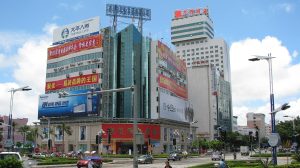
The ferry dock at the confluence of the Yangtze and Tuo rivers smells of diesel, wet stone, and the sweet, heavy perfume of fermenting sorghum drifting from the distillery warehouses upstream. A cargo barge pushes a wake that rocks the smaller wooden boats tied to the pilings. An old man in a faded Mao suit squats on the concrete apron, peeling a pomelo with a pocket knife, letting the thick rind fall into the brown water. This is where Luzhou shows its pulse — not in a museum case, but in the rhythm of the river traffic and the industry that built the city.
Walking the Old River Streets
Start at the base of the Tuojiang Bridge before the morning rush. The bridge itself is a modern span, but the warren of alleys behind the north abutment — collectively called Jiangyang Old Street — still follows the grid laid out during the Ming dynasty. Stone thresholds are worn concave by centuries of shoe leather. You pass a tofu shop where blocks steam in wooden boxes, a barber with a straight razor strop hanging beside his chair, and a hole-in-the-wall selling huangba, sticky rice dumplings wrapped in bamboo leaves that taste of wood smoke and alkali ash.
Locals don’t treat this as a heritage zone. They buy pickled mustard greens by the plastic bag, argue over the price of river shrimp, and drink tiny cups of high-proof baijiu at 9 a.m. from fold-up stools. If you pause to photograph a carved lintel, a vendor will likely wave you toward a stool. “Drink,” she’ll say. “Good for the stomach.” The liquor burns clean, tasting of grain and pit fruit, nothing like the harsh firewater sold in export bottles. Stay long enough to eat a bowl of xiaomian — thin wheat noodles in a broth red with chili oil, topped with minced pork, crushed peanuts, and a tangle of cilantro. The heat builds in your fingertips.
Inside the Liquor City
Luzhou Laojiao’s main distillery sits on the southern bank, a compound of brick fermentation pits and tile-roofed warehouses that has operated continuously since the late Ming. The tour groups move on a schedule, but the real education happens if you linger near the jiu hai — the earthenware jars half-buried in the courtyard. Each jar holds a ton of aging spirit. The clay breathes, letting the liquor marry with the air. Workers in blue jackets check seals with a practiced thumb press.
Ask for the “cellar master’s pour” at the tasting pavilion. They’ll bring a flight: a young tequ sharp with ethyl acetate, a ten-year erqu rounded by time, and a vintage reserve that coats the glass like honey. Sip, don’t shoot. Swirl. The aroma shifts from nail polish remover to dried plum, roasted grain, and something floral — osmanthus, maybe, or the ghost of the sorghum blossom. Buy a ceramic decanter from the factory shop if you have luggage space; the supermarket bottles are the same juice but lack the ceremony.
Up the Mountain to Bamboo Sea
An hour’s drive south on the G93 expressway, the flat basin drops away into the foothills of the Dalou Mountains. Chishui Bamboo Sea (Chishui Zhuhai) spreads across 100 square kilometers of ridges. The road climbs in switchbacks through stands of Phyllostachys edulis so dense the canopy blots the sun. At the visitor center, skip the electric cart. Hike the ridge trail toward Lotus Pond. The path is paved with irregular slate, slick with mist. You hear the culms creak in the wind — a sound like a ship’s rigging.
Midway up, a farmer’s wife runs a lean-to kitchen. She serves bamboo-shoot soup: tender tips simmered with cured ham, ginger, and a splash of vinegar. The broth is clear, sweet, and deeply savory. Eat it with a coarse corn bun. Past the pond, the trail narrows to a dirt track. Few tourists go this far. You’ll find a clearing where an old Daoist tends a shrine to the Mountain God — incense sticks planted in a rice bowl, a bottle of baijiu uncorked as offering. He doesn’t mind photos if you bow first.
Evening on the Yangtze Promenade
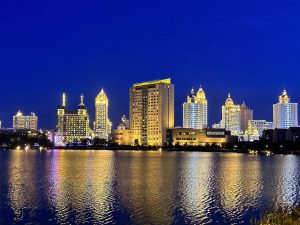
Return to the city by dusk. The riverside promenade stretches three kilometers from the railway bridge to the new financial district. Locals claim the railings for evening constitutionals. Grandmothers lead toddlers on reins; couples share earbuds; a man practices calligraphy with a giant brush dipped in water, writing poems that vanish on the gray stone in minutes. Food carts fire up: skewers of beef heart dusted with cumin and chili, grilled tofu skins brushed with fermented bean paste, whole fish roasted in foil packets with garlic and pickled chili.
Order a plastic tub of lengchi — cold chicken shreds tossed with Sichuan pepper oil, vinegar, and crushed peanuts. The pepper hits in two waves: first floral citrus, then the numb tingle that makes your lips feel swollen. Chase it with a snow beer from an ice bucket. Across the water, the distillery lights flicker on, rows of amber windows reflecting in the current. A freighter sounds its horn, low and long, heading downstream toward Chongqing. That sound, more than any slogan, tells you where you are.
What Newcomers Get Wrong
First, they treat Luzhou as a day trip from Chengdu. It’s four hours by high-speed rail each way — doable, but you’ll miss the night market, the morning ferry, the second tasting pour. Stay two nights minimum. Second, they stick to the baijiu museum and skip the neighborhood distilleries. Small family operations in the counties — Hejiang, Gulin, Xuyong — still hand-mash sorghum in stone troughs. Call ahead through a hotel concierge; some accept visitors for a fee and a bottle purchase.
Third, they order “Sichuan food” expecting Chengdu-style hot pot. Luzhou cuisine leans sour-spicy rather than numbing-spicy. Pickled vegetables — mustard stem, radish, cowpea — anchor every meal. Ask for suancai yu (pickled cabbage fish stew) at a riverside restaurant; the broth should be milky white from fish bones, not red from oil. Fourth, they assume English works in taxis. It doesn’t. Have your hotel write destinations in Chinese characters. Screenshots of map pins help, but drivers trust the written address.
Fifth, they visit in high summer. The basin traps heat and humidity; the bamboo sea offers relief but the city feels like a steamer. Come in the tenth lunar month — late autumn — when the pomelos ripen, the river drops clear, and the new baijiu vintage hits the market. Or the third lunar month, when the hills turn pale green with tea buds and the air smells of roasting leaves. The city breathes differently then.
Practical Rhythms
High-speed trains arrive at Luzhou Station on the eastern edge. Metro Line 1 connects the station to the city center in twenty minutes; a taxi costs roughly forty yuan and takes ten minutes longer in traffic. Buses reach the bamboo sea from the South Gate bus station; the first departure leaves at 7:30 a.m., the last returns at 5:30 p.m. Hire a private driver for the mountain if you want flexibility — negotiate 300 to 400 yuan round trip, including wait time.
Cash is king in markets and small eateries. WeChat Pay and Alipay work everywhere else, but foreign cards rarely link. Carry small denominations — 10, 20, 50 yuan notes. Vendors often lack change for a hundred. Learn three phrases: duoshao qian (how much), bu yao la (no chili), xiexie (thank you). The last one opens doors the first two can’t.
- Stay: Jiangyang District riverside hotels put you walking distance from the ferry, old street, and promenade. Mid-range chains run 250–400 yuan per night off-season.
- Eat: Lao Luzhou Xiaomian (老泸州小面) on Minjiang Road for breakfast noodles; Hejiangmen Fish Head (合江门鱼头) for the sour cabbage stew; any stall on the promenade after 7 p.m. for grilled skewers.
- Drink: Factory tasting pavilion for the flight; neighborhood baijiu bars (look for red lanterns with the character jiu) for cheap pours and local gossip.
- Hike: Chishui Bamboo Sea ridge trail — 3 hours round trip, moderate elevation, bring water and a light rain shell.
- Connect: Buy a China Mobile tourist SIM at the station kiosk (passport required). 30 GB data for 30 days costs roughly 100 yuan.