The high‑speed train slides into Ma’anshan East Station just as the morning mist lifts off the Yangtze. Through the platform glass you can see the river’s broad brown ribbon, the twin spans of the Ma’anshan Yangtze River Bridge stitching the city to Nanjing, and a cluster of cranes swinging over new residential towers. A vendor on the concourse shouts the price of steamed buns, and the smell of soy‑sauce‑braised pork drifts from a nearby canteen. That mix of heavy industry, river geography, and quiet historical corners is the first impression most visitors get — and it stays with you long after you leave the station.
Getting oriented
Ma’anshan sits on the southern bank of the Yangtze, directly across from Nanjing’s Pukou District. The urban core spreads along the river in a rough crescent: Yushan District to the west, Huashan District in the center, and the newer Bowang District pushing inland toward the expressway. Most travelers base themselves near the high‑speed rail station or around the People’s Square metro stop, where buses, taxis, and the single subway line converge. The subway (Line 1) runs east‑west for about 25 kilometers, linking the station, the university zone, and the industrial parks. Buses are frequent and cheap, but the route maps are only in Chinese; a translation app or a photo of the destination characters saves a lot of guessing. Taxis start around ten yuan and rarely exceed forty for cross‑town trips. Ride‑hailing apps work, though drivers sometimes cancel short rides during shift change at dusk.
Riverfront and bridge views
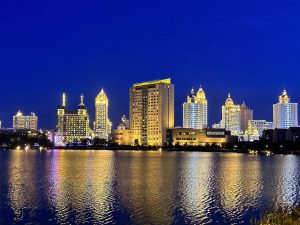
The most rewarding walk in the city follows the Yangtze promenade from the Ma’anshan Yangtze River Bridge westward toward the old ferry dock. The bridge itself has a pedestrian lane separated from traffic by a low concrete barrier. Early morning or late afternoon light paints the water gold, and you’ll often see retirees practicing tai chi, couples flying kites, and photographers waiting for a cargo ship to pass under the main span. About halfway along the promenade, a small pavilion houses a stone tablet describing the city’s role as the “Jinling Barrier” during the Six Dynasties. Climb the steps for a panorama that takes in the Nanjing skyline on the far bank — modern towers rising behind the ancient city wall. If you stay until sunset, the bridge’s LED ribbons flicker on, turning the structure into a neon artery.
Historical sites worth the detour
Ma’anshan’s history hides in pockets rather than grand complexes. The most accessible is Caishi Rock (采石矶), a limestone bluff jutting into the river about twenty kilometers west of the city center. Poets Li Bai and Du Mu both wrote verses here; a stone stele carved with Li Bai’s “Seeing Off a Friend at Caishi” stands near the cliff edge. A steep stairway leads down to a narrow beach where you can touch the same water that carried Tang‑dynasty grain barges. The site includes a modest museum displaying Song‑era ceramics recovered from the riverbed. Entry is free, but the parking lot fills fast on weekends in the autumn travel season.
Closer to town, the Sui‑Tang Canal Heritage Park preserves a section of the ancient Grand Canal that once fed the capital at Jiankang. Restored stone revetments line a quiet waterway shaded by plane trees. Information boards (Chinese only) explain the lock system that lifted boats over the elevation change. Locals come here to fish with long bamboo poles; you can rent a rod from a kiosk near the north gate for a few yuan an hour. The park is flat, wheelchair‑friendly, and a good place to escape the midday heat in the seventh lunar month.
Parks, lakes, and green lungs
For a city built on steel, Ma’anshan surprises with water. Jiashan Lake (嘉山湖) in the east covers nearly twenty square kilometers. A twelve‑kilometer cycling loop circles the shore, passing wetlands, a lotus pond that blooms in the sixth lunar month, and a sculpture park featuring works from a biennial that invites artists from the Yangtze Delta. Bike‑share docks sit at three points on the loop; scan the QR code, pay the deposit, and ride. The western shore has a barbecue area where families grill river shrimp on charcoal — bring your own skewers or buy a kit from the vendor near the lotus pond.
Yushan Forest Park, on the western hills, offers steeper trails. The main path climbs 300 meters to a viewing platform that looks back over the entire urban stretch. In spring, azaleas carpet the slopes; in the ninth lunar month, maples turn the ridge scarlet. There’s a small tea house at the summit serving bamboo‑leaf green tea and roasted sweet potatoes. No cable car — just your legs. Wear shoes with grip; the stone steps get slick after rain.
Food: what arrives on the table
Ma’anshan cuisine leans toward the salty‑sweet side of Huaiyang cooking, with a heavy hand on river fish and freshwater crustaceans. The signature dish is “Ma’anshan stewed soft‑shell turtle” (马鞍山炖鳖), a clear broth scented with ginger, scallion, and a splash of Shaoxing wine. The turtle meat falls off the shell in gelatinous shreds, and the broth is sipped like tea. Another staple is “Yangtze knife‑fish” (长江刀鱼), steamed whole with fermented black bean, garlic, and julienned ginger. The bones are fine enough to eat, but most diners pick them out with chopsticks. For a quick lunch, look for “cold rice noodles with sesame paste” (凉拌米粉) at a streetside stall — thick wheat‑free noodles tossed in peanut‑sesame sauce, chili oil, cucumber matchsticks, and a handful of crushed peanuts.
- Soft‑shell turtle (about 500 g), cleaned and blanched
- Ginger, 30 g, smashed
- Scallion, 2 stalks, knotted
- Shaoxing wine, 2 Tbsp
- Water, 1.5 L
- Salt, 1 tsp
- Goji berries, 10 g (optional)
Home method: Bring water to a rolling boil, add turtle pieces, ginger, scallion, and wine. Skim foam for the first five minutes. Lower heat to a bare simmer, cover, and cook ninety minutes. Add salt and goji berries in the last ten minutes. Serve in deep bowls with a side of steamed rice.
Restaurant ordering tip: Ask for “清炖” (clear stew) rather than “红烧” (red‑braised) if you want the delicate broth. Many places default to the heavier soy‑sauce version unless you specify. A common beginner mistake is ordering the knife‑fish “fried crisp” — the bones become sharp shards. Steamed is safer and lets the sweet flesh shine.
Culture, people, and daily rhythms
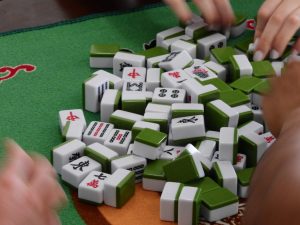
Ma’anshan’s rhythm is set by the steel mill shift schedule. The massive Baowu plant on the eastern edge runs three eight‑hour rotations; at each change, the streets around the factory gates swell with workers in navy uniforms, bicycles clicking, lunch pails clanking. If you walk through the workers’ housing blocks at 7 p.m., you’ll smell stir‑fried garlic chives and hear Mahjong tiles slapping tables in ground‑floor community rooms. Locals are used to outsiders — Nanjing commuters, truck drivers, university students — so they don’t stare, but they appreciate basic Mandarin greetings. A simple “师傅好” (master, hello) to a taxi driver or “阿姨” (auntie) to a market vendor opens doors.
Markets follow the lunar calendar. The biggest folk fair pops up on the fifteenth day of the first lunar month (Lantern Festival) at People’s Square: stalls sell sugar‑blown figurines, paper‑cut window decorations, and sticky‑rice balls filled with black sesame. In the seventh lunar month, the “Ghost Festival” sees families burning paper money at crossroads; it’s respectful to step around the ash piles rather than across them. During the autumn harvest (eighth lunar month), the riverbank hosts a night market where farmers from Bowang sell fresh lotus root, water chestnuts, and hairy crabs. Prices drop sharply after 9 p.m. when vendors pack up.
One thing newcomers get wrong: assuming the city shuts down early. The downtown bar street near Hongxing Road stays lively past midnight, especially on Fridays when Nanjing university students cross the bridge for cheaper drinks. Craft beer bars pour local IPAs brewed with Yangtze water; the tap list changes with the season. If you’re invited to a private gathering, expect baijiu toasts — refuse politely with “我酒量小” (my tolerance is low) and sip tea instead. Nobody pressures you, but showing you understand the ritual earns respect.
Practical tips and common missteps
- Bring cash (small denominations) for market stalls and park bike deposits; mobile pay works everywhere else.
- Download an offline map — cellular signal drops in the riverfront tunnels and on the hill trails.
- Carry a light rain jacket from the fifth to the eighth lunar month; sudden thunderstorms roll off the river.
- Don’t rely on English signage at Caishi Rock or the Canal Park; photograph the Chinese characters for your destination before you leave the hotel.
- If you take a taxi to the high‑speed station, allow twenty extra minutes during shift change (around 5 p.m. and 1 a.m.).
- Public toilets in older parks are squat‑style; pack tissue and hand sanitizer.
The city rewards curiosity. Turn down a side alley behind the main shopping mall and you’ll find a decades‑old noodle shop where the broth has been simmering since the owner’s grandfather stirred the pot. Climb the hill behind the university campus at dawn and you’ll hear the chant of students reading classical texts aloud. Ma’anshan doesn’t hand you a postcard view — it hands you a fishing rod, a bike, a bowl of stew, and the quiet confidence of a place that knows exactly what it is.