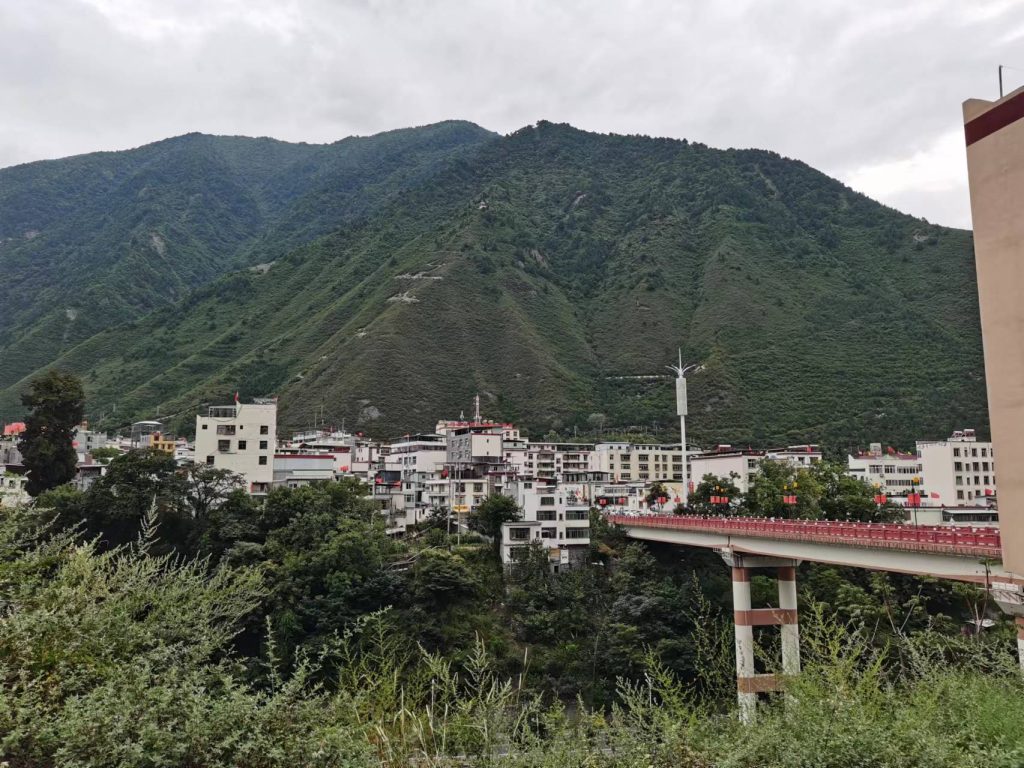
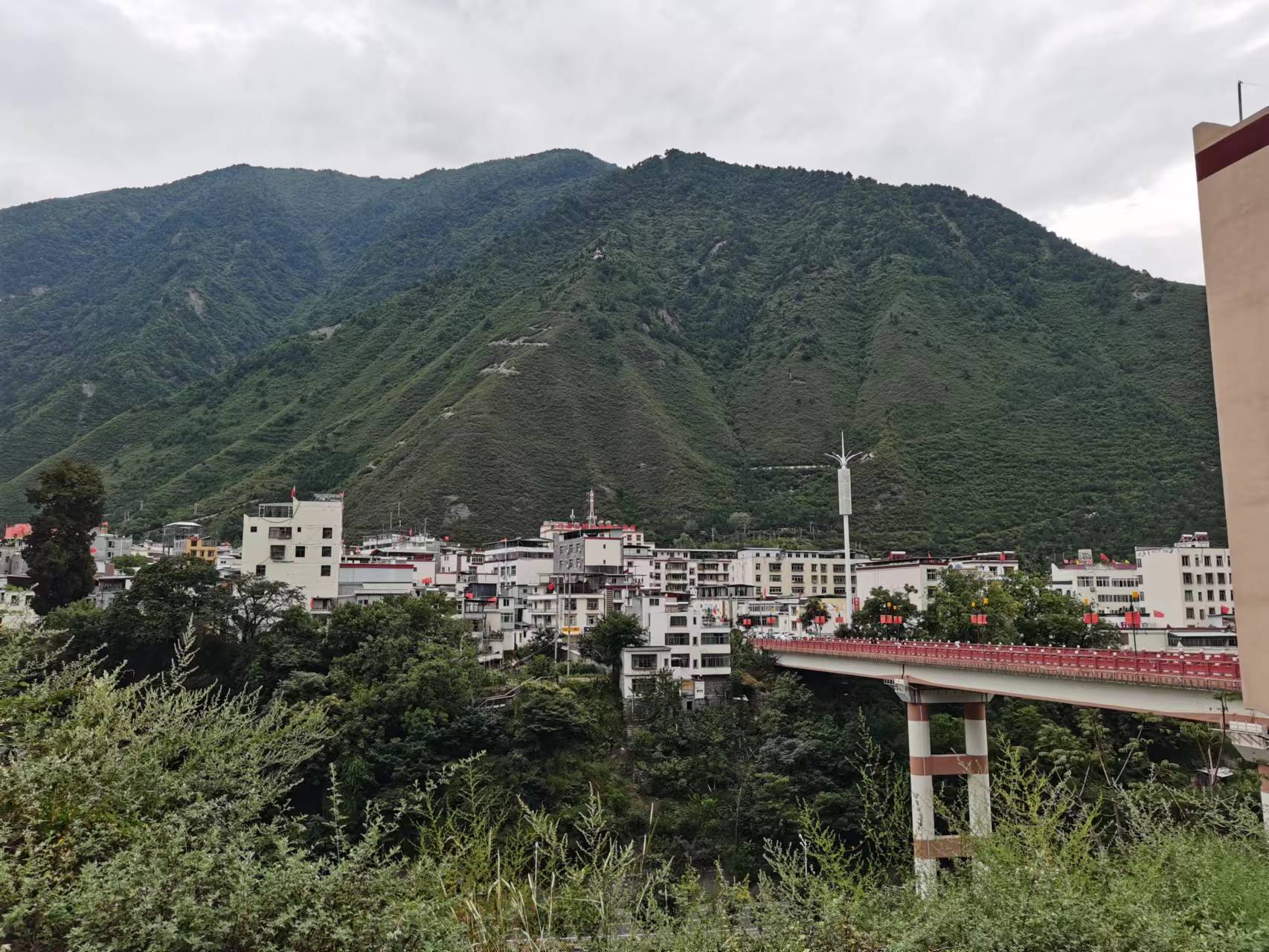
The minibus shuddered to a halt on a hairpin bend above the Min River, the diesel engine coughing in the thin air. Through the open door I could see a cluster of flat-roofed stone houses clinging to a steep slope, their white walls bright against the dark pines. An old woman in a blue headscarf was spreading corn kernels on a bamboo tray beside the road, barely glancing up as we unloaded our packs. That first breath — cold, scented with woodsmoke and wet stone — told me Maoxian would not be a place you simply pass through.
Getting there and moving around
Most travelers arrive from Chengdu on the early morning bus that leaves Xinnanmen Station before dawn. The ride takes about five hours, winding through Dujiangyan and up the Min River valley. In winter the road can ice over near the Diexi tunnel, so drivers sometimes pull over to fit chains. If you prefer the train, the high-speed line stops at Jiangyou; from there a local bus or shared taxi covers the last ninety minutes. Once in the county seat, the town is compact enough to walk. For the villages farther up the valleys, flag down a green minivan at the junction near the bus station — drivers wait until they have six passengers, then roar off up the mountain. Agree on the fare before you climb in; a ride to Pingtou usually costs about thirty yuan per person.
Pingtou Qiang Village: stone lanes and watchtowers
Pingtou sits on a terrace about ten kilometers north of the county seat. The village was rebuilt after the 2008 earthquake using the same slate and timber techniques the Qiang have used for centuries. Houses stack against each other, flat roofs forming the lane for the tier above. Narrow stairways cut between walls, leading to a central square where a stone watchtower stands thirty meters high. Inside the tower, wooden ladders climb past arrow slits to a platform that looks down the valley to the river.
- Walk the perimeter lane at sunset — light gilds the whitewashed walls and the smoke from dinner fires rises straight up.
- Enter a family courtyard if invited; the hearth sits in the center of the main room, and elders will offer roasted barley tea in wooden bowls.
- Buy a hand‑woven belt from the women who sit under the eaves; the patterns tell clan stories, and the price is fixed — no haggling expected.
- Stay overnight in a homestay: you sleep on a heated kang bed, wake to rooster crow, and share a breakfast of steamed corn cakes and pickled radish.
Beginners often treat Pingtou as a photo stop, snapping the watchtower and leaving within an hour. The village rewards slowness. Sit on a doorstep with a cup of barley tea, listen to the dialect — Qiang has no written script, so songs carry the history — and you begin to hear the rhythm of a place that has survived earthquakes, landslides, and centuries of isolation.
Diexi Haizi: the landslide lake
Fifteen kilometers further up County Road 103, the valley opens onto Diexi Haizi. The lake formed in 1933 when an earthquake shook loose an entire mountainside, damming the Min River. Today the water is a startling turquoise, held between cliffs that still show raw rock scars. A paved path circles the shore, passing a small temple where locals burn incense for the souls lost in the slide.
- Rent a paddle boat from the kiosk near the restaurant; the water is cold even in summer, so wear a wind‑proof jacket.
- Follow the trail that climbs the left bank — after twenty minutes you reach a viewpoint where the whole lake lies below, framed by snow peaks.
- Eat at the lakeside restaurant: the specialty is stewed trout with Sichuan pepper and wild mint, served in a clay pot that bubbles at the table.
- If you camp, pitch your tent on the grassy spit near the outflow; rangers patrol at dusk and will check permits, which cost a few yuan at the gate.
A common mistake is arriving at midday in high summer, when tour buses unload and the path becomes a conveyor belt. Come at first light or late afternoon; the light paints the water deeper colors and the crowds thin to a few fishermen casting from the rocks.
Beichuan: memory and reconstruction
Beichuan County lies just across the prefectural border, but most visitors reach it from Maoxian via the mountain road that follows the Jian River. The old county seat, now preserved as an earthquake ruin park, sits half‑buried under a landslide. Twisted rebar pokes from collapsed classrooms; a clock on the hospital tower is frozen at 14:28. Walking the boardwalks between the ruins feels like stepping into a paused breath. The new Beichuan, built on a plateau above the valley, is a tidy grid of white‑tiled buildings. Locals move between the two worlds — mourning in the old town, living in the new.
- Enter the ruin park through the main gate; a guide is not required but the audio headset (ten yuan) explains each site in Mandarin and English.
- Visit the Qiang Cultural Museum in the new town — displays include silver headdresses, sheep‑horn flutes, and a model of a traditional watchtower you can climb.
- Join a family for the “fire festival” if your visit falls in the tenth lunar month; villagers circle a bonfire, singing call‑and‑response songs that last until dawn.
- Respect the silence at the memorial wall; photography is allowed but flash is discouraged, and loud conversation draws sharp looks.
Newcomers sometimes treat Beichuan as a disaster tourism checkbox. The place is not a museum exhibit; it is a living community still stitching itself together. Ask before you point a camera at a person, and if someone invites you to share a bowl of noodles, accept — refusal is seen as a slight.
Seasonal rhythms and practical tips
Spring brings rhododendrons on the slopes above Pingtou; the trails are muddy but the air is clear. Summer is the festival season — the Qiang New Year falls in the tenth lunar month, but smaller harvest dances pop up in village squares from the sixth month onward. Autumn turns the walnut trees gold and the river runs low enough to wade. Winter is quiet; snow closes the higher passes, but the county seat stays open, and you can often have Diexi Haizi to yourself.
- Altitude: the county seat sits at 1,500 meters; Pingtou climbs to 2,100. Spend your first night in town before heading higher.
- Cash: mobile payment works in the county, but village shops and homestays prefer small bills. Carry a few hundred yuan in tens and twenties.
- Language: Mandarin is universal in town; in villages you will hear Qiang. A smile and “zuo fan le ma” (have you eaten) opens doors.
- Permits: no special permit is needed for Maoxian or Beichuan, but if you plan to hike beyond the marked trails into the national forest, register at the forestry bureau in the county seat.
I left Maoxian on a misty morning, the minivan winding back down the valley as the sun burned through. The old woman was still at her corn tray, now winnowing the kernels in a shallow basket. She raised a hand — not a wave, just a palm lifted — and I understood it was enough to have been seen, to have sat awhile on her doorstep, to have tasted the barley tea and listened. That is the measure of a journey here: not how many sites you tick, but whether the place lets you stay long enough to be noticed.