The minibus shudders to a halt beside a rust-streaked bollard where the Min River widens into a grey slate sheet. A crane arm swings overhead, dropping a shipping container onto a trailer with a metallic clang that vibrates in your chest. To the left, a whitewashed pagoda leans against the hillside, its upturned eaves catching the last of the afternoon light. There is no tourist information kiosk, no queue of selfie sticks—just a few elderly men mending nets on a seawall and the smell of diesel mixed with salt. This is Mawei: a working port that happens to hold a few quiet corners of history.
Getting There Without the Hassle
Most visitors arrive via Fuzhou Changle International Airport. A taxi from the terminal to Mawei takes roughly forty minutes and costs about the same as a decent dinner for two. If you are already in central Fuzhou, the BRT Line 1 runs along the riverside expressway; grab a seat on the right side for the bridge views. The ride from the city center lasts twenty minutes. For the adventurous, public bus 73 or 303 follows the older coastal road, passing shipyards where hulls lie in various states of assembly. Ferries to the Matsu Islands depart from the passenger terminal on Luoxing East Road several times a day; buy tickets at the window with your passport—no online booking required.
Where to Sleep: Shipyard Views or Riverside Quiet
Accommodation clusters in two zones. Near the university campus and the Luoxing Tower park, a handful of mid-range business hotels offer clean rooms, reliable hot water, and breakfast buffets heavy on steamed buns and congee. Ask for a high floor facing the river; the night shift cranes light up like a construction-site Christmas tree. Closer to the ferry terminal, family-run guesthouses occupy renovated shophouses. They lack elevators, but the owners often speak a smattering of English and can tell you which lane serves the best fish balls at dawn. Book a week ahead during the Dragon Boat Festival—rooms vanish fast.
Walking the Pagoda Anchorage Loop
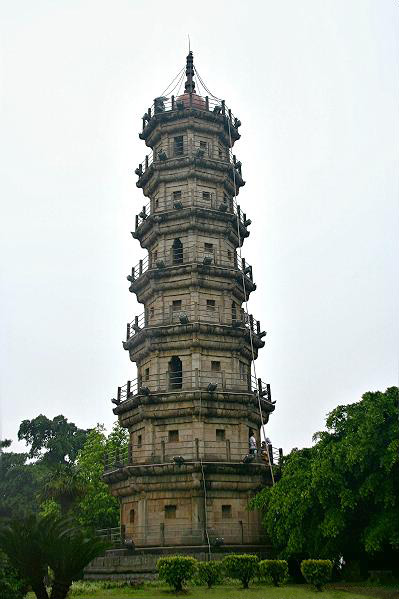
Start at Luoxing Tower, the stone pagoda that gave the anchorage its English name. The climb is short—seven flights of steep stone stairs—but the balcony wraps a full 360 degrees. From up there you trace the Min River bending toward the Taiwan Strait, the container terminals marching north, and the old French-built shipyard workshops roofed in red tile. Descend and follow the riverside promenade west. You pass the former British Consulate, now a low-key museum with a few faded photographs of tea clippers. The path ends at the Mawei Shipbuilding Culture Center, where a half-hull model of the Foochow sits beside rusted riveting tools. Allow two hours for the loop; the wind off the water keeps it cool even in high summer.
Eating Where the Dockworkers Eat
Mawei’s cuisine leans on the river and the strait. Breakfast means a bowl of bian rou yan—thin wheat wrappers stuffed with minced pork, swimming in a clear broth scented with dried shrimp and scallion. Lunchtime crowds gather at the open-air stalls behind the bus station for yu wan, fish balls pounded until they bounce, served with a ladle of vinegar-chili oil. Dinner is best at a family restaurant on Gongye Road: order steamed pomfret with fermented bean curd, stir-fried clams with basil, and a plate of cao zai guo, a sticky rice cake steamed in banana leaves. Don’t ask for a menu; point at what the next table is eating.
- Bian rou yan: pork-filled wheat wrappers, dried shrimp broth, scallion
- Yu wan: fresh mackerel or eel paste, sweet potato starch, ice water, vinegar-chili dip
- Steamed pomfret: whole fish, fermented red bean curd, ginger matchsticks, soy, hot oil finish
- Cao zai guo: glutinous rice flour, brown sugar, banana leaves, peanut powder
Mistakes That Waste a Day
First, assuming the ferry to Matsu runs on a fixed timetable year-round. Winter winds cancel half the sailings; call the terminal the night before. Second, treating the shipyard museum as a quick photo stop. The captions are Chinese-only, and the real context lives in the volunteer guides—usually retired engineers—who appear only if you linger near the model dock. Third, skipping the hill behind the pagoda. A narrow footpath climbs to a concrete platform where PLA soldiers once watched for Nationalist raids; the view stretches to the Matsu outline on a clear day. Finally, paying for a “tea culture experience” in a polished showroom. The authentic tea houses are back in Fuzhou’s Three Lanes and Seven Alleys; Mawei’s claim to tea is the warehouse where chests waited for the clipper ships, not the ceremony.
Seasonal Rhythms and Local Tempo
Visit in the ninth lunar month, when the northeast monsoon settles in. The air turns crisp, the river calms, and the Matsu ferry runs on schedule. You’ll see families burning paper money at the riverbank for the Hungry Ghost Festival, then sharing mooncakes on the promenade benches. Spring brings the Mazu pilgrimage: a palanquin borne from the Tianhou Temple through streets lined with firecrackers, the deity’s birthday celebrated with opera on a temporary bamboo stage. Summer is hot, humid, and thick with mosquitoes—locals retreat indoors after lunch. Winter is quiet, the best time to wander the empty shipyard halls and hear the river slap the seawall without another voice in earshot.