The minibus shudders to a halt on a hairpin bend somewhere between the prefecture seat and Dabu County. Through the open door comes the scent of damp bamboo and woodsmoke. An elderly woman in a blue floral headscarf hoists a woven basket onto the rack, nods at the driver, and settles beside me with a thermos of tea. No announcement, no digital display—just the rhythm of the road and the Hakka dialect rolling off tongues like river stones. This is how Meizhou reveals itself: not in a station concourse, but in the spaces between peaks.
Arriving Without a Script
Most travelers touch down at Meixian Airport, a tidy single-terminal field that handles a handful of domestic routes and a few cross-border hops. If your flight lands late, the airport taxi queue thins fast; a pre-booked ride through a hotel or a local contact saves a long wait. The alternative is Jieyang Chaoshan International, ninety minutes away by expressway—wider flight choice, but you trade time for convenience. High-speed rail now stitches Meizhou West to Guangzhou South in under three hours, and the station sits on the edge of the urban sprawl, a short ride from the old town. Whichever way you arrive, keep small bills handy. Drivers prefer cash, and the ticket machines at smaller bus stations often reject wrinkled notes.
Sleeping Inside a Tulou
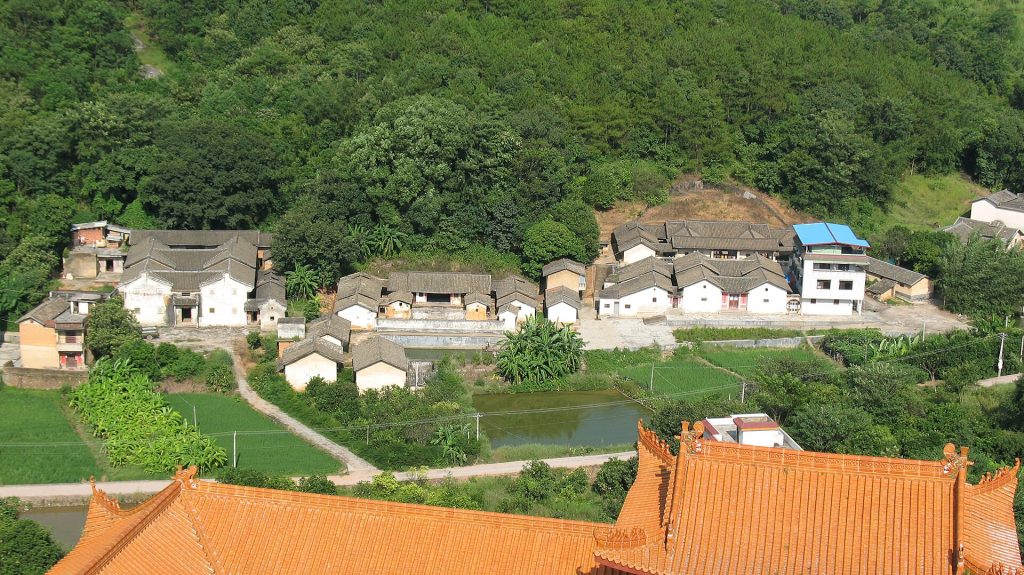
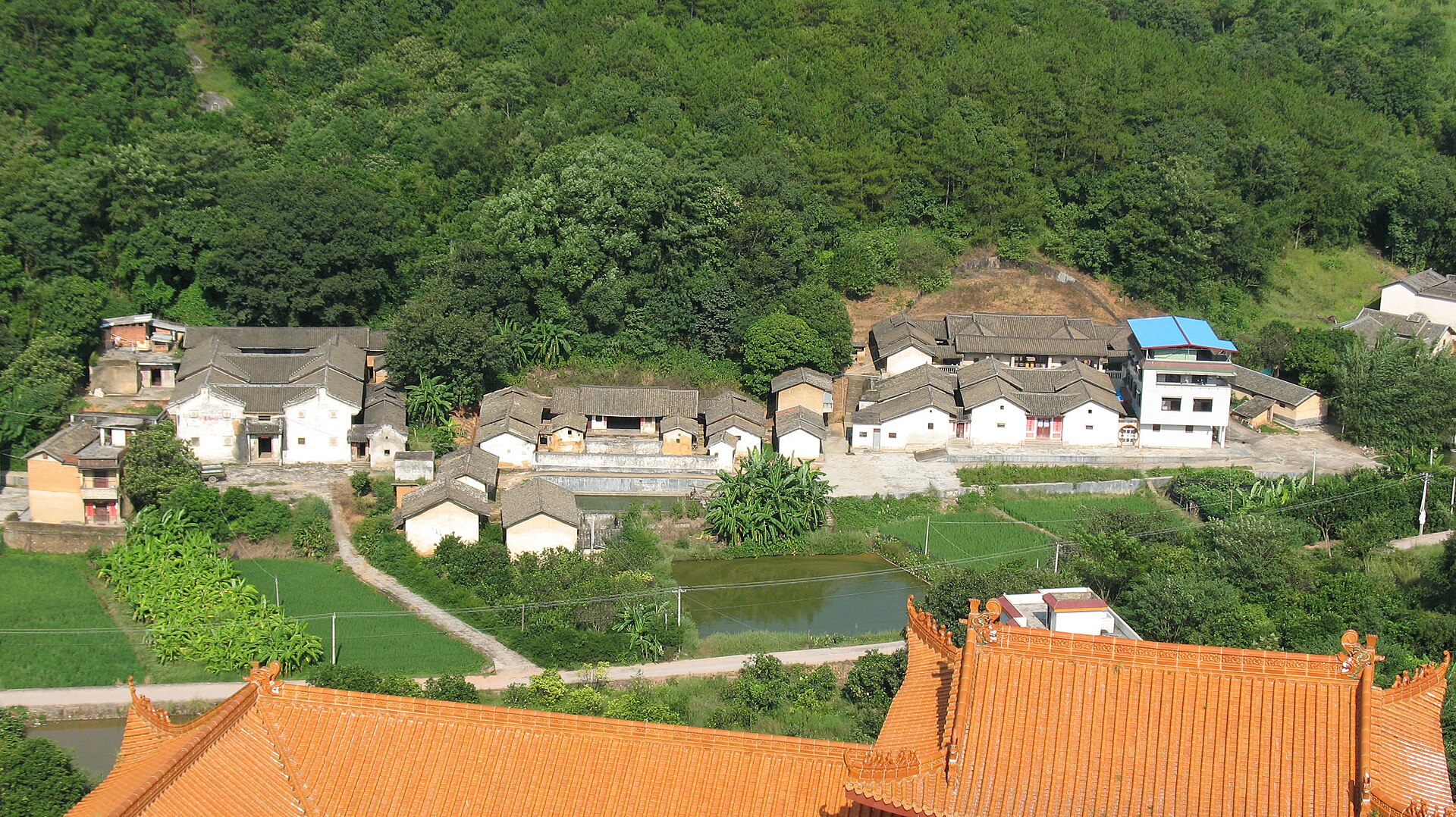
The iconic circular earthen buildings—tulou—are not museum pieces. Families still live in them, their daily routines unfolding behind rammed-earth walls three stories high. In villages like Chayang or the cluster around Fengshun, a handful of households rent out spare rooms. Expect a wooden bed, a shared courtyard where grandparents sort tea leaves, and a squat toilet at the end of the corridor. Hot water runs on a schedule; showers are best taken before the evening rush. Bring a plug adapter for the two-pin sockets and a flashlight for the stairwell after dark. The payoff comes at dawn: mist curling over the tiled roofs, the clack of mahjong tiles, and a bowl of hand-pulled noodles passed over a low wall by a neighbor who assumes you’re family.
Eating the Hakka Way
Meizhou cuisine is salt-forward, oil-generous, and built for labor. The signature dish, salt-baked chicken, arrives with skin the color of aged parchment, meat so tender it falls from the bone, and a perfume of star anise and coarse salt that lingers on fingertips. Preserved mustard greens (mei cai) braised with pork belly turn meltingly sweet, while stuffed tofu—deep-fried triangles cradling minced pork and mushroom—crackles when bitten. In a village kitchen you’ll see the same ingredients: free-range chicken, coarse sea salt, sand ginger, mei cai, firm tofu, pork shoulder, dried shiitake, garlic chives, and plenty of rendered lard.
- Salt-baked chicken: whole bird, rubbed inside and out with salt and sand ginger, wrapped in lotus leaf or parchment, buried in a wok of hot coarse salt for forty minutes.
- Mei cai kou rou: pork belly blanched, fried skin-side down until golden, layered with rinsed mei cai, steamed two hours, then inverted onto a plate.
- Stuffed tofu: tofu triangles hollowed, filled with pork, shiitake, garlic chive, soy sauce, white pepper; pan-fried, then braised in light stock.
- Thunder tea rice (lei cha): green tea, roasted peanuts, sesame, mint, basil, coriander, puffed rice pounded to a paste, poured over steamed rice with pickled radish, long beans, and tofu cubes.
In town, head to the alley behind the old West Gate where steam rises from stainless vats before noon. Order by pointing: one bowl of lei cha, a plate of fried intestine with garlic chives, a side of pickled radish. Locals eat fast, talk loud, and leave the bones on the table. Don’t ask for less oil or less salt—the kitchen won’t adjust, and the flavor depends on that balance. A common mistake is ordering a single dish for the table; Hakka meals are built around shared plates, each person taking a little of everything with their own rice bowl.
Walking the Tea Ridges
Yannanfei Tea Garden spreads across terraced slopes an hour’s drive northeast of the city. The paved path climbs through rows of Camellia sinensis, past stone pavilions where pickers rest during the spring flush. In the misty season—usually the third lunar month—the ridges disappear into cloud, and the air tastes of chlorophyll and wet stone. Wear shoes with grip; the stone steps turn slick. At the summit, a simple teahouse serves fresh brew in glass cups, no menu, no Wi-Fi. Sit long enough and an old farmer may offer a pinch of home-cured olive vegetable, salty and bitter, to chase the tea’s sweetness. If you visit during the autumn harvest, the drying racks behind the processing shed glow amber in the late sun—photographers linger, but the workers barely glance up.
Market Days and Mountain Temples
Every sixth day on the lunar calendar, the township of Dabu opens its periodic market along the riverbank. By mid-morning the lanes are packed: baskets of blood oranges, stacks of bamboo shoots, live eels writhing in blue tubs, bolts of indigo cloth, and stalls mending umbrellas with wire and tape. Vendors shout in Hakka, Cantonese, and Mandarin; prices are negotiated with a calculator passed back and forth. Try the steamed rice cakes topped with fermented bean curd—hot, sticky, pungent. Keep your bag zipped and your phone in a front pocket; the crowd moves as one organism.
Above the market, a steep stairway leads to the Thousand-Buddha Cliff, where niches carved in the Tang dynasty hold weathered statues. Incense curls from a brazier at the base; worshippers bow three times, touch their foreheads to the stone, and slip red envelopes into a donation box. There is no ticket booth, no guardrail—just the cliff, the river roar, and the sense that devotion here is measured in worn knee prints.
What Newcomers Get Wrong
First, assuming Mandarin works everywhere. In the villages, Hakka is the default; even younger locals switch to it at home. Learn a few phrases—“m̀-goi” for thank you, “sik fan mei” for have you eaten—and faces soften. Second, treating tulou as photo backdrops. Knock before entering a courtyard, ask before pointing a lens at elders, and never step on the threshold beam; it’s considered the family’s spine. Third, over-scheduling. The mountain roads eat time—landslides after rain, wedding processions blocking the single lane, a flat tire on a minibus with no spare. Build slack into every day. Fourth, skipping the morning wet market in Meijiang District because the hotel breakfast is easier. That market—live fish flopping on ice, mountains of bitter melon, the clatter of cleavers—is where the city’s pulse is loudest. Go hungry, watch the aunties test melons by tapping them like drums, and eat a bowl of beef brisket noodles from the stall with the longest queue.
Meizhou does not perform. It simply continues—tea bushes pushing through mist, tulou walls breathing with the seasons, a dialect that has survived migrations and revolutions. Show up with patience, an empty stomach, and a willingness to sit on a low stool beside strangers. The rest follows.