The bus from Wuzhou drops you at the station on National Highway 321 just as the morning mist lifts off the karst ridges. A vendor waves a steamer basket of rice noodles rolled with pickled mustard greens and chili oil; the broth smells of pork bone and star anise. Across the forecourt, a driver leans against a minivan painted with a cartoon monkey, shouting departures for the waterfall and the old town. You have a backpack, a paper map the ticket seller circled in red pen, and no fixed plan beyond the next ridge.
Arriving Without a Car
Mengshan sits in central Guangxi, administered by Wuzhou but closer in spirit to the limestone corridors that stretch toward Guilin. The county bus station is the only public gateway unless you hire a private driver. Buses run frequently from Wuzhou’s main terminal—about two hours on the expressway—and from Guilin, Liuzhou, Hezhou, Nanning, and even Guangzhou on overnight sleepers. Tickets are sold at the counter or through the WeChat mini-program of the Mengshan County Tourist Transportation Centre; the QR code is posted on the station wall beside the departure board.
If you arrive late, the station courtyard stays lit and the noodle stall operates until the last bus leaves. There is no train line, no airport shuttle, no ride-hailing pool that reliably covers the rural legs. Download an offline map before you board; mobile signal drops in the deeper valleys.
Moving Around the County Seat
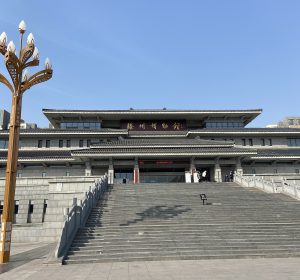
Mengshan Town fits inside a two-kilometer radius. The old Yongan street grid—narrow lanes, tiled eaves, a drum tower that still marks the hour—can be crossed on foot in twenty minutes. Urban buses all radiate from the bus station; route 1 loops past the county museum, the Confucian temple, and the riverfront park. Taxis are hatchbacks with green roofs; motorized pedicabs (three-wheeled, canvas-roofed) cluster near the market and charge a flat five yuan for any hop within the core. Agree on the price before you climb in; meters are rare.
- Bus station to museum: route 1, ten minutes, two yuan.
- Bus station to Confucian temple: walk north along Renmin Road, fifteen minutes.
- Pedicab from market to river park: five yuan, cash only.
Reaching the Rural Trails
The waterfalls, tea terraces, and minority villages sit outside the town loop. Special tourist buses depart from the Tourist Transportation Centre, a low building behind the main station with a blue sign in Chinese and Zhuang script. Buy tickets at the window inside; the staff will stamp your receipt with the return time. Buses leave when full—usually eight to twelve passengers—so expect a short wait in the low season. Destinations include:
- Longtan Waterfall: forty minutes, winding road through bamboo groves.
- Yao Village of Ping’an: fifty minutes, steep final climb; the bus stops at the village gate.
- Tea Mountain Scenic Area: thirty minutes, flat access to the viewing platform.
If you miss the last return bus, the village guesthouses will let you sleep on a straw mat for twenty yuan. Bring a headlamp; the mountain paths have no streetlights.
Hiking the Main Ridges
The signature walk links Longtan Waterfall to the Tea Mountain ridge. Start early, when the air is cool and the tour groups have not yet arrived. The trailhead is a stone arch behind the waterfall parking lot, marked with a faded red arrow. From there:
- Follow the concrete steps down to the plunge pool—slippery after rain, wear gripped shoes.
- Cross the footbridge, then turn left onto the dirt path that climbs through a stand of camellia oleifera.
- After thirty minutes the gradient eases; you reach a saddle with a stone pavilion and a vendor selling bamboo-tube water.
- Continue along the ridge line; the trail narrows to a single file of slate slabs. On clear days the view opens to the Wuzhou plains.
- Descend via the tea terrace stairs—narrow, uneven, bordered by waist-high bushes. The route ends at the Tea Mountain visitor center where the return bus waits.
Total distance is roughly eight kilometers, four to five hours at a relaxed pace. Carry two liters of water, a packet of salted peanuts, and a light rain shell. The limestone turns slick in minutes when clouds roll in.
What Locals Expect and Where Newcomers Slip
Village elders in Ping’an greet visitors with a bowl of fermented rice wine served in a horn cup. Sip once, then place the cup on the tray with both hands—refusing outright is considered rude. In the tea terraces, pickers work in silence; step aside and do not brush the leaves. The waterfall pool is a swimming spot for local children in summer; if you join, keep to the shallow edge and never dive—the bottom hides submerged rocks.
Common mistakes: assuming the tourist bus runs on a fixed timetable (it doesn’t), wearing sandals on the ridge descent (your toes will pay), and trying to pay the pedicab driver with a large bill (they rarely carry change). Also, the county museum closes for lunch from twelve to two; plan your town walk around that gap.
Seasonal Rhythms
Spring brings the tea harvest—terraces green as jade, the air scented with fresh leaf. Summer thunderstorms swell the waterfall to a roar; the trail can close after heavy rain. Autumn turns the camellia forest gold and the tourist flow thins. Winter is quiet, mist clinging to the peaks, and the Yao village hosts a fire festival around the tenth lunar month—drums, torches, and a communal feast of glutinous rice and smoked pork. If your dates flex, aim for the week after the Mid-Autumn Festival; the crowds have gone, the weather holds, and the tea bushes are flushed with a second growth.