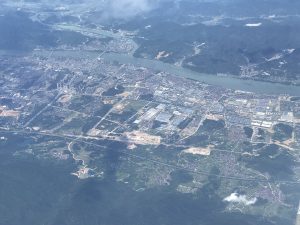
The minibus from Yulin rattles over the last rise of the Loess Plateau and the sprawl of Shenmu suddenly appears below, a grid of wide avenues and coal trucks kicking up ochre dust against a sky that seems bleached white by the sun. I stepped off at the Binhe Avenue bus station with a duffel bag and a paper map that the driver had circled in red pen, realizing the real navigation would happen on foot, following the smell of lamb fat and cumin drifting from the night market stalls.
Arriving Without a Hitch
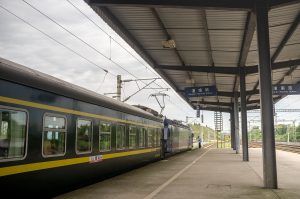
Most travelers fly into Yulin Yuyang Airport, about an hour’s drive south. From the arrivals hall, ignore the touts offering private cars; the official airport shuttle drops at Yulin’s main bus station where direct coaches to Shenmu leave every forty minutes. If you are coming by rail, you have a choice to make. Shenmu Station sits thirty kilometers northwest of town on the high-speed line linking Yulin, Yan’an, and Xi’an—clean, modern, and connected to the city by the number 5 bus. Shenmu North Station is closer, only three kilometers out, but it serves the slower Datong line and tickets must be bought at the window; the 12306 app will not show them. I learned that the hard way, stranded on the platform watching a train to Datong pull away while my phone displayed “no tickets available.” A shared minivan from the station forecourt costs a few yuan per seat and delivers you to the central crossroads in ten minutes.
Moving Through the City
Shenmu spreads along a north-south axis defined by Binhe Avenue and Yunchuan Avenue. The public bus network—routes 1 through 8—covers every major sight, but the stops are announced only in Mandarin and the schedules loosen after dusk. I found the electric scooters parked near the Bell Tower the most efficient way to chase the late afternoon light. Scan the QR code with Alipay, helmet optional but smart, and you can zip from the museum to the wetland park in fifteen minutes. Taxis cluster at the train stations and the Wanda Plaza; insist on the meter, though drivers often quote a flat rate for cross-town trips. If you rent a car, watch for the coal convoys on the S204 provincial road—they move slow, kick up gravel, and own the lane.
Erlangshan: The City’s Green Backbone
Erlangshan Scenic Area rises directly behind the central district, a pine-clad ridge crisscrossed with boardwalks and pavilions. Bus 4 terminates at the main gate, where a stone arch frames the first flight of stairs. The climb to the summit takes forty minutes at a steady pace; the path switches back through stands of Chinese red pine and juniper, the air thick with resin. At the top, a flat platform holds a weathered bronze bell and a view that stretches over the city’s rooftops to the Yellow River’s distant bend. Come at dawn in the ninth lunar month when the persimmons on the lower slopes turn the color of lanterns—locals hike up with thermoses of millet tea to watch the mist burn off. Weekends draw crowds doing calisthenics near the halfway pavilion; weekdays you might have the upper trails to yourself.
Hongjiannao Wetland: Inland Sea at Dusk
Forty kilometers southeast, Hongjiannao Lake sits like a sapphire in the desert steppe, the largest freshwater lake in Shaanxi. No direct bus runs here; hire a driver in the city for the day—around three hundred yuan round trip including wait time. The wetland park entrance opens at eight in the morning. Wooden boardwalks thread through reed beds where egrets stalk the shallows. In late autumn, thousands of swan geese and relict gulls stage here before heading south; their calls carry across the water long before you see them. The best spot is the observation tower at the lake’s western finger. Stay until the sun drops behind the dunes—the water catches the last gold, and the temperature plunges ten degrees in minutes. Bring a windproof jacket even in early summer; the lake makes its own weather.
Shimao Ruins: Walking the Neolithic Wall
Ten minutes north of the city center by taxi, the Shimao archaeological park protects a stone-walled city that predates the Terracotta Army by a millennium. The site museum displays jade blades, bone flutes, and the eerie “eye-beads” carved from turquoise, but the real impact comes outside. You can walk a restored section of the inner rampart—four meters thick, faced with fitted limestone blocks, no mortar. Archaeologists found human skulls buried beneath the foundation, a ritual to stabilize the walls. Stand on the gatehouse reconstruction at midday when the tour groups have left for lunch; the wind whistles through the crenellations and the Loess Plateau rolls out, empty as a drumhead. Signage is bilingual but thin on context; download a translation app and photograph the placards for later reading.
Eating Where the Miners Eat
Shenmu’s cuisine runs on lamb, millet, and chili oil. The night market behind the Wanda Plaza wakes at six in the evening. Follow the smoke to a stall where a cast-iron wok sears hand-pulled noodles with diced lamb, garlic shoots, and a ladle of rendered fat—the noodles should cling together, slightly charred at the edges, the broth milky from bone stock. Order a side of liangfen, cold mung bean jelly cut into ribbons and doused in vinegar, chili, and crushed peanuts. For breakfast, hunt down a hole-in-the-wall serving youcha, tea soup whisked with roasted millet flour, sesame, and walnut chunks; sip it from a porcelain bowl while squatting on a plastic stool. Avoid the “tourist set menus” advertised near Erlangshan’s gate—they reheat frozen dumplings and charge double.
Sleeping and Seasonal Rhythms
Chain hotels cluster around the high-speed rail station and the Binhe Avenue commercial strip; a standard business room with reliable hot water runs two to three hundred yuan. For quiet, book a courtyard guesthouse in the old lanes north of the Bell Tower—wooden lattice windows, a shared kitchen, and a landlord who will wake you with fresh steamed buns. Spring brings sandstorms that coat everything in grit; keep a scarf over your mouth and nose. Summer is dry heat, thirty-five degrees by noon, but nights cool fast. The autumn harvest festival in the eighth lunar month fills the streets with yangko dancers and stalls selling roasted chestnuts. Winter drops below minus fifteen; the lake freezes solid enough for trucks to cross, and the city runs on mutton hotpot eaten around brass chimneys. Check the lunar calendar before you book—major holidays swell the trains and triple the room rates.
Mistakes That Cost Time
First, assuming Shenmu North and Shenmu stations are interchangeable—they serve different lines and are forty kilometers apart. Second, relying on the 12306 app for North Station tickets; buy at the window or ask your hotel to send a runner. Third, skipping the wetland because “it’s just a lake”—the bird migration in the ninth and tenth lunar months is a spectacle that rivals coastal reserves. Fourth, eating only at the hotel buffet; the best lamb noodles come from a steamy stall with plastic stools and no English menu. Fifth, wearing city sneakers on Erlangshan’s stone steps; the moss-slick granite has sent more than one traveler to the clinic for stitches. Pack trail shoes, a power bank for the long bus rides, and patience for the dust. The city rewards the pace you give it.