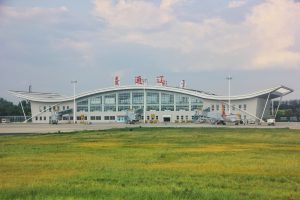
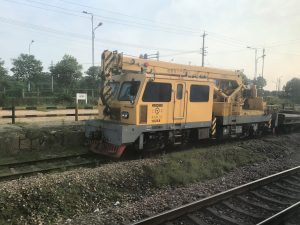
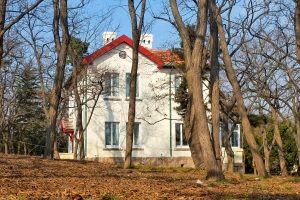
The bus from Ürümqi pulls into Shihezi’s station just as the sun drops behind the Tianshan peaks, painting the desert flats in a bruised purple. Steam rises from a vendor’s lamb kebabs on the forecourt, and the air smells of cumin, dust, and the faint, sweet rot of overripe melons. A row of poplars lines the avenue outside, their leaves trembling in the evening breeze — proof that someone once decided a forest could grow in the Junggar Basin, and then made it happen.
Getting There
The high‑speed train from Ürümqi South slices the journey to a shade over two hours. Hard‑seat tickets cost roughly twenty‑four yuan; the slower conventional service takes three hours for half the price but runs only a handful of times a day. Buses still roll out of the north station every twenty minutes from early morning until late evening, priced between thirty and thirty‑six yuan depending on legroom. Traffic on the G30 can add thirty minutes in peak season, so the train is the safer bet if you have a tight connection.
- High‑speed train: ~2 hrs, ¥24 hard seat
- Conventional train: ~3 hrs, ¥12 hard seat, few departures
- Long‑distance bus: 2.5–3 hrs, ¥30–36, frequent departures
Moving Around Town
City buses are a flat one yuan per ride, numbered routes fanning out from People’s Square. A taxi flag‑fall starts at five yuan; most cross‑town trips stay under ten. The grid is wide and flat — walking is pleasant from late spring through early autumn, but winter wind chills can hold at minus twenty, turning a ten‑minute stroll into a test of will. Shared e‑bikes cluster near the university gates; unlock with a phone scan and drop them anywhere inside the ring road.
- Bus: ¥1 flat fare, covers main arteries
- Taxi: ¥5 start, ¥10 typical cross‑town
- E‑bike share: scan QR, park inside ring road
- Walking: comfortable April–October; brutal in deep winter
What to See
People’s Square at dusk is the city’s living room. Retirees fly kites shaped like hawks, couples pose under strings of red lanterns, and the Tianshan ridge — sixteen thousand feet at its highest — looms like a dark wall behind the fountain. Ten minutes north by taxi sits Mushroom Lake, a reedy reservoir ringed by willows. In summer, lotus blossoms cover the surface; in winter the ice is thick enough for locals to drive sedans across, though I wouldn’t recommend it. The Shihezi Museum, tucked behind the government compound, holds a quiet exhibit on the 1954 reclamation corps — black‑and‑white photos of soldiers planting the first poplars with shovels made from tank parts.
- People’s Square: evening kite‑flying, mountain backdrop
- Mushroom Lake: lotus in summer, ice‑walking in winter
- Shihezi Museum: reclamation corps artifacts, free entry
What to Do
Shihezi University’s campus feels more like a park than a school — wide lawns, ginkgo alleys, and a lake where students paddle swan boats in June. The medical college on the east side draws English‑major volunteers who staff a weekly “English Corner” under the gingko trees every Friday at four. Show up with a thermos of milk tea; they’ll trade vocabulary for stories about your hometown. If your visit falls in the grape‑harvest moon (usually the eighth lunar month), the surrounding farms open their vineyards for picking — bring a basket, pay by weight, and eat until your fingers stain purple.
- English Corner: Fridays 16:00, gingko grove near med‑school gate
- Campus lake: swan‑boat rental ¥20/half‑hour
- Vineyard picking: eighth lunar month, pay by jin
Where to Sleep
The university guesthouse on Xueyuan Road is the town’s best‑kept secret. Rooms are simple — twin beds, private bath, reliable hot water — and cost roughly one hundred fifty yuan a night. The front desk speaks enough English to sort a wake‑up call, and breakfast includes hand‑pulled noodles with chili oil. If the guesthouse is full, the Jinjiang Inn near the train station offers standard business‑hotel reliability for a few yuan more. Avoid the unnamed “express hotels” clustered around the bus station; thin walls and shared bathrooms are the norm there.
- University Guesthouse: ~¥150, quiet, campus access
- Jinjiang Inn (Station): ~¥180, predictable standards
- Budget express hotels: cheap but noisy, shared facilities
Eating and Drinking
Shihezi’s claim to culinary fame is the watermelon. In the heat of the seventh lunar month, whole trucks unload oblong, dark‑green globes at every intersection. A ripe one cracks with a sharp *pop* when you press your thumb into the rind; the flesh is crimson, crisp, and so sweet it hurts the teeth. Buy half a melon from a roadside stack, eat it squatting on the curb, and let the juice run down your wrists. For a sit‑down meal, follow the lunch crowd to the Muslim quarter behind the south gate — hand‑ripped laghman noodles in beef broth, cumin‑dusted lamb ribs, and bowls of cold liangpi tossed with garlic vinegar and chili oil. Wash it down with a bottle of ice‑cold Xinjiang Black Beer, bitter and malty, served in a thick glass that sweats in the desert air.
- Watermelon: seventh lunar month, roadside stacks, pick heavy fruit with yellow field spot
- Laghman: hand‑pulled, beef broth, chili oil on side
- Lamb ribs: cumin, chili flakes, eat with fingers
- Liangpi: cold wheat starch ribbons, garlic vinegar, chili oil
- Xinjiang Black Beer: 500 ml bottle, serve freezing
Beginner Mistakes
First‑timers often book a hotel in Ürümqi and try to day‑trip Shihezi — three hours each way on the bus eats the whole afternoon. Stay overnight; the city reveals itself after dark. Another error: skipping the university because “it’s just a campus.” The English Corner and the ginkgo alleys are where real conversations happen. Don’t assume every taxi driver knows Mushroom Lake; show a screenshot of the Chinese name (蘑菇湖) on your phone. And never, ever refuse a slice of watermelon offered by a stranger — it’s the local handshake.
- Day‑tripping from Ürümqi: loses evening atmosphere
- Ignoring campus: misses English Corner and best walking paths
- No Chinese destination text for drivers
- Declining shared watermelon: breaks social ritual