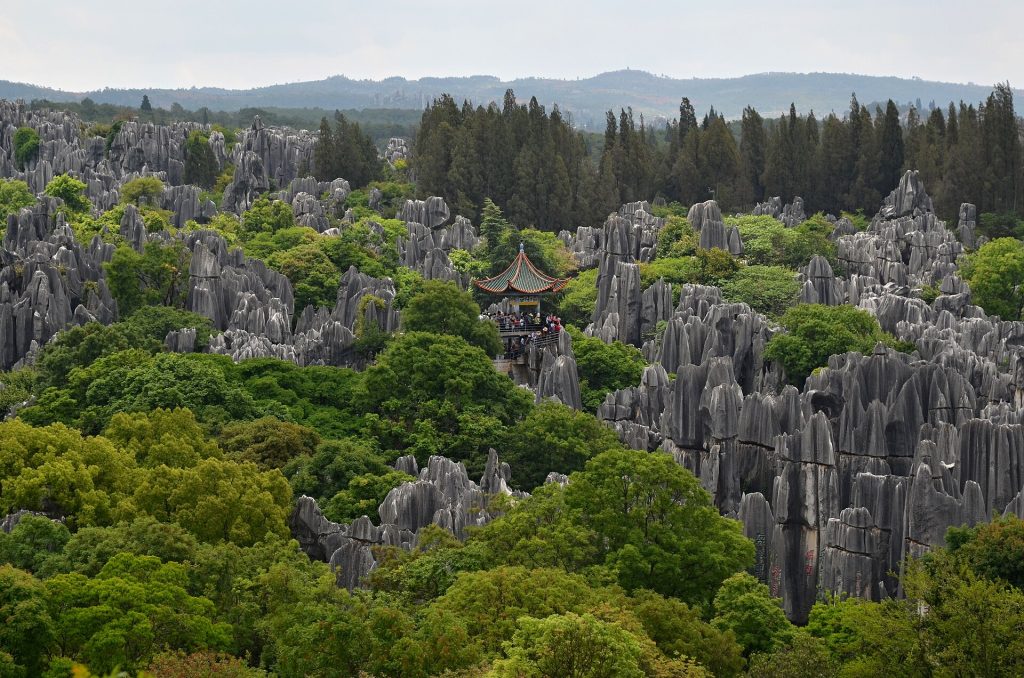
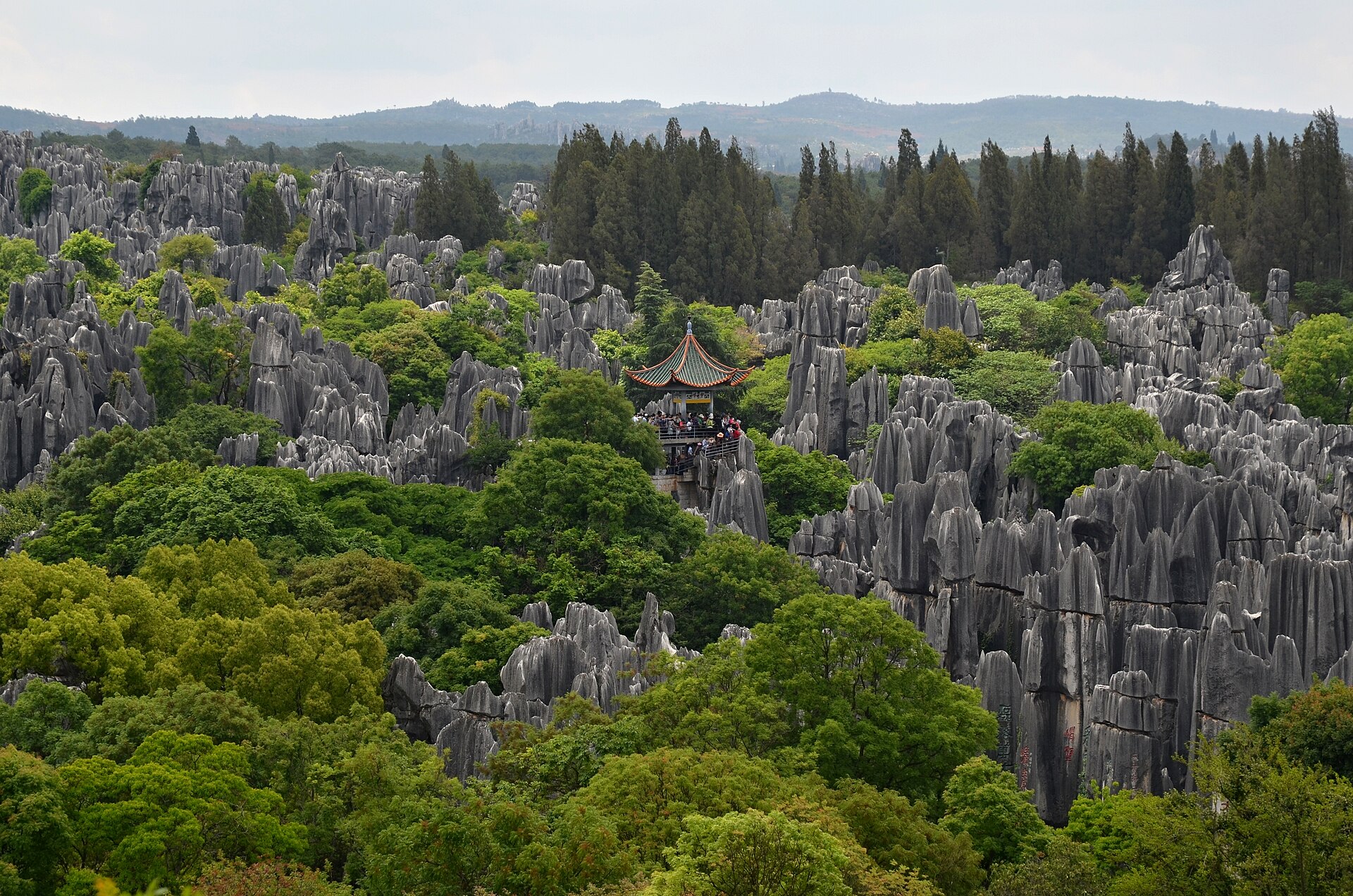
The minibus from Kunming Changshui Airport shuddered over a pothole, spilling cold tea from my paper cup onto my jeans. Outside the window, the neat rows of tobacco fields and plastic greenhouses gave way to gray limestone outcrops pushing through red soil like broken teeth. An hour and a half after leaving the terminal, the driver killed the engine in a dusty lot beside a row of snack stalls selling grilled sausage on skewers. A faded sign read “Scenic Area Bus Station.” I shouldered my pack and walked five minutes down a pedestrian lane to the ticket windows, the sound of tour guides shouting into megaphones growing louder with every step.
When to Go
The stone forest is at its quietest in the weeks after the Lunar New Year, when the mist still clings to the peaks and the summer tour groups have not yet arrived. By the time the rapeseed flowers turn the surrounding hills electric yellow in the third lunar month, the main loop is a conveyor belt of selfie sticks. The rainy season arrives in the sixth lunar month, slickening the stone stairs and hiding the views behind a low ceiling of cloud. If you can, aim for a weekday in late autumn. The air is dry, the light sharp, and you can hear the wind whistle through the fissures instead of a loudspeaker explaining the legend of Ashima.
Getting There
From Kunming, the airport minibus is the least hassle if you are landing and heading straight out. Look for the “Long-Distance Passenger Bus Station” sign after you exit the arrivals hall—turn right, walk fifty meters, and you will see the ticket window tucked beside a convenience store. Buses leave when full, roughly every ninety minutes. The ride costs around forty-five yuan and drops you at the scenic area lot, not the county bus station in Shilin town. That distinction matters: the town station leaves you a thirty-minute taxi ride from the park gate.
If you are starting from downtown Kunming, head to the East Bus Station (东部客运站) near the Third Ring Road. Coaches for the scenic area depart from the main hall; buy a ticket at the counter marked “Shilin Scenic Area” to avoid the town stop. The journey takes ninety minutes on the expressway. Drivers rarely speak English, so have the characters 石林风景区 written on your phone. A shared ride-hailing car from the city center splits four ways for roughly the same price per person and saves forty minutes, but you will need a Chinese phone number to book it.
Tickets and Entry
The ticket office sits behind a low stone wall at the end of the pedestrian lane. One price covers the entire park, including the shuttle bus that runs between the major zones. Keep the paper stub; conductors check it every time you board the electric carts. There is no separate fee for the Naigu Stone Forest or the Long Lake area, but the cable car up to the Lion Pavilion costs extra. Buy the shuttle pass even if you plan to hike—the distances between zones are deceptive on the map, and the midday sun on bare rock is brutal.
Navigating the Park
The main loop—Major Stone Forest, Minor Stone Forest, and the Sword Peak Pond—takes three hours at a slow pace with photo stops. Start at the north gate and walk counterclockwise; you hit the iconic “Stone Forest” inscription rock before the tour groups arriving from the south gate. The paths are paved but uneven, with stone steps worn smooth by millions of shoes. Wear shoes with grip. I watched a woman in wedges slide sideways on a mossy stair and bruise her hip.
Beyond the main loop, the Naigu Stone Forest (乃古石林) sits ten kilometers northeast. Fewer visitors make it out there. The formations are darker, sharper, and the trails are dirt, not concrete. Rent a bicycle at the Naigu entrance if your legs are tired; the loop is flat and takes forty minutes. Long Lake (长湖) is a quiet spot for lunch—bring sandwiches, because the only food nearby is instant noodles from a thermos at a ranger station.
Food and Rest Stops
- Inside the main gate: a cafeteria serving rice plates—braised pork belly, stir-fried wild mint, steamed egg with fungus. Portions are small; order two dishes if you are hungry.
- Vendors along the main loop sell roasted corn on the cob, vacuum-packed spicy tofu strips, and plastic bottles of warm yogurt drink. Prices are double what you pay in Kunming.
There are squat toilets at every shuttle stop and near the major viewpoints. Toilet paper is not provided. Carry a packet of tissues and a small bottle of hand sanitizer. Benches are scarce; most visitors perch on flat boulders. If you need a proper seat, the visitor center at the north gate has a air-conditioned lobby with chairs and free hot water from a dispenser.
Common Mistakes
- Arriving at ten in the morning on a weekend. The ticket line stretches two hundred meters. Be at the gate when it opens, usually around eight.
- Following the painted arrows blindly. They lead to the most crowded viewpoints. Step onto the unmarked side paths—red ribbons tied to branches mark the quieter routes locals use.
- Skipping the shuttle to save money. The walk from the Minor Stone Forest to the Naigu entrance is two hours on a dusty service road with no shade.
- Expecting English signage. Map boards use Chinese and Yi script only. Download an offline map with GPS coordinates for the major formations before you leave Kunming.
- Wearing a dress or short shorts. The stone is abrasive; you will scrape knees and elbows squeezing through the “Threading the Needle” crevice.
I left the park through the north gate as the last shuttle rattled past, the driver honking at a stray dog. The light had turned the limestone a warm amber, and the crowds were gone. A Yi woman in a pleated skirt and embroidered headscarf sat on a rock, stitching a shoe sole. She didn’t look up when I passed. That silence—just wind and the tap of a needle—was the thing I came for.