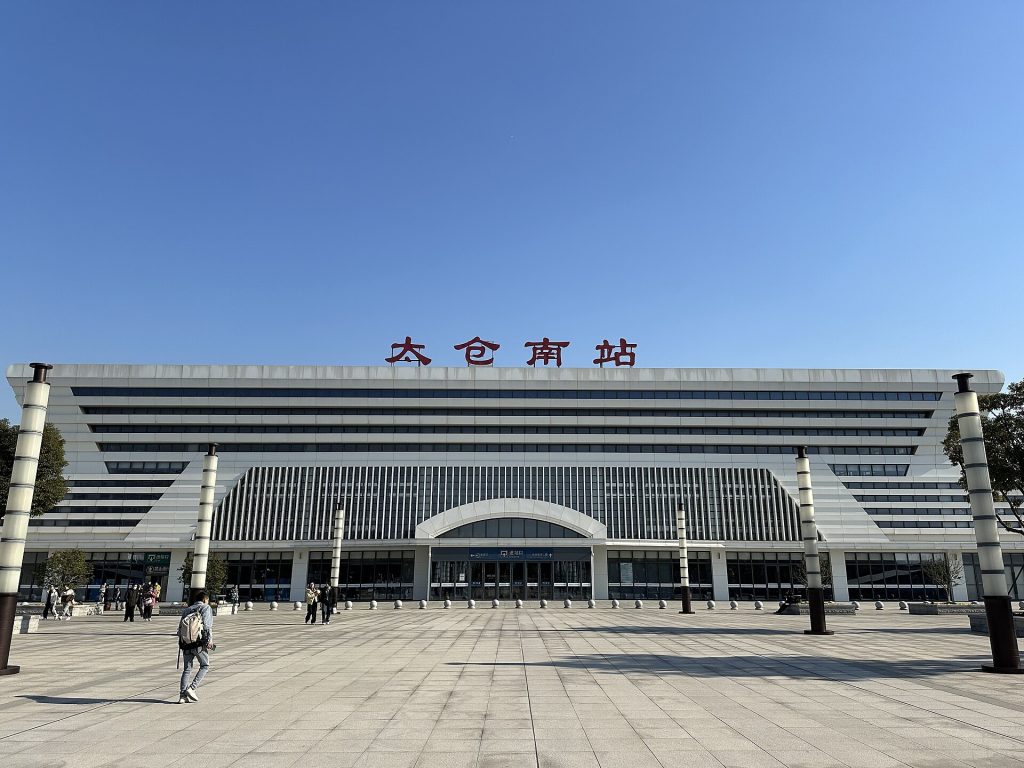
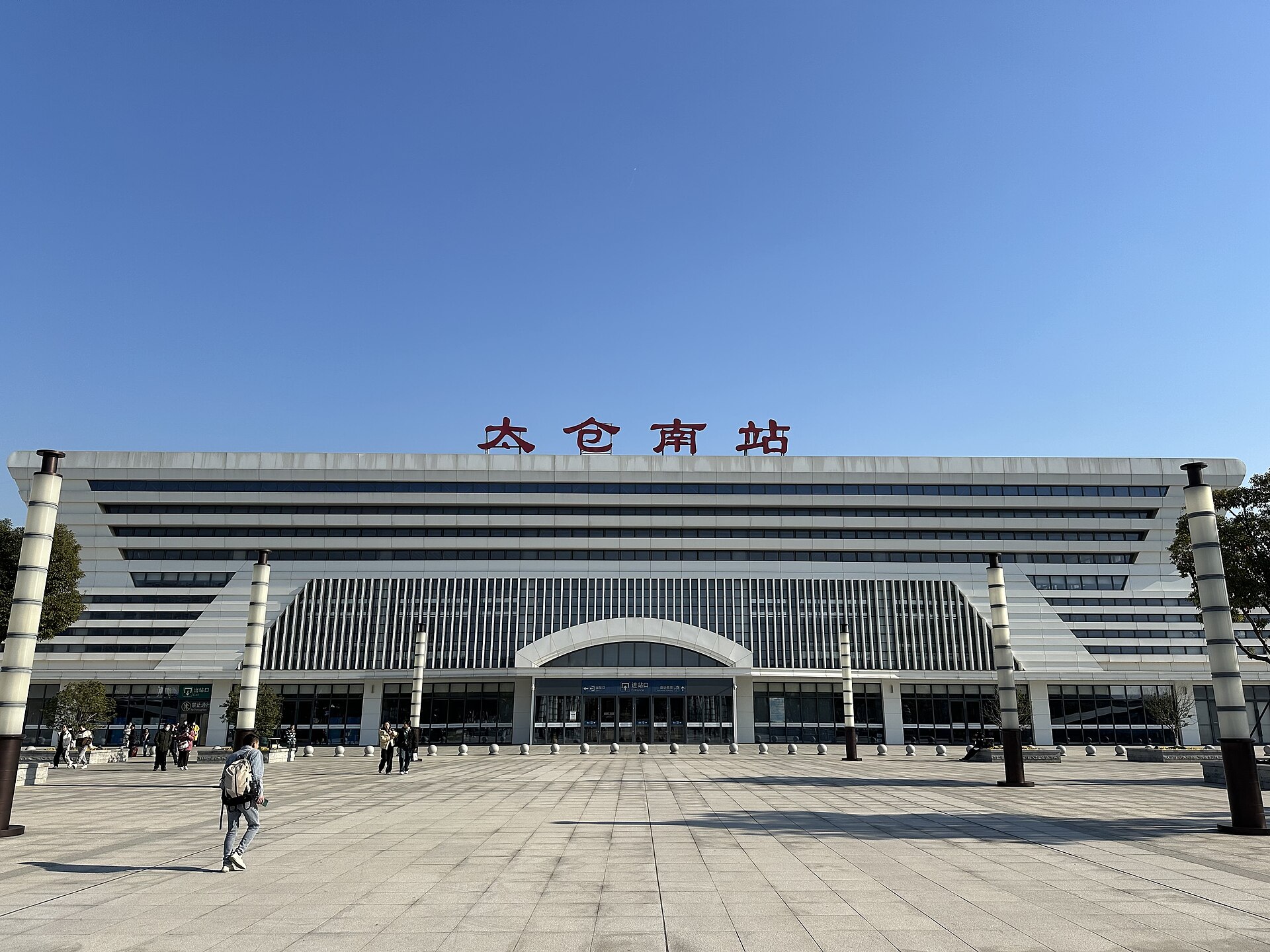
The high-speed train from Hongqiao slides past endless vegetable greenhouses and low factory roofs, then suddenly the Yangtze widens to a silver band on the left. Twenty-eight minutes after leaving Shanghai, the announcement chimes for Taicang. I step onto the platform of the new station, where a row of shared bikes waits under a canopy of solar panels, and the air already smells of river mud and fried dough.
Getting There Without a Headache
Most visitors arrive from Shanghai. The fastest route is the G-series train from Hongqiao Railway Station — about half an hour, departures every twenty minutes or so. Buy the ticket on the 12306 app or at the machine with your passport; no need to collect a paper slip, just tap your ID at the gate. If you land at Pudong Airport, take the maglev to Longyang Road, switch to Metro Line 2 to Hongqiao, then follow the signs upstairs to the railway concourse. Allow ninety minutes door-to-door.
Driving is an option if you want to chase the riverbank roads later. The G15 Shenhai Expressway cuts straight across the city. Weekend traffic can back up near the Yangtze Bridge toll plaza, so leave Shanghai before 8 a.m. or after 10 a.m. Parking at the major sights is free but fills by mid-morning on holidays.
Where to Drop Your Bag
The city center clusters around Renmin Road and the old canal. I stayed in a family-run guesthouse above a noodle shop on Nanshi Street — two beds, a window onto the water, and a landlady who slips a bowl of hand-pulled noodles onto the table at 6 a.m. without asking. Chain hotels like Jinjiang Inn and Atour sit near the high-speed station; they are reliable, have English-speaking front desks, and cost roughly 250 to 400 yuan a night in autumn. Book a week ahead during the Mid-Autumn festival or the May holiday.
One Day on Foot: Canal, Temple, River
Start at the Zheng He Memorial Park just after opening. The stone statue of the admiral faces the water, his fleet etched in relief behind him. Walk the causeway to the replica treasure ship — climb the ladder to the quarterdeck and you can see the Yangtze shipping lane stretching to the horizon. Allow an hour.
Head south along the pedestrianized canal towpath. Elderly men practice tai chi under the plane trees; a woman sells steamed buns from a bamboo steamer balanced on her bike. Turn left at the stone bridge with the lion heads and you reach the Loudong Painting Academy courtyard. The exhibition rotates, but the garden — rockery, lotus pond, a single ginkgo — stays the same. Sit on the stone bench and listen to a volunteer play a snippet of Jiangnan Sizhu on a pipa.
Lunch at the alley behind the academy: a stall doing “white water fish” — river perch poached in ginger-scallion broth, served with a dish of black vinegar and julienned ginger. Order a side of stir-fried river shrimp, shells soft enough to crunch. Wash it down with a bottle of local yellow wine, served warm in a tin cup.
Afternoon: cross the river by the sightseeing ferry (ten yuan, runs every twenty minutes). The north bank is quieter — wetlands, a boardwalk, and the Cowherd-Weaver Girl sculpture park where couples attach red ribbons to the railings. Rent an electric scooter at the dock and ride the dike road toward the port. The wind off the water cuts the humidity. Return before dusk; the last ferry leaves around 5:30 p.m. in the cooler season.
Eating Your Way Through the Night Market
When the lanterns flicker on along Nanshi Food Street, the crowd shifts from tourists to factory workers and students. Follow the smoke.
- Steamed pork buns (shengjian) — bottom crust blackened on the griddle, skin pleated at the top, juice hot enough to scald. Eat in three bites: nibble a corner, sip the soup, then the rest.
- Stinky tofu — fermented blocks deep-fried until the crust shatters, doused in chili oil and cilantro. The smell hits you ten meters away; the taste is creamy, salty, slightly sweet.
- Glutinous rice balls in fermented rice soup — tiny white spheres floating in a milky, faintly alcoholic broth. A winter comfort dish, but served year-round here.
- Grilled oysters — shucked on the half-shell, brushed with garlic-soy butter, charred over charcoal. Squeeze the lime wedge provided.
Order by pointing; vendors rarely speak English. Pay with WeChat or Alipay — scan the QR code on the cart. A full crawl costs under fifty yuan. The lane clears by 10 p.m.; the last carts pack up when the chengguan patrol passes.
Mistakes That Waste Time
- Assuming the old station near the city center still runs passenger trains. It doesn’t — all high-speed services use the new Taicang Station on the eastern edge. Check the station name on your ticket.
- Trying to hail a taxi on the street after 9 p.m. Drivers switch to app-only orders. Install Didi or ask your guesthouse to call one.
- Skipping the ferry because “the view is the same from the bridge.” The bridge is a highway; the ferry puts you at water level with the cargo ships and the gulls.
- Expecting English menus outside the two big hotels. Learn the characters for beef (牛肉), pork (猪肉), vegetarian (素), and spicy (辣). A photo of the dish on your phone works better than translation apps.
- Planning a Monday museum visit. The Zheng He Memorial and the Painting Academy both close for maintenance on Mondays (except public holidays).
If You Have a Second Day
Rent a car or hire a driver for the coastal loop. Drive the S336 along the Yangtze estuary to the Wetland Park — boardwalks through reed beds, a bird hide where you can spot egrets and, in the migration season, spoonbills. Continue to the fishing village of Shuangfeng for a lunch of steamed hairy crab (autumn only) and drunken shrimp. The road loops back via the old salt-field dikes, now solar farms. Sunset at the wind-turbine ridge gives you the whole river mouth in one frame — Shanghai’s skyline a grey smudge on the far bank.
Return the car, grab a final bowl of wonton soup at the station plaza, and ride the train back to Hongqiao as the city lights blink on. The whole loop fits in a weekend, but the rhythm of the canal and the river stays longer.