The night boat slides under a stone arch, lanterns painting the canal water in shades of amber and crimson. On the bank, an old woman folds jianbing on a blackened griddle, the scent of scallion and fermented bean paste rising through the damp air. A group of university students laughs over shared plates of braised chicken, their voices bouncing off whitewashed walls. This is Taierzhuang after dusk — not a museum, but a living neighborhood where the Grand Canal still sets the rhythm of daily life.
Getting There and First Steps
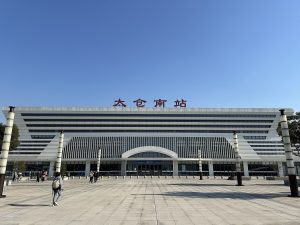
Most travelers arrive via Zaozhuang Station on the high-speed line between Beijing and Shanghai. From the station forecourt, the direct bus to the ancient town runs every twenty minutes and takes about forty minutes; a taxi cuts that to twenty-five if traffic allows. If you are coming from Jinan or Xuzhou, the slower conventional trains stop at Taierzhuang Station itself, a ten-minute walk from the north gate. During the spring festival season, book the bus seat a day ahead — the queue snakes around the block by midmorning.
Enter through the west gate if you want the classic canal view first; the east gate drops you closer to the battle memorial and the quieter residential lanes. Tickets are sold as a single pass covering all eight scenic zones. Keep the paper stub — guards at each internal checkpoint will ask to see it. Wear flat shoes with grip. The flagstones are polished smooth by centuries of foot traffic and turn treacherous after rain.
Where to Sleep: Canal-Side Courtyards vs. Modern Convenience
The most atmospheric beds are inside the restored Ming-Qing courtyards that line the main waterway. Families have converted side wings into guest rooms with kang platforms heated by charcoal in winter. Expect shared bathrooms in the cheaper rooms; the upmarket courtyards have en-suite facilities hidden behind carved screens. Book directly through the host’s WeChat — they will send a video of the actual room so you know exactly which window faces the canal.
If you prefer a private bathroom and reliable hot water without negotiation, the cluster of boutique hotels just outside the south gate offers modern rooms at a third of the courtyard price. They run shuttle golf carts to the ticket gates every half hour. Light sleepers should avoid rooms facing the night-market alley; the skewer vendors grill until two in the morning.
Walking the Eight Zones: A Practical Route
Start at the west gate at opening hour. The canal-front promenade leads straight to the Ancient Dock, where you can board the twenty-minute electric boat loop — do this first, before the tour groups clog the railings. Disembark at the Hui-style quarter and wander the narrow lanes where merchants still sell hand-stitched insoles and copper tea caddies. The architecture shifts block by block: northern quadrangle courtyards with high gray brick walls, then a sudden stretch of Minnan swallow-tail ridges, then a European consulate row with wrought-iron balconies shipped from Tianjin a century ago.
Midday heat drives crowds into the Taierzhuang Battle Memorial Hall. The exhibits are heavy on artifacts — rusted rifles, handwritten letters, a reconstructed trench — and light on English labels. Hire the audio guide at the entrance desk; the narrator’s grandfather fought here, and his commentary adds context no plaque provides. Allow ninety minutes. Exit through the back courtyard where a veteran volunteer sometimes demonstrates bayonet drills for school groups.
Late afternoon belongs to the southern Shandong folk-house zone. Artisans operate open workshops: a woodcarver shaping opera masks, a paper-cutter snipping zodiac animals, a distiller firing small batches of baijiu in clay pots. You can try your hand at the paper-cutting station for a small fee — the master will correct your grip without a word, tapping your wrist until the scissors follow the grain.
Eating Like a Local: What Hits the Table
Taierzhuang cuisine sits at the crossroads of Shandong saltiness and Jiangsu sweetness. The signature dish is spicy chicken stewed with wide hand-pulled noodles — tender meat falling off the bone, broth thickened with cassia bark and star anise, noodles chewy enough to survive the boil. Order it at any riverside canteen; the best ones have a queue of delivery riders at noon.
- Spicy chicken stew (辣子鸡炖面): bone-in thigh pieces, dried chili, Sichuan pepper, cassia, star anise, hand-pulled noodles, scallion.
- Canal carp braised in brown sauce (红烧运河鲤): whole fish scored deep, soy, rock sugar, ginger, shaoxing wine, finished with hot oil splash.
- Vegetable pancake rolls (菜煎饼卷大葱): thin wheat crepe, fermented bean paste, cilantro, raw scallion stalk, folded and eaten like a taco.
- Lotus root starch pudding (藕粉): hot water stirred into fine powder until translucent, topped with osmanthus syrup and crushed peanuts.
For a home-style attempt at the chicken stew, brown the bone-in pieces in cold oil with a spoonful of rock sugar until the sugar caramelizes. Add water to cover, then the aromatics — cassia, star anise, bay leaf, dried chili, Sichuan pepper. Simmer forty minutes. Drop fresh noodles in the last three minutes. Finish with a handful of chopped scallion and a drizzle of sesame oil. The broth should cling to the spoon.
Restaurants inside the scenic area add a tourist surcharge. Walk five minutes beyond the east gate to the alley behind the bus station — the same dishes cost half as much and the portions are larger. Avoid the “imperial feast” set menus; they are reheated banquet leftovers plated for photos.
Culture, People, and the Mistakes Newcomers Make
Locals treat the ancient town as their backyard. Morning tai chi groups occupy the plaza beside the memorial hall; grannies wash vegetables in the canal steps where their mothers did. If you point a camera at a face without asking, someone will gently lower your hand. Ask first — most will nod and adjust their collar. During the autumn harvest festival, families float lotus lanterns downstream at dusk. You can buy a lantern from the vendor at the north bridge, but write your wish on the paper before lighting the candle; the vendor will not do it for you.
Common missteps: trying to “do it all” in four hours — the town rewards slowness. Skipping the boat ride because the line looks long — the electric boats run on a loop, so wait ten minutes and the next batch arrives half-empty. Wearing heels on the stone bridges — I saw a sprained ankle every afternoon last autumn. Buying “antique” coins from the street peddlers — they are cast from molds sold in Yiwu markets. And assuming English works everywhere; the ticket staff know numbers and gate names, but for directions, carry a screenshot of the Chinese characters for your destination.
Stay past the last tour bus. When the day-trippers vanish, the lanterns switch to a softer glow, the canal reflects the eaves without a ripple, and the old woman at the griddle hands you a still-warm jianbing wrapped in newspaper. That moment — steam rising, crickets starting, the Grand Canal sliding silently toward the Huai — is why you came.