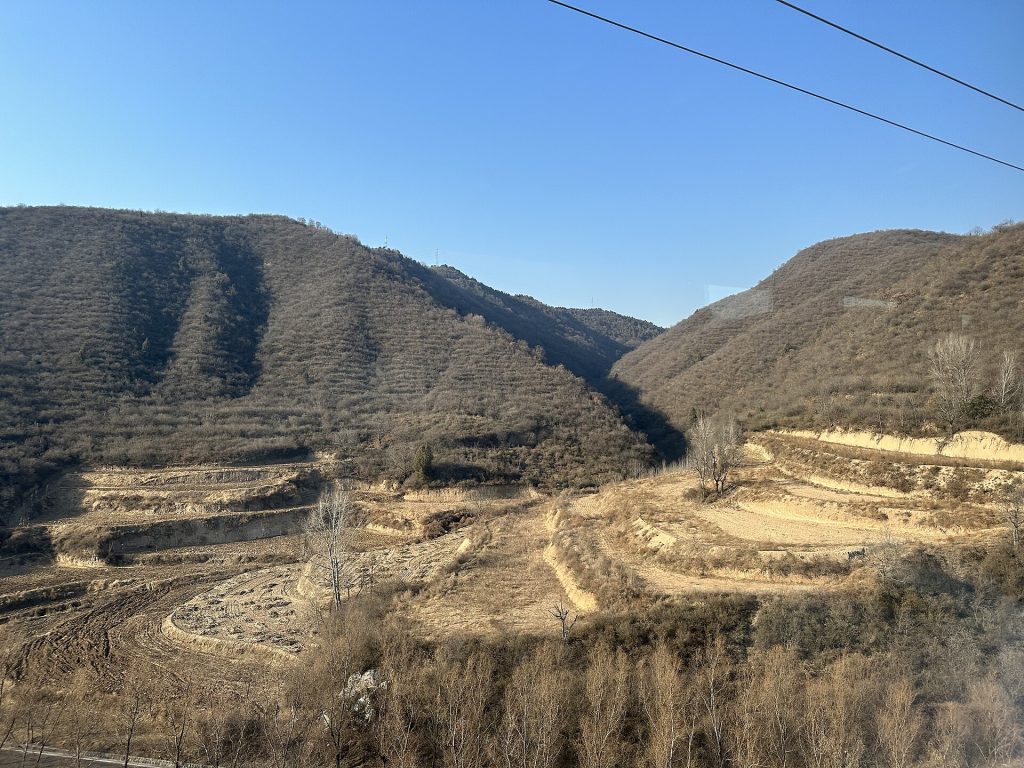
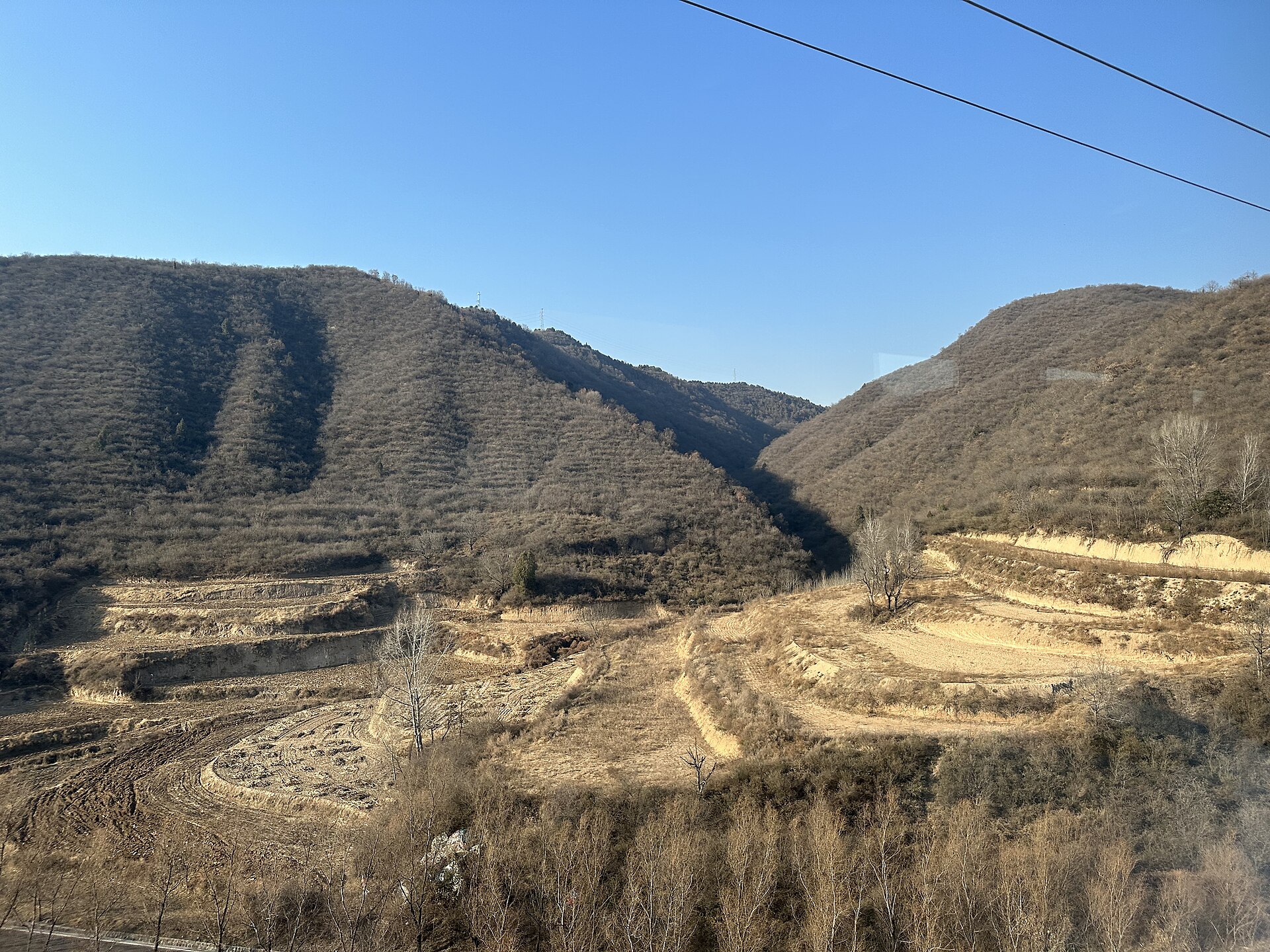
The minibus rattles over a cattle guard and the air thins, scented with pine resin and dry loess. Ahead, the tiled ridges of Yuhua Palace poke through a stand of ancient cypress, their eaves curled like old scrolls. To the left, the Yaowang Mountain stairway disappears into mist, each step worn smooth by centuries of pilgrims searching for the Medicine King’s blessing. This is Tongchuan: a hinge between the Guanzhong wheat fields and the rolling plateau that leads north to Yan’an, where history is not locked in museums but lived on mountain paths and in cave courtyards.
Getting oriented
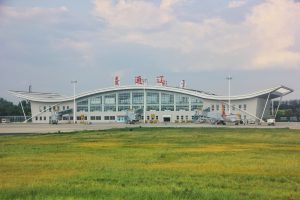
Tongchuan sits roughly two hours north of Xi’an by car, straddling the fault line where the plain lifts into the Northern Shaanxi Plateau. The city proper spreads across three districts — Yaozhou, Wangyi, and Yintai — each anchored around a former coal town that has spent the last decade rewriting its identity. The main rail station handles high‑speed services from Xi’an North in about seventy minutes; slower K‑trains still chug through if you prefer watching the landscape shift from irrigated paddies to terraced orchards. Long‑distance buses leave Xi’an’s Chengbei station every half hour and drop you at the central terminal beside the Yaowang Mountain park entrance. Once in town, the numbered city buses (1, 2, 6, 9) connect the districts, but a ride‑hail app or a negotiated taxi day‑rate (usually around 150‑200 yuan) saves hours when you want to chase light across the hills.
Seasonal rhythm
Spring arrives with the peach blossoms on Yaowang Mountain, usually around the third lunar month, when the slopes blush pink and the air is cool enough for a full‑day hike. Summer brings sudden thunderstorms that turn the ravines into temporary waterfalls — spectacular but slippery; carry a packable rain shell and start early. Autumn, the eighth and ninth lunar months, is the sweet spot: clear skies, golden ginkgo leaves carpeting the palace courtyards, and the chrysanthemum festival at the Yaozhou Kiln Museum drawing local families. Winter is bitter, often below minus ten Celsius, and snow can close the mountain roads for days; if you come then, stick to the indoor kiln exhibitions and the heated cave‑hotel courtyards in Chenlu Town.
Core sites and how to move through them
Yuhua Palace is the anchor. Built in the Tang dynasty as a summer retreat for Emperor Taizong, it sits in a box canyon where a stream still powers a series of stone mortars once used to hull rice for the imperial kitchen. Allow three hours: enter through the south gate, climb the shaded stone steps to the Hall of Ten Thousand Buddhas, then follow the ridge trail behind the complex to the “Cloud Terrace” viewpoint — on a clear day you can trace the Wei River ribbon back toward Xi’an. The site has English placards, but the volunteer guides (retired teachers, mostly) tell better stories if you ask in Mandarin or bring a translation app.
Yaowang Mountain, five kilometers east, is a different energy. The main axis is a 1,080‑step stairway lined with stelae inscribed with medical prescriptions from the Song and Ming dynasties. At the summit, the Medicine King Hall smells of sandalwood and mugwort; locals still press fresh herbs into the cracks of the altar. If your knees protest, a shuttle minibus runs from the parking lot to the midway pavilion — twenty yuan each way — but you miss the herb‑seller stalls where old women dry honeysuckle and licorice root on bamboo mats.
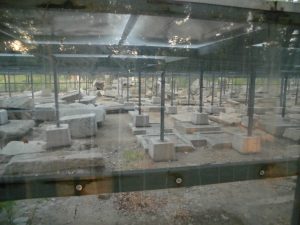
The Yaozhou Kiln Museum in Huangbao Town showcases the celadon that once shipped along the Silk Road. The exhibition hall is modern, but the real draw is the excavation pit behind it: you can see the saggar stacks and kiln furniture exactly as they collapsed when the fire went out. Weekday mornings are quiet; weekends fill with school groups. A combined ticket with the nearby Chenlu Ancient Kiln Village (thirty yuan) lets you watch potters throw on kick‑wheels in cave workshops that have operated continuously since the Jin dynasty.
For a half‑day detour, drive forty minutes north to the Mausoleum of the Yellow Emperor in Huangling County. The approach road passes through a forest of ancient cypress, some trunks so wide three adults cannot encircle them. The main mound is simple — rammed earth, no glitter — but the side halls display bronze chariots and jade bi discs that make the legend feel tactile. Arrive before 10 a.m. to beat the tour buses from Xi’an.
Eating on the road
Tongchuan’s cuisine leans salty, sour, and pepper‑hot — fuel for miners and mountain walkers. The signature dish is guaokui, a fist‑thick sesame‑crusted flatbread baked against the inner wall of a clay oven. Tear it open, stuff it with braised pork belly, pickled mustard greens, and a spoonful of chili oil, and eat it standing at the stall counter. Another staple: hele noodles, hand‑pressed through a wooden extruder into a boiling vat, then ladled into a broth thick with lamb, day‑lily buds, and fermented bean curd. For a sit‑down meal, seek out a “cave restaurant” in Chenlu — tables set in arched loess chambers where the temperature stays constant year‑round. Order the stewed chicken with wild gastrodia tuber (tianma) and a plate of cold‑tossed fern shoots.
- Guaokui flatbread: high‑gluten flour, yeast, sesame seeds, pork lard. Knead, rest two hours, roll thick, slap onto pre‑heated oven wall, bake six minutes.
- Hele noodles: wheat flour, water, salt. Press through hele tool directly into rolling boil, cook ninety seconds, shock in cold water, reheat in lamb broth.
- Stewed chicken with gastrodia: free‑range chicken, dried gastrodia slices, ginger, goji berries, Shaoxing wine. Simmer two hours in clay pot over low charcoal.
- Cold fern shoots: blanched bracken, garlic, vinegar, soy sauce, chili oil, toasted sesame. Toss and rest ten minutes.
Vegetarians can ask for “su hele” (no meat broth) and extra day‑lily buds; most stall owners understand the term. Avoid the pre‑packaged “tourist gift boxes” of vacuum‑sealed guaokui at the highway service areas — they stale within hours. Fresh bread is baked in batches from dawn until the lunch rush; after 1 p.m. you’re eating leftovers.
Sleeping in the landscape
Chain hotels cluster near the high‑speed rail station — clean, predictable, and loud with construction crews. For atmosphere, book a courtyard room in Chenlu Ancient Kiln Village. The better ones (look for “Yaozhou Kiln Homestay” or “Cypress Courtyard”) have heated kang platforms, private walled gardens, and hosts who fire a small kiln in the yard for evening tea. Rates run 300‑600 yuan per night including breakfast of millet porridge, pickles, and fresh guaokui. Reserve at least a week ahead during the chrysanthemum festival; otherwise you can often walk in and negotiate a cash discount.
If you prefer the mountain, the Yaowang Mountain pilgrim hostel offers dorm beds (sixty yuan) and private rooms (180 yuan) in a converted temple annex. Lights out at 10 p.m., wake‑up bell at 5 a.m. — join the morning chant if you like, or just sip hot barley tea on the balcony watching the sun hit the cypress tips.
Practical traps and local etiquette
First, the altitude jump from Xi’an (400 m) to Yaowang summit (1,600 m) catches flatlanders off guard. Hydrate the night before, carry electrolyte tablets, and don’t power‑walk the stairs. Second, the mountain temples are active worship sites, not photo backdrops. Speak low, step over (never on) the threshold beams, and never point your feet toward a statue. If you want to light incense, buy the bundle at the temple gate (five sticks, three yuan) — outside vendors sell coated sticks that drip black tar onto the bronze censers.
Third, cash is still king in Chenlu and the mountain villages. WeChat Pay works in the city museums and chain restaurants, but the potters, herb sellers, and cave‑restaurant owners often only take red notes. Carry a few hundred yuan in small denominations. Fourth, the “Yellow Emperor ancestry certificate” hawked near the mausoleum is a souvenir, not a legal document — smile, decline, and keep walking. Finally, the loos at scenic spots are squat‑only and rarely stocked with paper; pack a travel roll and hand sanitizer in your daypack.
Sample two‑day flow
Day one: high‑speed train from Xi’an North at 7:30 a.m., taxi to Yuhua Palace by 9 a.m., hike the ridge loop, lunch at the palace gate noodle stall. Afternoon bus to Yaozhou Kiln Museum, stay for the 3 p.m. kiln‑firing demo. Evening check‑in at Chenlu courtyard, dinner in the cave restaurant, nightcap of chrysanthemum tea by the kiln fire. Day two: early shuttle to Yaowang Mountain midway pavilion, climb to summit, descend via the herb‑stall path. Late lunch of guaokui and lamb soup in Huangbao Town. Taxi to Tongchuan station for the 4:30 p.m. train back, or continue north on the afternoon bus toward Yan’an if your route allows.
Tongchuan rewards the traveler who moves at the pace of its kilns: slow, deliberate, fired by patience. Bring sturdy shoes, an empty stomach, and a willingness to sit on a heated kang while the mountain wind rattles the cypress branches. The rest will settle into place like ash on a fresh glaze.