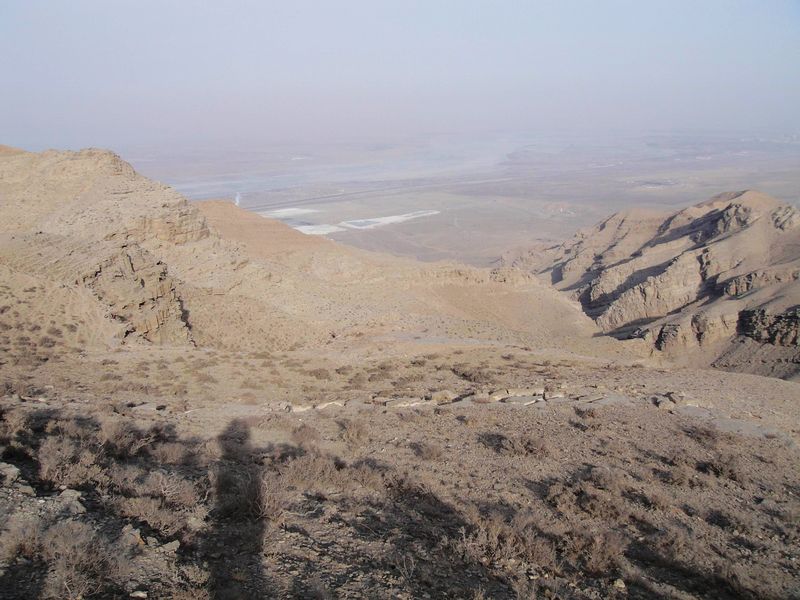
The minibus shuddered to a halt at the edge of the dunes, the engine coughing into silence. Through the open door, the Yellow River glittered like a strip of beaten copper, cutting a sharp line between the black basalt of the Gobi on one side and the pale, shifting sands of the Ordos on the other. A wind whipped off the water, carrying the scent of brine and wormwood, and somewhere behind the dunes a camel groaned. This is Wuhai: a city of 250,000 people pinned between two deserts, built on coal and grape vines, where the river doesn’t just water the fields—it defines the frontier.
Reading the Land and the Calendar
Wuhai sits in the upper reaches of the Yellow River, hemmed in by the Gander Mountains to the northeast and the Alxa League stretching west toward the deep desert. The climate writes its own rules here. Summer arrives fast and furious—days above thirty-five Celsius, the sun hammering the sand until the air shimmers. Rain is a rumor in July; the real moisture comes as snow in deep winter, dusting the dunes white for a few days. Winter nights drop well below freezing, but the days are often bright, windless, and surprisingly bearable if you stay in the sun.
The sweet spot for moving around is the autumn harvest season, roughly the eighth and ninth lunar months. The grape vines hang heavy, the corn stands golden, and the temperature settles into a range where you can hike the dunes at noon without boiling. Spring brings the notorious Mongolian wind storms—walls of grit that scour paint off cars and force the airport to cancel flights. If you arrive then, keep a scarf over your mouth and goggles handy. Winter has its own stark beauty: the river freezes thick enough for trucks to cross, and the wetlands near the river mouth fill with whooper swans that stay until the ice locks them in.
Getting There Without Losing a Day
Wuhai Airport (WUA) sits in Haibowan District, about twenty kilometers from the train station. Flights connect to Beijing Capital, Hohhot, and Shanghai Hongqiao, but schedules shift with the season—carriers often drop frequency after the autumn travel rush. The airport bus (Route 9) runs from the train station square; it costs pocket change and takes just over an hour because it stops at every residential compound along Airport Road. A taxi from the terminal to central Haibowan runs roughly forty minutes. If you are carrying luggage or hate waiting, negotiate a flat fare before you climb in; meters are rare on airport runs.
The train station handles conventional and high-speed services. The bullet line from Hohhot takes about three hours, rolling through the Yellow River valley with the desert pressing against the tracks. Overnight sleepers from Beijing or Xi’an arrive early morning, which is convenient if you want to catch the first light on the dunes. Buses from Yinchuan (Shizuishan side) cross the Yellow River Bridge—an experience in itself when the wind howls across the deck. Driving in? The G18 Expressway cuts straight through the city from north to south. Fuel stations are plentiful in town but vanish fast once you turn west toward Alxa; fill the tank before you leave the urban ring road.
Moving Around the Three Districts
Wuhai is really three towns stitched together by highway: Haibowan (the administrative center), Wuda (the old coal-mining heart), and Hainan (the agricultural and wine zone). City buses connect them, but the routes are slow and the signage is Chinese-only. Most visitors hire a car with a driver for the day—your hotel front desk usually has a WeChat contact for a reliable guy named Lao Zhang or Brother Li. Expect to pay a flat daily rate plus fuel and lunch for the driver. If you ride a shared electric scooter (the blue-and-white ones parked near every mall), stick to the wide boulevards; the narrow lanes in Wuda’s old quarters have blind corners and coal trucks that don’t brake for pedestrians.
For desert excursions, you need a proper 4×4 and a driver who knows the difference between firm interdune corridors and the soft bowls that swallow axles. Do not attempt the dunes in a city sedan, even one with high clearance. The sand here is fine as flour and shifts overnight. A local driver will also know which patches are designated tourism zones and which are protected wetlands where rangers issue fines on the spot.
What to Do: River, Dunes, Vines, and Rock
The Yellow River Wetland Park sits at the city’s southern edge, where the river braids into channels and reed beds. Boardwalks lead to bird hides; in autumn migration you can spot relict gulls, swan geese, and the occasional white-tailed eagle. Bring binoculars—the hides are far from the parking lot. Early morning is best; by ten the light flattens and the mosquitoes wake up.
North of town, the Singing Sand Bay (Mingsha Bay) tourist area offers the classic desert menu: camel rides, sand sliding on plastic sheets, ATV loops, and sunset photography from the high dunes. The “singing” is a low hum the sand makes when the wind hits the right angle—more felt through your soles than heard. Go late afternoon, stay for the cool-down, and watch the dunes turn purple against the river. Vendors sell roasted lamb skewers and hot milk tea from insulated barrels; the tea is salty, buttery, and essential after the wind dries your lips.
Hainan District is wine country. The Yellow River’s alluvial soil, intense sun, and massive diurnal shift produce thick-skinned Cabernet Sauvignon and Merlot. Several estates—Chateau Hansen, Chateau Xixia, and the state-run Wuhai Winery—run tours ending in tasting rooms with views over trellised rows stretching to the desert fringe. Book ahead on weekends; the tasting pours are generous, and the drivers appreciate a designated sober person. If you want bottles to take home, buy at the estate shop; supermarket stock is often last year’s vintage stored in uncooled warehouses.
For a quieter half-day, head to the Rock Art Site at Zhuozi Mountain (Table Mountain) on the eastern fringe. Petroglyphs carved into basalt cliffs depict hunters, herds, and shamanic figures—some dating back three thousand years. The site is fenced and has interpretive signs in Chinese and English. Wear sturdy shoes; the path climbs steep switchbacks with loose scree. A small museum at the base displays bronze knives and pottery shards excavated from nearby burial mounds.
Eating: Lamb, Noodles, and the Tea Ritual
Meals in Wuhai revolve around mutton, wheat, and dairy. The signature dish is hand-grabbed lamb (shouba yangrou): a whole leg boiled in a plain broth with scallions, ginger, and a pinch of salt until the meat falls off the bone. You tear chunks with your fingers, dip them in a sauce of fermented bean curd, chili oil, minced garlic, and chopped cilantro. The meat should be pink at the center, not gray; the fat renders sweet and transparent. Restaurants in Wuda’s old market lane serve it on stainless steel trays the size of manhole covers.
- Hand-grabbed lamb: whole leg, water, scallion, ginger, salt; boil ninety minutes, rest ten, tear by hand.
- Dipping sauce: fermented red bean curd (two cubes), chili oil (one spoon), garlic paste, cilantro, splash of vinegar.
- Milk tea (suutei tsai): brick tea crushed, boiled in water twenty minutes, add fresh sheep milk and salt, simmer five minutes, strain.
- Oat noodles (youmian): buckwheat flour rolled thin, cut into strips, boiled, served in mutton broth with pickled mustard greens.
- Roast whole lamb: only at licensed courtyard restaurants; order a day ahead; wood-fired oven, skin crisp as paper, meat pink.
Vegetarians will struggle. Most “vegetable” dishes are stir-fried with rendered mutton fat or dried shrimp. The safest bet is a Muslim-run Lanzhou beef noodle shop—ask for “qing zhen” (halal) and specify no meat, just broth, radish, and hand-pulled noodles. Breakfast is often steamed buns stuffed with scallions and a smear of fermented tofu, washed down with a bowl of hot millet porridge.
Sleeping: From Courtyard Gates to Chain Lobbies
Haibowan has the highest concentration of mid-range chains—Home Inn, Jinjiang, Atour—clustered around the government square and the riverfront park. Rooms are clean, air-conditioned, and have reliable hot water. Book a river-view floor if you want the sound of water instead of traffic. Wuda offers a different flavor: converted courtyard homes (siheyuan) inside the old miners’ compounds. Thick adobe walls keep nights warm and days cool. The host usually provides a kettle, a thermos of milk tea, and directions to the best lamb stall. No elevator, squat toilets in some rooms, and the Wi-Fi drops when the wind blows hard.
Hainan District has a handful of vineyard guesthouses. You sleep among the vines, wake to magpies in the trellis, and walk to the tasting room in slippers. These book solid during the autumn harvest festival (usually the eighth lunar month). If you arrive unannounced in peak season, you will be turned away. Camping is technically allowed in designated zones of the wetland park and at the Singing Sand Bay tourist area, but you must register with the gate office and bring your own water—there are no showers.
What Newcomers Get Wrong
First mistake: treating Wuhai as a day trip from Yinchuan or Ordos. The distances look short on the map, but the desert roads, wind delays, and border checkpoints between leagues eat hours. Stay at least one night—two if you want the dunes and the wine without rushing. Second mistake: showing up at a winery without a reservation on a Saturday. The tasting rooms are small; walk-ins are poured last, if at all. Third: underestimating the sun. The UV index at this altitude and latitude is extreme even in April. A baseball cap is useless; bring a wide-brim hat, sunglasses, and SPF fifty. Fourth: assuming everyone speaks Mandarin fluently. In Wuda’s alleys and the pastoral fringes, Mongolian is the first language. Learn “sain bainuu” (hello) and “bayarlalaa” (thank you); it opens doors that a loud “ni hao” does not. Fifth: drinking the tap water. It’s heavily mineralized from the river and the coal strata. Stick to bottled or boiled—every hotel lobby has a hot water dispenser for a reason.
Last thing: the desert does not forgive carelessness. If you wander off the marked trails at Singing Sand Bay, the dunes swallow footprints in minutes. Phone signal vanishes two kilometers past the ticket gate. Tell your driver exactly which dune you plan to climb and when you’ll be back. Carry more water than you think you need. The wind erases tracks, the cold drops fast after sunset, and the river, beautiful as it is, runs fast and cold year-round. Respect the space, and Wuhai gives you a horizon you won’t forget.