The minibus shuddered to a halt on a stretch of desert highway where the only landmark was a faded billboard advertising lamb skewers. I had just rolled out of Lanzhou after three hours of watching the Yellow River shrink behind the window, and the air here tasted of dust and alkali. A driver leaned out, shouted “Wuwei!” and tossed my pack onto a roof rack already sagging with crates of dried apricots. That was my first proper look at the Hexi Corridor — not from a guidebook map, but from the back seat of a rattling van with the window stuck open.
Getting There Without a Flight
Wuwei has no commercial airport of its own. The closest runway with scheduled service sits in Jinchang, about an hour west by car. Most travelers fly into Lanzhou Zhongchuan International Airport instead, then catch a direct long-distance bus from the airport forecourt. The ride takes three to three and a half hours, depending on wind and traffic. Buses leave every hour or so during daylight; the last one usually departs before sunset. Tickets are bought on the spot — cash or mobile payment — and the driver will stow luggage in the hold beneath the passenger cabin.
If you prefer rail, two stations serve the city. Wuwei Railway Station sits on Yingbin Road in Liangzhou District, right in the urban core. City buses 1, 2, 10, 12, 14, 17, 19, 20, 27, 28, 605 West, and the two night lines all stop at the square out front. Wuwei South Railway Station lies farther out on Wunan Street; only bus 17 connects it to the center. High-speed services from Lanzhou, Zhangye, and Jiayuguan call at both, but the older conventional trains often use only the central station. Check your ticket carefully — arriving at the wrong one adds a taxi ride of twenty minutes across town.
Moving Around the City
The central bus station occupies the southeast corner of Erhuan South Road and Yingbin Road, a five-minute walk northeast of the main railway station. From there, routes fan out to every district and to the major scenic areas. Inside the city, the numbered bus network is dense and cheap — one or two yuan per ride, exact change or a transport card. Stops are announced in Mandarin only, so keep a map app open. Taxis cluster at both railway stations and at the bus station; a cross-town trip rarely exceeds twenty yuan. Ride-hailing apps work, but drivers sometimes cancel short hops during peak hours. For the desert sites outside town, hiring a private car for the day is simpler than stitching together rural bus timetables.
Where the Flying Horse Was Found
Leitai Temple sits on the northern edge of the old city, its gate framed by a pair of stone lions worn smooth by generations of palms. The complex centers on a Han-dynasty tomb discovered in 1969 when a farmer’s shovel struck brick. Inside lay a bronze galloping horse, one hoof resting on a swallow — the image now stamped on every tourism brochure in Gansu. The original bronze lives in the provincial museum in Lanzhou, but the tomb chamber has been reconstructed on site. You descend a cool stairwell into a vaulted space where the walls still show traces of red pigment. A replica horse stands at the center, lit from below. Few tourists linger long; most snap a photo and climb back into the sun. Stay a minute longer. The air down there holds a faint mineral scent, and the silence is deeper than anything on the surface.
Confucian Temple and the Desert Museum
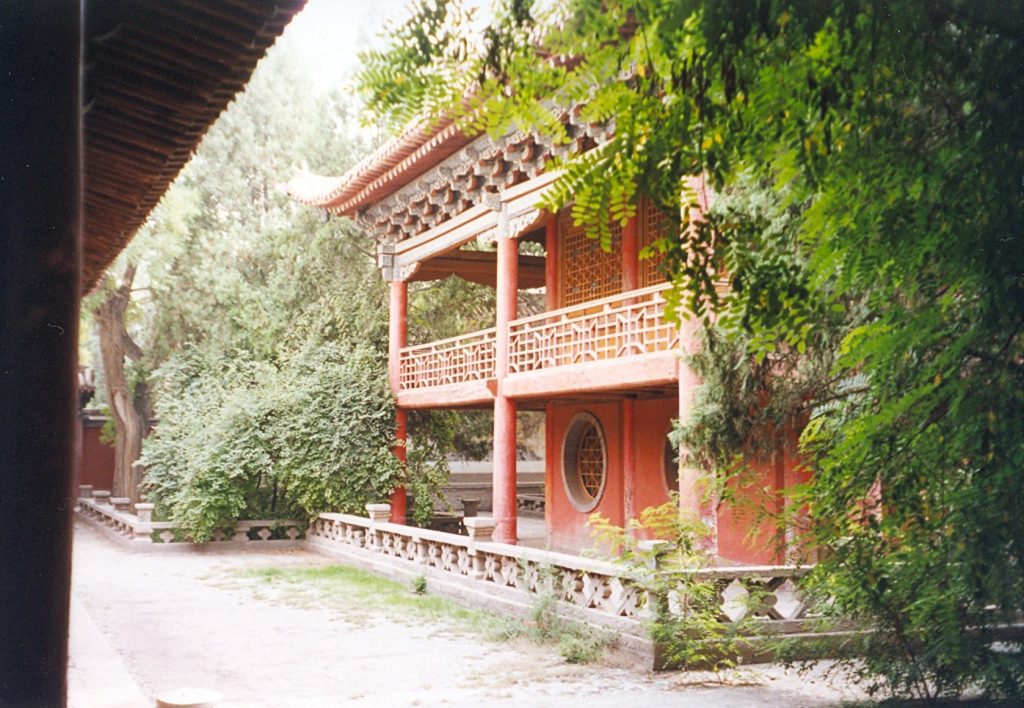
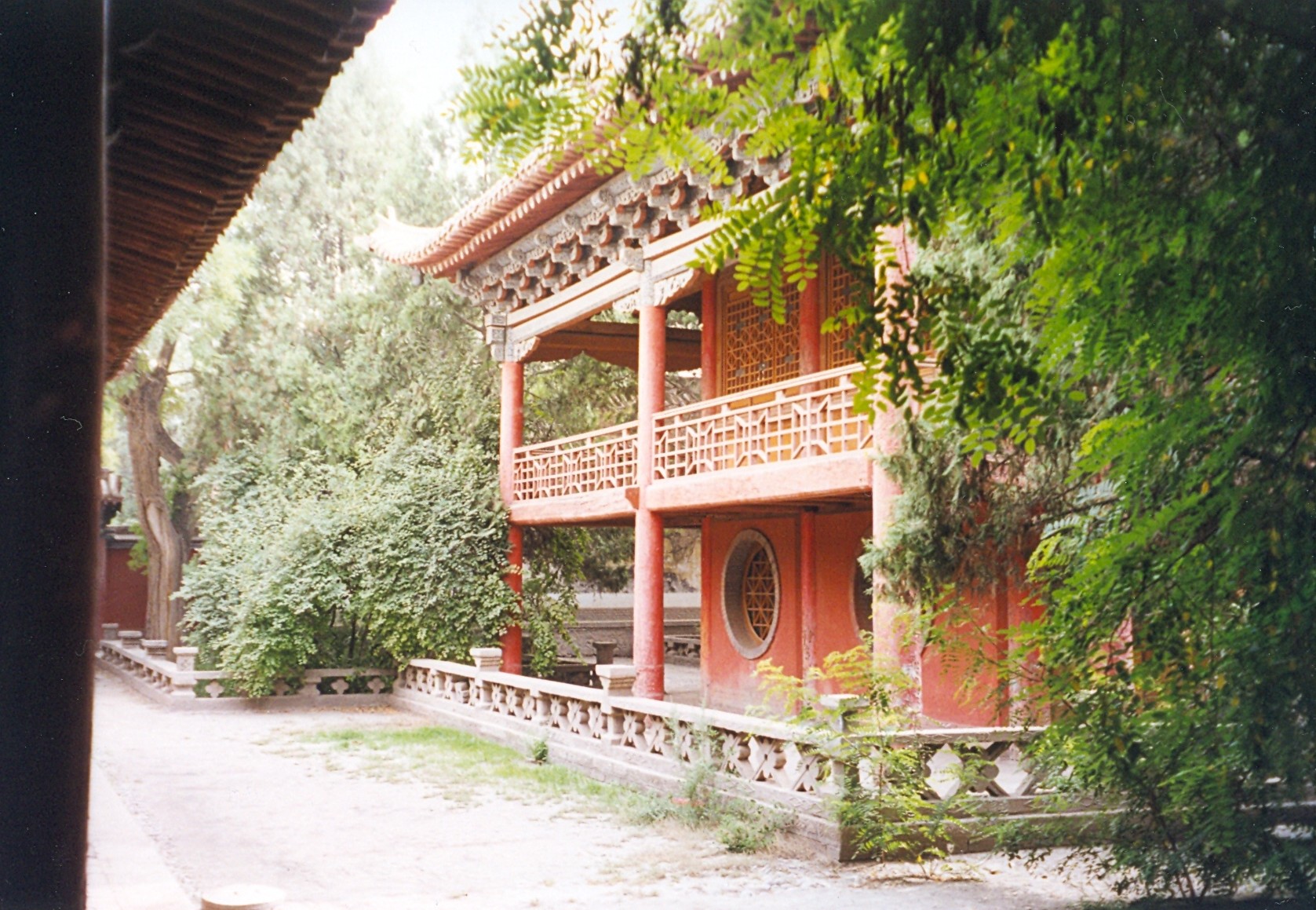
Two blocks south of the main pedestrian street, the Wuwei Confucian Temple occupies a walled compound of cypress trees and gray tile roofs. The main hall houses a statue of Confucius flanked by disciples carved from juniper. Stone stelae in the courtyard record imperial examination results from the Ming and Qing eras — names, ranks, and hometowns etched in characters that have softened to a sepia blur. School groups come here in spring to bow before the sage; otherwise the place is quiet enough to hear wind in the branches.
A short taxi ride west brings you to the Wuwei Museum, a modern building shaped like a folded scroll. Its star exhibit is a collection of Han wooden slips — bamboo strips used for official documents before paper spread westward. The slips record grain shipments, legal judgments, and even a recipe for fermented mare’s milk. Labels are in Chinese and English. The museum also displays fragments of Silk Road textiles: wool dyed with madder, silk woven with Persian motifs. Allow two hours. The air conditioning is a relief after the midday glare.
Day Trip to the Tianti Mountain Grottoes
Fifty kilometers south of the city, the Tianti Mountain Grottoes cling to a cliff face above a reservoir. The drive climbs through gullies where apricot orchards give way to scrub pine. At the parking area, a shuttle bus covers the final steep kilometer. The caves were first carved in the Northern Liang period, around the early fifth century, and expanded under the Northern Wei, Western Wei, and Tang. Many statues were damaged by earthquakes and later iconoclasm; what remains are weathered Buddhas with noses worn flat and bodhisattvas whose paint has faded to ghostly ochre. Cave 13 still shelters a seated Maitreya, three meters tall, his right hand raised in the fear-not gesture. Water drips from a crack above his shoulder — a natural drip that has marked centuries on the stone.
- Depart Wuwei before 8 a.m. to catch morning light on the cliff face.
- Bring water and a hat; the site has no shade and the sun reflects off the water.
- Wear sturdy shoes — the path between caves is uneven sandstone.
- Photography is permitted without flash; tripods require a permit from the ticket office.
- Return by mid-afternoon; the last shuttle leaves at 5 p.m. in summer, earlier in autumn.
Desert Edge at the Great Wall Museum
On the western outskirts, the Great Wall Museum of the Hexi Corridor sits beside a reconstructed beacon tower. The building is low and angular, designed to mimic a watchtower silhouette. Inside, a raised-relief map stretches the length of a hallway — the Wall snaking from Jiayuguan to the Yumen Pass, punctuated by garrison towns and signal fires. Artifacts include bronze arrowheads, iron plowshares, and a set of leather armor stitched with sinew. One display case holds a wooden tablet inscribed with a soldier’s leave request: “Mother ill. Request ten days. Year of the Metal Rabbit.” The date converts to a spring in the early sixth century. The museum roof offers a panorama: to the north, the desert stretches flat to the horizon; to the south, the irrigated fields of the Shiyang River basin form a green ribbon. Stay for sunset. The light gilds the beacon tower, and the temperature drops fast.
Eating Where the Caravans Stopped
Wuwei’s food leans salty, oily, and heavy on wheat. The signature dish is liangpi — cold wheat noodles tossed with chili oil, vinegar, garlic, and gluten cubes. Vendors near the railway station serve it from stainless steel tubs; the best ones hand-pull the gluten fresh each morning. Another staple is yangrou chuan, lamb skewers dusted with cumin and chili flakes, grilled over charcoal until the fat crackles. Look for stalls where the skewers are cut thick, not paper-thin — thin slices dry out before the crust forms.
- Liangpi: wheat starch noodles, gluten cubes, cucumber matchsticks, bean sprouts, chili oil, aged vinegar, garlic water, sesame paste.
- Yangrou chuan: lamb shoulder cubed, cumin seed, chili flakes, salt, skewers.
- Home method for liangpi: mix wheat flour with water to a slack dough; rest thirty minutes. Wash dough in a bowl of water until the water turns milky; strain and let starch settle overnight. Pour off clear water. Steam the starch slurry in thin layers on oiled trays. Cut cooled sheets into ribbons. Toss with toppings.
- Restaurant ordering tip: ask for “bu yao xiang cai” if you dislike cilantro; many places heap it on by default.
- Beginner mistake: ordering rice. Wheat is the grain here; rice arrives mushy and overcooked.
Seasonal Rhythms and Local Expectations
Spring arrives with the Qingming wind — fine sand that coats eyelashes and settles in shirt collars. Locals tie gauze masks over their faces and keep windows shut. By the time the apricot blossoms open, usually around the third lunar month, the dust settles. Summer brings intense heat; midday temperatures climb above thirty-five Celsius. Shops close from noon to three, and the streets empty until late afternoon. Autumn is the sweet spot: clear skies, cool nights, and the grape harvest in the surrounding vineyards. Winter is bitter, dry, and wind-scoured; snow is rare but frost feathers every surface.
When visiting temples or the Confucian compound, dress with shoulders and knees covered. Speak quietly. Photography inside active worship halls is discouraged — watch for signs. At the grottoes, do not touch the statues; oils from fingers accelerate erosion. If a monk or caretaker offers a blessing, accept with both hands and a slight bow. Tipping is not customary anywhere. Bargaining applies only at market stalls, not in restaurants or museums.
Newcomers often try to pack the Flying Horse site, the Confucian Temple, the museum, and the grottoes into a single day. The distances look short on a map, but travel between them eats hours. Pick two. Spend the leftover time sitting in a noodle shop watching hand-pulled dough slap the board, or walking the old city wall at dusk when the call to prayer drifts from the mosque on the corner. That is the rhythm Wuwei keeps — not the one printed on a timetable.