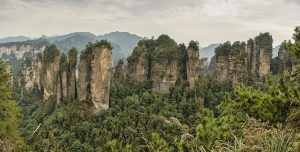
The minibus shudders as it climbs the switchbacks toward Fairy Mountain, the air thinning and cooling with every hairpin turn. Below, the Wu River cuts a brown line through a valley that disappears into mist. Ahead, the limestone teeth of the Three Natural Bridges catch the last of the afternoon sun, glowing amber against the grey-green forest. This is Wulong: not a city you explore on foot, but a vertical landscape you move through in pieces—by elevator, by shuttle bus, by footpath carved into cliff faces.
Getting There Without Losing a Day
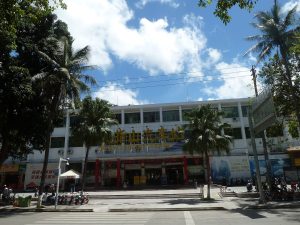
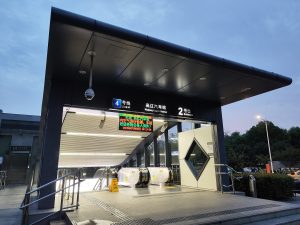
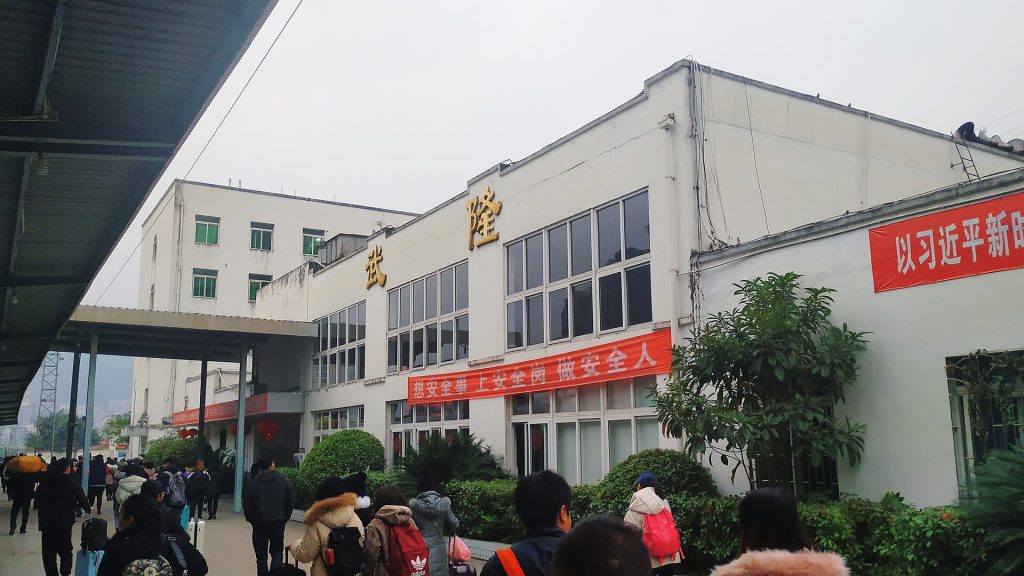
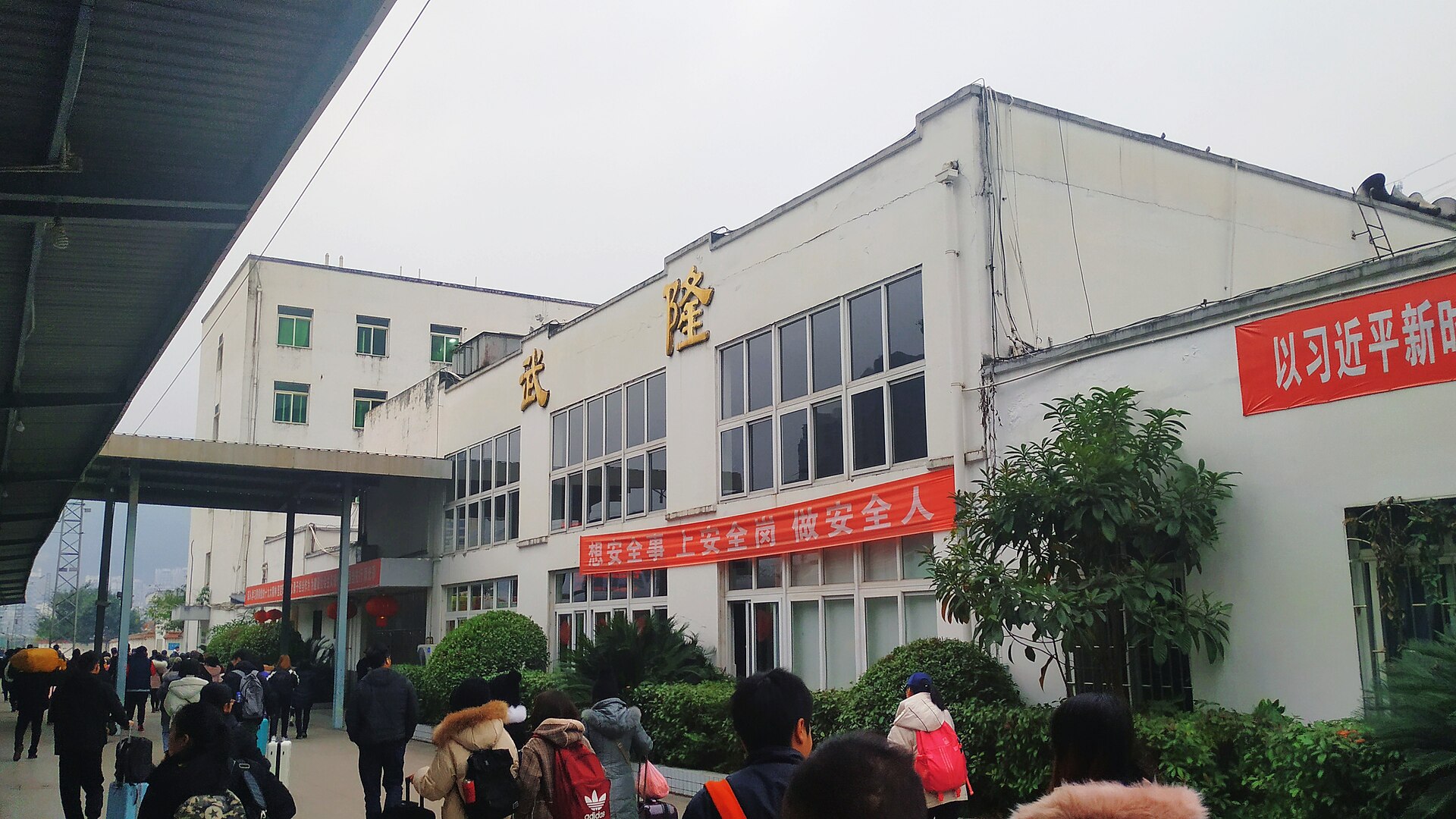
Most travelers arrive from Chongqing. The high-speed train from Chongqing East to Wulong South Railway Station is now the default choice—just over an hour on the new line, whisking you from the metro sprawl straight into the karst foothills. From the station forecourt, the tourist shuttle (Line 201 or the dedicated Fairy Mountain Star Bus) waits to ferry passengers to the visitor centers. If you land on a regular-speed train at the older Wulong Railway Station near the Wu River, you are closer to the town center but farther from the scenic zones; allow an extra forty minutes by local bus or taxi to reach the main ticket offices.
Flights into Wulong Xiannüshan Airport exist, but the schedule is thin and seasonal. Unless you are connecting from a distant Chinese hub with no rail link, the train saves time and headache. Drivers coming from Chongqing city center should budget three hours on the G65 expressway, longer during holiday peaks when the toll plazas back up onto the shoulder.
The Three Natural Bridges: Walking Under Stone Arches
This is the set piece. You enter at the Tourist Center, swipe your ID, and queue for the glass elevator that drops you two hundred meters into the gorge. The ride lasts thirty seconds; your ears pop. At the bottom, a boardwalk threads between Tianlong, Qinglong, and Heilong bridges—three successive arches carved by an ancient underground river. The scale only registers when you stand beneath the middle span and look up: the opening is wide enough to swallow a ten-story building, and the rock walls drip with ferns that have never seen a lawnmower.
- Wear shoes with grip. The boardwalk stays slick from constant seepage.
- Bring a light rain jacket even in summer; the gorge creates its own microclimate.
- Allow two hours for the full loop if you stop for photos at every platform.
- Skip the electric cart upsell at the exit unless your knees are shot—the climb back to the elevator is steep but short.
Photographers should target the morning slot (first elevator down at 8:30). The light shafts penetrate vertically between 9:00 and 10:30, painting the moss in colors no filter can replicate. By noon the sun sits overhead and the magic flattens.
Longshuixia Fissure: The Slot Canyon Next Door
Ten minutes by shuttle from the Bridges ticket office, Longshuixia feels like a different planet. A narrow crack in the plateau, two kilometers long and barely thirty meters wide at the top, funnels a stream that has polished the walls into waves. The walkway clings to the left bank, sometimes suspended on steel brackets bolted into the rock. Waterfalls drop from hidden side chambers, hitting the path as fine spray. You walk in near-silence broken only by dripping water and the occasional tour guide’s megaphone.
- Buy the combined ticket (Bridges + Fissure) at the first window; separate entry costs more and requires a second queue.
- Visit the Fissure after the Bridges, around 11:00. The crowd thins, and the sun angle lights the upper walls.
- Protect your phone. One slip on the wet metal grating and it’s gone into the dark water.
Fairy Mountain: Alpine Meadow on a Limestone Plateau
Twenty kilometers south, the terrain flips. Fairy Mountain sits at 1,900 meters, a rolling grassland dotted with pine plantations and wind turbines. In summer, herders graze horses beside the boardwalk; in winter, the ski resort operates the only decent slopes within striking distance of Chongqing. The tourist loop road circles the plateau—thirty kilometers of smooth asphalt popular with cyclists and electric sightseeing cars.
Stay overnight here if you want stars. The township has a cluster of mid-range hotels and a few boutique homestays converted from old forestry dorms. Wake before dawn, walk five minutes to the viewing platform, and watch the sea of clouds fill the valleys below the karst peaks. It is the only place in the district where you can see the whole system at once: the bridges, the fissure, the river, the highway threading through like a grey ribbon.
Furong Cave and the River Town Below
East of the main cluster, Furong Cave runs twelve kilometers under the mountains, though only two are lit for visitors. The formations are textbook—curtains, shields, pearls, a chamber called “Palace of the Crystal King”—but the real draw is the approach. You take a small ferry across the Furong River from Jiangkou Town, passing under a railway bridge where freight trains thunder overhead every twenty minutes. The town itself survives on spicy river fish and tourists waiting for the boat. Eat a bowl of *jiangtuan* stew (catfish in fermented bean paste) at a riverside stall while you wait for the return crossing; the broth remembers every hand that stirred it.
- Cave temperature holds at 16°C year-round. Bring a layer.
- Ferry runs 8:00–17:30. Last return boat leaves the cave dock at 17:00 sharp.
- Skip the “VIP” audio guide. The Chinese signage is clear, and the formations speak for themselves.
Logistics That Save Sanity
Buy tickets on the official WeChat mini-program “武隆旅游” the night before. Screenshots work at the gate; no paper printout needed. The combined Three Bridges + Longshuixia ticket is valid for two days, but you must enter each site on the calendar day you select—no hopping back the next morning.
Luggage storage exists at both Wulong South Station and the Three Bridges Tourist Center. A standard suitcase costs 20 yuan per day. If you are continuing to Chengdu or Guiyang on the high-speed line, stash your bags at the station and do the Bridges as a day trip from the train.
Food in the scenic zones is overpriced and bland. Pack sandwiches, fruit, and water for the gorge hikes. Real meals happen in Wulong town (near the old railway station) or Jiangkou: look for crowds at noon. A plastic stool, a bottle of cold Beerlao, and a plate of stir-fried *ciba* chili with cured pork will cost less than the park’s instant noodles and taste like the place actually lives.
Seasonally, spring (third to fifth lunar month) brings wild azaleas on Fairy Mountain and high water in the fissure. Autumn (ninth to tenth lunar month) paints the grassland gold and clears the air for photography. Summer weekends swell with Chongqing families escaping the furnace; book hotels three weeks ahead. Winter is quiet, cold, and sometimes icy on the boardwalks—check the park’s WeChat for closure notices before you commit.