The ferry churns brown water as it crosses the Han River, the old city wall rising on the south bank like a spine of grey brick. On the north side, Fancheng’s apartment blocks climb the slope, laundry fluttering from balconies above street‑level noodle stalls. A vendor shouts the price of steamed buns, the smell of chili oil and pork fat cutting through the river mist. This is the daily stitch that holds the two halves of Xiangyang together.
Getting Oriented on the Two Banks
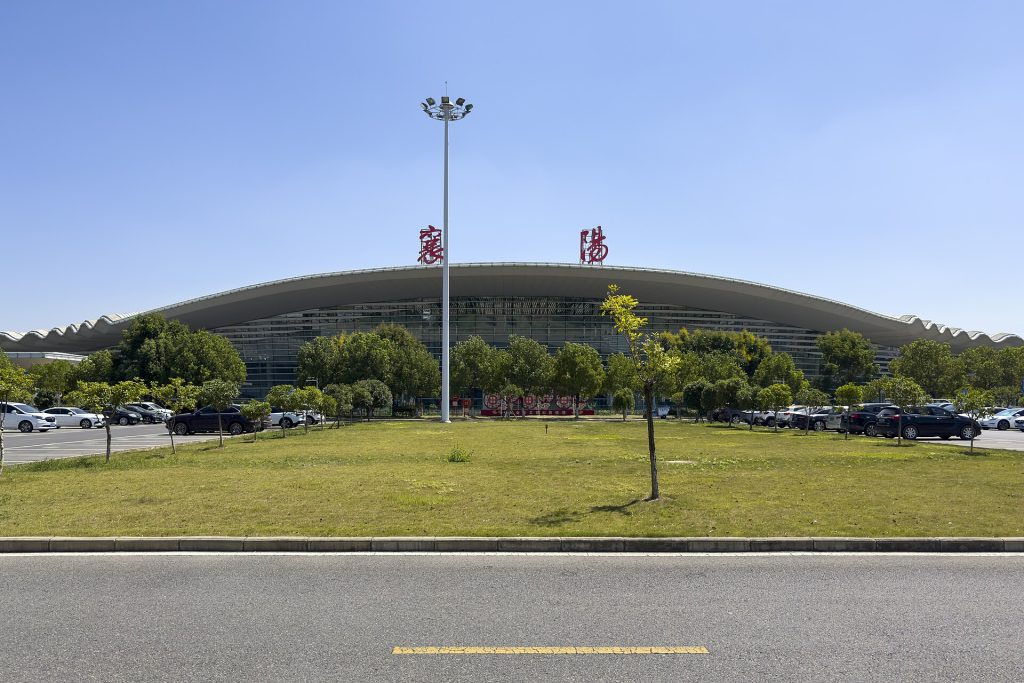
Xiangyang sits in northwestern Hubei where the Han River makes a wide bend. The historic core — still called Xiangyang by locals — hugs the south bank. Fancheng, the newer commercial district, spreads north. Most long‑distance trains arrive at Xiangyang Station on the south side; high‑speed services pull into Xiangyang East, a taxi ride from the wall. City buses numbered in the single digits cross the big bridge every few minutes. If you prefer two wheels, shared e‑bikes unlock with a phone scan and handle the flat riverside roads well.
Walking the wall at dawn is the best way to read the city’s layout. The rampart runs roughly six kilometers, punctuated by four main gates. Start at the south gate, Zhongxuan Men, where elderly men practice tai chi in the shadow of the watchtower. Follow the brick path east toward the river gate; the Han glints below, barges pushing coal downstream. Allow two hours for a full loop, longer if you stop for tea at the small pavilion near the north gate.
Three Kingdoms Ground: Longzhong and the Ancient City
Ten kilometers west of the center, Longzhong Scenic Area sits in a fold of pine‑covered hills. This is where Zhuge Liang farmed and studied before Liu Bei visited him three times. The compound is modest — a thatched cottage, a stone tablet pavilion, a hexagonal well — but the surrounding forest keeps the air cool even in high summer. Weekday mornings are quiet; tour groups arrive after ten. Wear flat shoes; the stone steps are slick with moss.
Back inside the wall, the Ancient City scenic zone clusters around the Drum Tower. The tower itself is a Ming reconstruction, but the square beneath it functions as the neighborhood living room. Chess boards click on stone tables. A storyteller in a faded Mao suit recounts the siege of 1267, when Mongol trebuchets pounded these same bricks for six weeks. Locals listen while peeling sunflower seeds. You can climb the tower for a view of tiled roofs stretching to the river, but the real exhibit is the street life at its base.
Eating Like a Local: Beef Noodles, Fish Cakes, and Late‑Night Skewers
Xiangyang beef noodles (襄阳牛肉面) are the city’s signature bowl. The broth simmers overnight with beef bones, star anise, cassia bark, and a handful of dried chili. Hand‑pulled wheat noodles arrive al dente, topped with thin slices of braised shank, a spoonful of chili oil, and a scatter of cilantro. The best stalls serve a side of pickled mustard greens — sour, crisp, essential for cutting the richness.
- Broth: beef knuckle bones, water, ginger, scallion, star anise, cassia bark, dried chili, Sichuan peppercorn, salt.
- Braise: beef shank, soy sauce, dark soy, rock sugar, the same spices as the broth, simmered two hours until the meat holds shape but yields to chopsticks.
- Assembly: boil fresh alkaline noodles ten seconds, drain, drop into a bowl of boiling broth, add braised slices, ladle hot broth over, finish with chili oil, cilantro, pickled greens.
Order at a sit‑down shop by saying “da wan, jia niu rou” — large bowl, extra beef. At a street cart, point to the pot and hold up fingers for spice level. Don’t ask for “less oil”; the chili oil carries the flavor.
Another staple is Xiangyang fish cake (鱼糕), made from freshwater carp pounded to a paste with egg white and starch, then steamed in a bamboo basket. The texture is springy, almost bouncy, served cold with a garlic‑vinegar dip. Find it at the morning market near the west gate, sold by weight in plastic bags.
After dark, the alley behind the Drum Tower fills with skewer carts. Lamb kidney, chicken hearts, lotus root slices, and tofu skin are brushed with cumin‑chili powder and grilled over charcoal. Grab a plastic stool, order a bottle of room‑temperature Snow Beer, and watch the smoke rise into the lantern light. The bill rarely exceeds fifty yuan for two people.
Seasonal Rhythms and Festival Moments
Spring arrives with the peach blossoms on Gulong Mountain, usually around the third lunar month. Families drive up the winding road for picnics, spreading blankets on the grass between the trees. By the fifth lunar month, the Dragon Boat Festival brings races on the Han — long, painted boats drummed by teams from local factories. The riverbanks crowd with spectators eating zongzi wrapped in bamboo leaves.
Autumn, the eighth lunar month, is the most comfortable for walking the wall. The air is dry, the sky a pale blue. Mid‑autumn night finds families on rooftops sharing mooncakes filled with lotus paste and salted egg yolk. Winter can be damp and cold, but the beef noodle stalls steam harder, and the hot‑pot restaurants along Jiefang Road fill with steam and laughter.
What Newcomers Get Wrong
First, assuming the wall is a museum piece. It’s a functioning thoroughfare — commuters cycle the top path, grandparents walk dogs, delivery scooters zip through gate arches. Treat it like a park, not a ruin.
Second, skipping Fancheng. The north bank has the best late‑night barbecue and a cluster of craft‑beer taprooms in converted warehouses near the university. The vibe is younger, louder, and less polished than the tourist strip south of the river.
Third, expecting English menus. Even mid‑range restaurants often have only Chinese characters. Learn the characters for beef (牛肉), noodles (面), fish cake (鱼糕), and “not spicy” (不辣). A translation app with offline camera mode saves meals.
Fourth, trying to see everything in one day. The distance between Longzhong and the city wall is real, and traffic on the ring road snarls at rush hour. Pick one major site per half‑day, leave room for a long lunch, and let the city’s rhythm set the pace.
Practical Notes for a Smooth Stay
Accommodation clusters in three zones: inside the south wall near the Drum Tower (boutique inns in renovated courtyard houses), around Xiangyang East Station (chain hotels, convenient for early trains), and in Fancheng near the university (budget hostels, lively nightlife). Book a place with a washing machine if you plan more than three days; the humidity makes clothes slow to dry.
Cash is still king at market stalls and skewer carts. Keep small denominations — tens and twenties. Mobile payment works everywhere else, but you’ll need a Chinese bank card linked to Alipay or WeChat Pay; international cards often fail at the final verification step.
Mandarin with a heavy southwestern accent is the street language. A few phrases go far: “duo shao qian” (how much), “bu yao la” (no chili), “xie xie” (thank you). Locals appreciate the effort and often reply with a smile and an extra spoonful of pickles.
When the ferry horn sounds again at dusk, the wall’s bricks glow amber under floodlights. You’ve walked the ramparts, slurped noodles beside a steaming pot, listened to a siege story while cracking sunflower seeds. Xiangyang doesn’t perform for visitors; it simply continues, and you’re lucky enough to move through it for a few days.