The taxi driver tapped the brakes as we turned onto Wenhua Road, the early winter wind pushing dust across the six-lane boulevard. To the left, a construction crane swung over a half-finished mall; to the right, the low gray wall of the Han Yangling Mausoleum stretched into the haze, its burial mounds humped like sleeping beasts. I had come to Xianyang expecting a quiet satellite of Xi’an, a place to kill an afternoon between high-speed trains. Instead, I found a city that wears its imperial past on its sleeve, where subway tunnels cut through Tang dynasty kilns and farmers still pull shards of painted pottery from their vegetable plots.
Arriving without the hassle
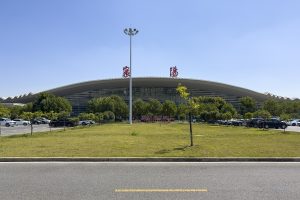
Most travelers land at Xi’an Xianyang International Airport, which sits inside Xianyang’s city limits, not Xi’an’s. The airport shuttle to Xianyang West Railway Station leaves Terminal 3 every forty minutes from mid-morning until late evening, costs pocket change, and drops you at a square where taxis and DiDi cars cluster. If you are already on the ground in Xi’an, the metro Line 1 extension whisks you to Xianyang’s downtown in forty minutes — clean, air-conditioned, and signed in English. High-speed trains from Xi’an North take twelve minutes; the older conventional station, Xianyang Railway Station, sits closer to the old town but sees fewer bullet services. Grab a transport card at any metro kiosk; it works on buses, subways, and even the airport shuttle.
Walking the Han imperial corridor
Start at the Han Yangling Mausoleum, the joint tomb of Emperor Jing and Empress Wang. Unlike the Terracotta Army’s martial ranks, this site feels domestic. Glass walkways suspend you over burial pits where thousands of naked, armless figurines — originally clothed in silk that rotted away — kneel in silent procession. Miniature granaries, livestock pens, and kitchen utensils hint at a court obsessed with continuity of daily life. The on-site museum displays a startling find: a toilet with a running-water drainage system, proof that Han engineers understood sanitation two millennia ago. Visit in late morning when the sun angles low across the pits; the figurines’ polished torsos catch the light like bone.
Ten minutes by taxi north lies the Qianling Mausoleum, perched on Liang Mountain. This is Tang dynasty theater: a spirit way flanked by stone lions, ostriches, and winged horses, each carved from a single block. The real prize sits behind the main mound — the unopened tomb of Wu Zetian, China’s only female emperor. Her blank stele, the Wordless Tablet, stands at the southern gate, its surface deliberately smooth. Locals say she left it empty because history would judge her anyway. Hike the paved path to the summit for a view across the Wei River plain to the Qinling peaks; on a clear day you can trace the line of the ancient capital’s walls.
Eating where the emperors’ cooks once shopped
Xianyang’s food scene revolves around wheat, lamb, and chili oil. The signature dish is yangrou paomo — hand-torn flatbread simmered in mutton broth until the pieces swell like sponges. A proper bowl arrives with a side of pickled garlic cloves, chili paste, and a small dish of sweet garlic shoots. Tear the bread yourself; the size of the chunks determines the texture. Too fine and it turns to paste; too large and the broth won’t penetrate. The best versions use broth boiled overnight with lamb vertebrae, scallion knots, and a whisper of star anise.
- Flatbread (unleavened, fist-sized)
- Lamb broth (simmered 8+ hours with vertebrae, scallion, ginger, star anise)
- Pickled garlic cloves
- Chili oil (locally pressed)
- Garlic shoots, blanched
- Cilantro, chopped
- Tear bread into thumbnail-sized pieces; set aside.
- Bring broth to a rolling boil; add bread and stir gently.
- Cook two minutes until pieces turn translucent at edges.
- Ladle into bowls; top with garlic shoots, cilantro, and a spoon of chili oil.
- Serve pickled garlic on the side for diners to add at will.
For a sit-down version, head to Lao Sun Jia on Gulou Street — a shophouse with Formica tables and a line out the door by 11:30. Order the “large bowl” and ask for extra broth. If you prefer dry noodles, try biangbiang mian at a stall near the South Gate: wide, belt-thick strands slapped against the counter, doused in vinegar, garlic, and chili oil, crowned with bean sprouts and shredded cucumber. Vegetarians can request the broth-free “vegetable biangbiang” — same noodles, soy-based sauce, extra greens.
Day trips that don’t require a tour bus
Thirty kilometers west, the Maoling Mausoleum guards Emperor Wu of Han. The site is quieter than Yangling; you can circle the mound on a dirt path while elderly men practice tai chi beside the stone guardians. The adjacent Maoling Museum houses a gilt-bronze horse that once gleamed in a prince’s tomb — its mane still catches the sun. Combine this with a stop at the Famen Temple cultural scenic area, where a Tang dynasty underground palace yielded a finger bone relic of the Buddha, gold-silver tea sets, and silk so fine it passes through a ring. Buses from Xianyang West Station run hourly; the ride takes fifty minutes through persimmon orchards that blaze orange in late autumn.
Closer in, the Xianyang Museum occupies a former Confucian temple. Its star exhibits are 3,000 painted pottery figurines from the Western Han — dancers, musicians, acrobats frozen mid-flip. The labels are bilingual, and the courtyard’s ginkgo trees drop golden fans in the eleventh lunar month. Entry is free with ID; bring your passport. Allow ninety minutes, then walk five minutes to the People’s Park lake where locals fly kites shaped like centipedes and dragons.
What locals expect and where newcomers stumble
Xianyang moves at a different rhythm than Xi’an. Shops shutter for a long lunch between noon and two; don’t plan museum visits then. Taxis often refuse short hops — drivers prefer airport runs — so have a ride-hailing app ready. Mandarin here carries a thick Guanzhong accent; “shi” sounds like “si,” “chi” like “ci.” Smile and repeat slowly; vendors appreciate the effort. Cash is still king in market alleys; WeChat Pay works in malls but the old lady selling steamed buns from a bamboo steamer only takes red notes.
The biggest mistake? Treating Xianyang as a half-day add-on. The tombs demand walking, the noodles demand lingering, and the evening street barbecue — lamb skewers dusted with cumin, chili, and sesame — demands a plastic stool and a cold bottle of Yanjing beer. Stay the night in a business hotel near the Bell Tower; rates drop after the Golden Week holidays in the tenth lunar month. Wake early, catch the first metro back to Xi’an, and you’ll understand why the Han emperors chose this plain: the light on the Wei River at dawn turns the water to beaten gold, and the Qinling mountains float like ink on silk.