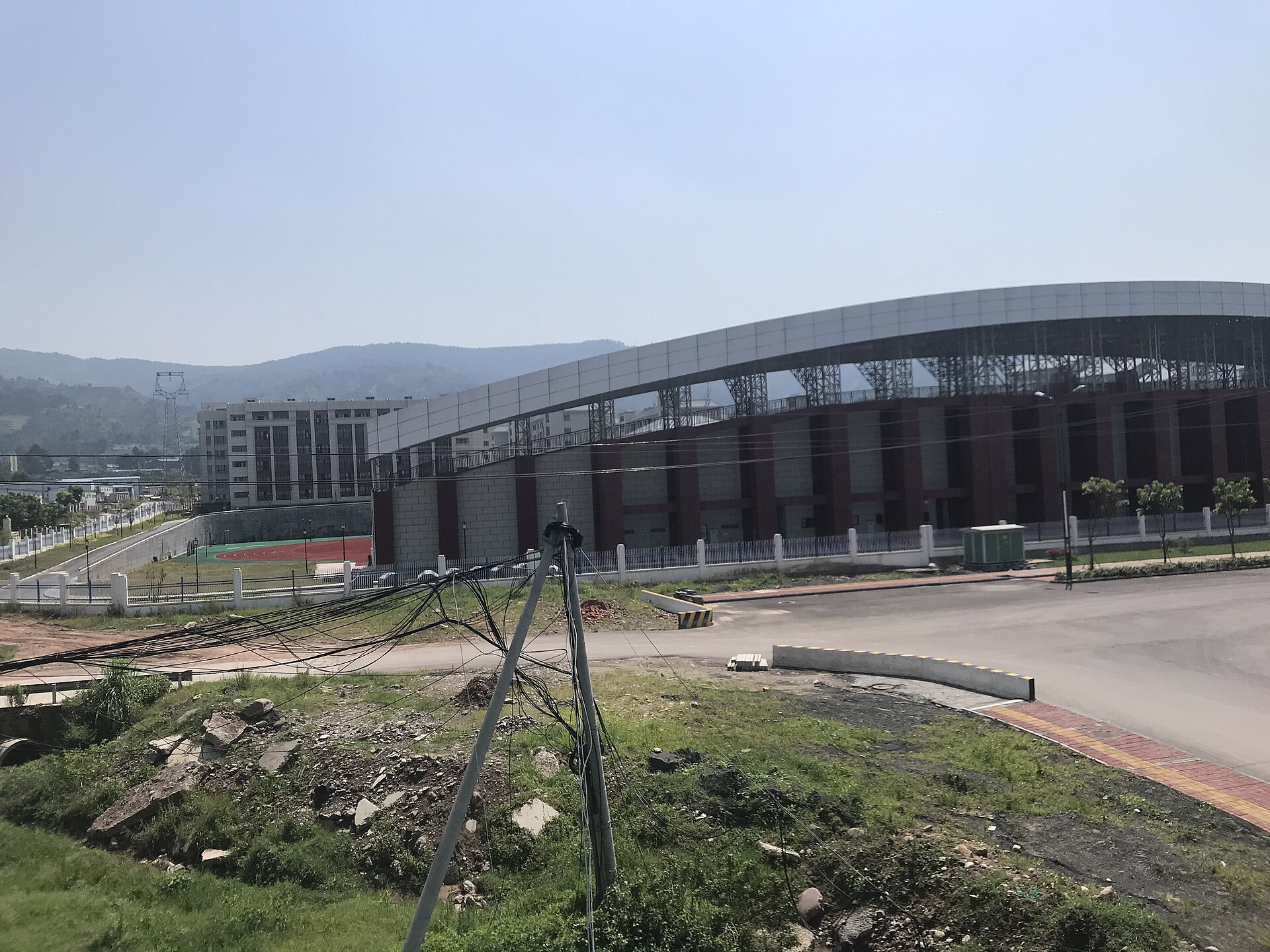
The night train from Chengdu shudders to a halt just before dawn, and the platform air carries a chill that vanishes the moment the sun clears the Liangshan ridges. Steam rises from a vendor’s noodle pot beside the taxi queue. You are in Xichang, the capital of the Liangshan Yi Autonomous Prefecture, where the altitude sits around 1,600 meters and the calendar seems stuck in perpetual April. Most travelers treat this place as a pit stop between the Sichuan basin and Yunnan’s Lugu Lake, six hours west on the G5 expressway. But the city rewards anyone willing to linger for a day or two.
Understanding the Rhythm
Xichang wears three nicknames: Moon City, Space City, and Spring City. The first two come from the satellite launch center—Base 57—hidden in the mountains sixty kilometers northwest. On clear evenings you can sometimes see a rocket’s contrail stitch a white line across the dusk sky. The third name is the one you feel in your bones. The climate is a subtropical highland monsoon type: winters rarely dip below freezing, summers hover in the mid-twenties Celsius, and the diurnal swing can be fifteen degrees or more. Pack a light down jacket for early mornings and a short-sleeve shirt for noon. Rain concentrates in the summer months; the dry season stretches from late autumn through early spring, which is also when the Yi New Year and Torch Festival preparations begin to surface in the markets.
Getting There and Moving Around
The city sits on the main artery linking Chengdu and Kunming. High-speed trains now cover the Chengdu run in roughly three and a half hours; the overnight conventional service takes twelve but saves a night’s accommodation. Flights from Chengdu, Chongqing, and Kunming land at Xichang Qingshan Airport, a twenty-minute drive from the center. Long-distance buses still rumble in from both provincial capitals and from Panzhihua to the south. Once in town, the public bus network reaches most sights for two or three yuan. Ride-hailing apps work reliably. If you plan a side trip to the launch center or to Qionghai Lake’s wetland park, hire a private car for the day—drivers know which military checkpoints require a passport check and which are waved through.
Where to Sleep
Chain hotels cluster near the high-speed rail station and along Chang’an Road. They offer reliable hot water and English-speaking front desks, but the character lies elsewhere. In the older districts south of the Anning River, courtyard guesthouses converted from Yi-style timber frames sit behind high walls. A family-run place on Jianchang Lane serves breakfast on a stone slab: steamed corn cakes, pickled mustard greens, and a bowl of yak butter tea that tastes like liquid smoke. Ask the host about the lunar calendar; they will tell you which market day falls on a “fire” day—auspicious for buying silver jewelry in the ethnic quarter. Mid-range options around Qionghai Lake’s north shore give you sunrise views over water reeds without the tour-bus crowds that arrive by ten.
Eating Like a Local
Liangshan cuisine leans on three pillars: tart, spicy, and smoked. The signature dish is tuotuo rou—chunks of pork belly boiled until the fat turns translucent, then dipped in a sauce of minced garlic, fermented chili, crushed Sichuan pepper, and a splash of vinegar. It arrives on a wooden tray with a side of cold buckwheat noodles. Another staple is yangyu baba, a potato pancake fried in lard until the edges lace into crisp netting. For breakfast, hunt down a stall selling suancai mian: hand-pulled noodles in a broth soured with house-fermented mustard greens, topped with minced pork and a drizzle of chili oil that glows like amber.
- Tuotuo rou (boiled pork belly) – pork belly, water, ginger, scallion; dip: garlic, fermented chili, Sichuan pepper, vinegar, soy sauce.
- Yangyu baba (potato pancake) – grated potato, corn starch, salt, lard for frying.
- Suancai mian (sour vegetable noodles) – wheat noodles, fermented mustard greens, minced pork, chili oil, cilantro.
- Yak butter tea – brick tea, yak butter, salt, churned in a wooden cylinder.
Vegetarians should learn the phrase bu yao rou early; broth bases often contain ham or bone stock. A safe harbor is the Buddhist canteen behind Wenchang Temple, where a tray of braised tofu, stir-fried wild greens, and brown rice costs less than a convenience-store sandwich.
Sights Worth the Detour
Qionghai Lake is the postcard shot: a crescent of blue framed by kapok trees that burst into red cotton in early spring. Rent a bicycle at the north gate and follow the lakeside path past the wetland boardwalk where black-necked cranes winter. Halfway around, a narrow lane leads to the Satellite Launch Center viewing platform. You cannot enter the base without a special permit arranged weeks ahead, but the platform offers a telescopic view of the launch pads and a small museum displaying a Long March rocket engine. Allow two hours.
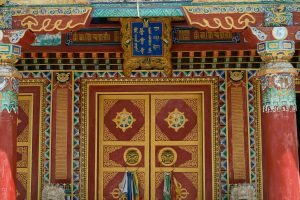
In the city center, the Yi Slave Society Museum occupies a modern building shaped like a traditional zhuijiao lou (corner-tower house). The exhibits trace the region’s transition from a matrilineal clan system to the democratic reforms of the 1950s. Look for the lacquered wooden bowls inlaid with silver—craftsmanship that still thrives in the workshops behind the building. Admission is free; bring your passport for the security scan.
For a quieter afternoon, walk the ancient city wall remnant near Beimen Gate. The bricks are Ming dynasty, patched with Qing repairs. Elderly men play Chinese chess on the parapet, their pieces clicking against the stone. No ticket, no turnstile, just the smell of roasting chestnuts from a cart below.
Culture, Markets, and Missteps
The weekly market at Xichang’s South Gate follows the lunar cycle, peaking on days ending in three and eight. Yi women in pleated skirts and embroidered headscarves spread blankets of wild mushrooms, walnuts, and hand-woven hemp cloth. Bargaining is expected but keep it light-hearted; a vendor once told me, “We argue price, not respect.” Silver ornaments—bracelets, earrings, neck rings—are sold by weight. Ask to see the hallmark stamp; genuine pieces carry a tiny “999” or “S925” mark. Avoid the “antique” coral beads displayed in velvet boxes; most are dyed plastic.
If you are invited to a Yi household, the host will pour the first bowl of wine onto the ground for ancestors. Accept the second bowl with both hands, sip, and return the bowl—refusing is considered a slight. Do not step over the fire pit in the center of the main room; it represents the family’s continuity. Photography inside homes is welcome only after asking. A common newcomer error is handing a business card or gift with one hand; always use two.
Language barriers can turn a simple bus ride into a comedy. Few drivers speak Mandarin fluently, and the local Sichuanese dialect swallows final consonants. Carry a screenshot of your destination written in Chinese characters. For the launch center, the characters are 西昌卫星发射中心. Show it, nod, and the driver will flash a thumbs-up.
Side Trips and the Road West
Lugu Lake is the siren call. The expressway cuts the old twelve-hour mountain slog to six hours, but the scenery demands stops. Pull over at the Yanyuan County overlook where the road hugs a cliff above the Yalong River. In late autumn, persimmon trees along the roadside hang like orange lanterns. If time allows, detour to Luji Mountain, two hours north. Its alpine lakes and azalea forests bloom in late spring, and the hiking trails see more yaks than people. Stock up on water and snacks in Xichang; mountain service stations sell instant noodles at triple the city price.
Before you board the westbound train or bus, eat one last bowl of suancai mian at the stall near the old railway station. The broth remembers every hand that stirred it. Xichang does not shout for attention, but the flavor lingers—like the scent of kapok blossoms on a spring breeze, or the faint rumble of a rocket lifting off behind the hills, carrying something human into the dark.