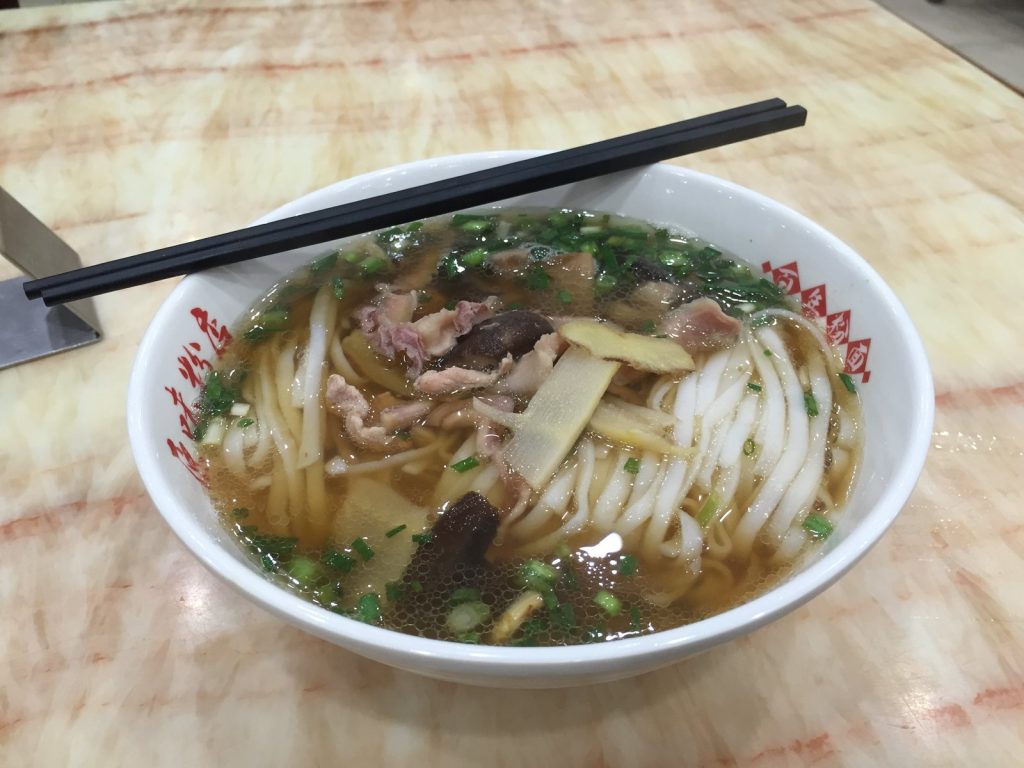
Changsha rice noodles (长沙米粉, Chángshā mǐfěn) are how much of Hunan’s capital starts the day. Locals call it suō fěn (嗦粉), “slurping noodles”: a quick bowl of soft, flat rice noodles in clear broth with a ladle of slow-cooked topping, eaten at a plastic table before work. Surprisingly for a Hunan dish, the bowl arrives without any chili — you add the heat yourself. This first-timer guide explains what makes Changsha rice noodles different, how to order without a menu in English, and what to check if you avoid pork or gluten.
What makes Changsha rice noodles different
Hunan has many rice-noodle traditions — round Changde noodles, Shaoyang beef noodles, Hengyang fish noodles — and Changsha’s version has its own identity:
- Flat noodles (扁粉, biǎn fěn). Changsha people mostly prefer thin, flat rice noodles, which pick up broth more easily than round ones. Many shops also offer round noodles (圆粉) if you ask.
- Clear, savoury broth. Hunan media describe the ideal as tāng xiān mǎ rè (汤鲜码热): fresh broth, hot topping. Shops typically simmer pork bones and chicken for hours; some old shops added fermented black beans to the stock.
- Toppings called mǎzi (码子). The topping is the star, and the noodle shop’s reputation rests on it.
- Chili on the side. A Hunan Daily-group report notes that a typical Changsha shredded-pork noodle bowl has no heat when served; the chopped chili, pickles and preserved vegetables wait on the counter for you.
If you are new to the city’s food, our Hunan cuisine for first-timers: Changsha must-try dishes sets the wider scene.
The toppings (mazi): what to choose
Hunan media divide toppings into two broad groups:
Pre-cooked toppings (盖码 / 煨码)
Made in big pots in advance and ladled over your noodles. The five classic stewed toppings, cited by old-name shop Yang Yu Xing (杨裕兴) and listed on Changsha’s municipal intangible heritage register, are:
- 肉丝 (ròusī) — shredded pork, slow-cooked until tender. The everyday classic and the best first order.
- 酱汁 (jiàngzhī) — soy-braised pork pieces, richer and darker.
- 牛肉 (niúròu) — braised beef.
- 杂酱 (zájiàng) — minced pork sauce.
- 酸辣 (suānlà) — hot-and-sour topping.
Many shops add their own: pork ribs, pig’s trotter, chicken, mushroom, or a steamed pork patty with egg (肉饼蛋).
Stir-fried-to-order toppings (炒码)
Cooked in a small wok when you order — pork kidney, liver, tripe, eel, or mixed seafood. These are tastier when you want something fresh but take a few minutes longer.
Tip: ask for shuāng mǎ (双码, double topping) if you are hungry, or guò qiáo (过桥, “cross the bridge”) to have the topping served in a separate bowl — an old-Changsha habit that keeps the broth’s original flavour clean.
How to order at a Changsha noodle shop
Most shops work the same way: order and pay at the counter (often by scanning a QR code), get a ticket or a number, collect your bowl when called, then add condiments at the self-service counter.
Useful phrases:
- 一碗肉丝粉 — one bowl of shredded-pork noodles
- 扁粉 / 圆粉 — flat noodles / round noodles
- 双码 — double topping
- 过桥 — topping on the side
- 宽汤 — extra broth
- 免青 — no scallions
- 重挑 / 轻挑 — more noodles / fewer noodles
- 不要辣 — no chili (usually not needed: chili is self-serve)
- 打包 — takeaway
At breakfast peak — a Changsha newspaper report puts it at about 8 to 9 am in busy shops — queues move fast. Know your order before you reach the front. Prices vary by shop and topping; check the board or the QR menu. Pay with Alipay or WeChat Pay; many small shops are cash-light.
The condiment counter
This is where you personalise the bowl. Expect some of:
- 剁辣椒 (duò làjiāo) — chopped salted chili, Hunan’s signature. Start with half a spoon.
- 干辣椒粉 — dried chili powder.
- 榨菜 — pickled mustard tuber, crunchy and salty.
- 酸豆角 — pickled long beans, sour and crisp.
- 油渣 — fried pork cracklings.
- 葱花 / 芹菜 — scallions or celery.
- Soy sauce and vinegar bottles on the table.
Purists argue the old way was no add-ons at all — one shop owner told a Changsha newspaper that “Changsha rice noodles don’t have side dishes” — while younger diners load up on chili. Both are authentic; follow your taste.
What it tastes like
The noodles are soft, smooth and slippery rather than chewy like wheat noodles. The broth is light and savoury; the topping supplies richness. Without chili, a shredded-pork bowl tastes mild, almost gentle — a good surprise if you expected Hunan fire. With chopped chili and pickles, it becomes salty, sour and hot. Slurping is normal. Drink some broth from the bowl or with a spoon.
Old shops and where to look
Changsha has several famous names cited by Hunan media: Ganchangshun (甘长顺), dating from 1883; Yang Yu Xing (杨裕兴), founded in 1894; and Heji (和记), which grew from a 1920s street stall. A local rhyme still pairs “Heji’s rice noodles” with other old Changsha snack names. Branches and opening hours change, so check a map app before you go.
You do not need a famous name to eat well. Look for:
- A busy neighbourhood shop with locals queueing at breakfast
- Big pots of toppings simmering behind the counter
- A well-stocked condiment counter
- Fast turnover — fresh noodles and hot broth
Combine a bowl with a morning walk before a Yuelu Mountain autumn visit, or follow our Changsha first visit guide. For an afternoon snack, try Changsha stinky tofu.
Golden Week and autumn timing
Today, Monday 5 October 2026, is day five of Golden Week (roughly 1–7 October; makeup workday Saturday 10 October). Changsha’s tourist areas are busy this week, but neighbourhood noodle shops away from the main pedestrian streets keep their normal local rhythm. Early mornings are the best time: hot broth on a cool October morning is exactly why locals love this dish. If the queue at a famous shop is long, walk two blocks and try the place where office workers are eating.
Dietary notes
- Pork: broth is usually pork-bone based, and most toppings are pork. Even a plain bowl (光头粉, no topping) uses the same stock. Muslim travellers should look for halal noodle shops instead; see our halal food guide for Chinese cities.
- Vegetarian: difficult in standard shops because of the broth. Ask 有没有素汤? (“Do you have a vegetable broth?”), or choose a vegetarian restaurant; our Chinese vegetarian temple food guide helps.
- Gluten: rice noodles are made from rice, but soy sauce and some braised toppings contain wheat. Coeliacs should be cautious.
- Spice: fully controllable — leave the chili off.
- Offal: stir-fried toppings often include kidney, liver or tripe. Point to 肉丝 if you prefer plain meat.
- Peanuts and sesame appear in some condiments; check if allergic.
Common first-timer mistakes
- Waiting at the table for a server who never comes — order at the counter
- Dumping a full spoon of chopped chili into the first bowl
- Expecting thick, chewy noodles like Guilin or Lanzhou noodles
- Forgetting to collect your bowl when your number is called
- Arriving at a famous shop at peak and queueing longer than you eat
If you enjoy Changsha’s version, compare it with Guilin rice noodles — round noodles, a different topping logic.
FAQs
Are Changsha rice noodles spicy? Not when served. Chili and pickles are self-serve, so you choose the heat.
What is the best first order? 肉丝粉 (shredded-pork noodles) with flat noodles.
Is it only for breakfast? It is mostly a breakfast and lunch food; many shops close by mid-afternoon. Check hours.
What does 嗦粉 mean? Local slang for eating rice noodles — literally “slurping noodles”.
Can I get it without pork? Beef topping is common, but the broth is usually pork-based.
Is it gluten-free? The noodles are rice, but soy sauce and toppings may contain wheat.
Before you go
Save 一碗肉丝粉,扁粉 on your phone, order at the counter, add chili a little at a time, and go early. A bowl of Changsha rice noodles is the fastest way to eat breakfast like a local in Hunan’s capital.
Lovely China was founded in 2025 to publish practical English guides for travellers and expats in China. Questions or a broken link? Email [email protected].
Cover photo: N509FZ / Wikimedia Commons (CC BY-SA 4.0).