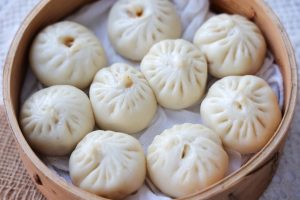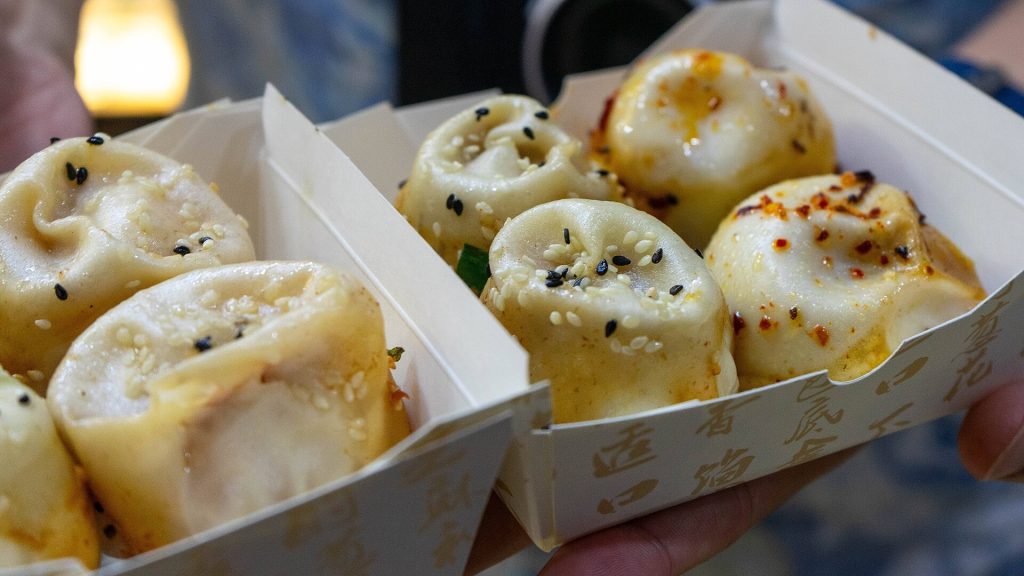
If xiaolongbao (soup dumplings) are the graceful, delicate debutantes of Shanghai’s culinary scene, shengjianbao (生煎包) are their loud, proud, crisped-to-perfection streetwise cousins. These pan-fried pork buns are a cornerstone of Shanghai breakfast culture (zaocan), delivering a masterclass in textural contrast: a golden, crunchy bottom, a fluffy steamed top studded with sesame seeds and chopped scallions, and a rich, scalding-hot pork soup trapped right inside.
As autumn deepens across the Yangtze River Delta, a piping-hot bag of freshly fried shengjianbao is one of the ultimate comforts against the chilly morning air. But if you dive into your first bun without knowing the rules, you are guaranteed to scald your tongue or spray hot broth all over your traveling companion. Here is everything a first-timer needs to know to conquer Shanghai’s legendary pan-fried buns like a local.
1. Shengjianbao vs. Xiaolongbao: What’s the Difference?
Many travelers confuse shengjianbao with xiaolongbao, but beyond being round flour wrappers filled with pork and soup, they live in entirely different universes:
* The Wrapper: Xiaolongbao use a thin, translucent, un-leavened dough designed to steam quickly and gently hold soup without tearing. Shengjianbao use a semi-leavened dough—thicker and fluffier on top, akin to a baozi, but rolled flat on the bottom so it can pan-fry into a shatteringly crisp crust.
* The Cooking Method: Xiaolongbao are exclusively steamed in bamboo baskets. Shengjianbao are cooked in massive, shallow cast-iron pans with heavy lids, pan-fried in oil on the bottom, then spritzed with water and steamed covered until the tops turn pillowy and soft.
* The Vibe: Xiaolongbao are dainty items meant to be eaten gingerly off a soup spoon. Shengjianbao are heavy, rustic, grab-and-go street food.
*(If you’re eager to explore more classic local flavors after mastering your buns, you might also want to check out our guide on Shanghai Stir-Fried Rice Cakes (Chao Niangao) for First-Timers for another carb-heavy staple of local Shanghainese comfort cooking.)*
2. The Golden Rule: How to Eat Without Exploding Your Mouth
The greatest trap of the shengjianbao is its interior broth. Because the meatball is wrapped with aspic (gelatinized pork stock) that melts into liquid during frying, the inside becomes a boiling-hot reservoir of soup. Biting straight down into a fresh bun is a rite of passage that usually ends in an emergency trip for ice water.
Follow this step-by-step technique to eat a shengjianbao safely:
1. Inspect and orient: Pick up the bun with your chopsticks by its twisted, pleated top. Look for the golden-brown, crispy bottom.
2. **The “Nibble and Blow” (小口吸汤 – Xiaokou xitang):** Hold the bun close to a spoon or paper cup, and nibble a tiny hole into the side or top crust. Let a little steam escape.
3. Sip the broth: Gently tilt the bun and slurp out the rich, savory pork soup through your little opening. Take your time—let it cool for a minute!
4. Dip and devour: Once the danger of scalding soup has passed, dip the exposed meat filling and crispy crust into Chinese black vinegar, then eat the rest in one or two satisfying bites.
3. Anatomy of a Masterpiece: What Goes Inside the Wrapper?
To truly appreciate a great shengjianbao, it helps to understand the engineering that goes into every batch. A master vendor balances structural integrity with maximum flavor through three core components:
The Filling (Meat and Aspic Ratio): Traditional Shanghainese shengjianbao use ground pork shoulder with a balanced fat-to-lean ratio. Finely minced scallions, fresh ginger, Shaoxing wine, and a touch of white pepper form the seasoning base. Crucially, pork skin stock or gelatin blocks (pijiang*) are folded into the raw meatball. When heated, this aspic melts into a rich, gelatinous soup that bathes the meat from the inside out.
* The Pleating and Sealing: Expert chefs pleat the top of the bun tightly—typically with 18 to 24 delicate folds—pinching it closed so tightly that no steam escapes upward. This forces the steam to circulate internally, cooking the pork evenly while keeping the juices locked inside until you make your first nibble.
* The Crust Chemistry: Achieving that iconic amber-gold, lace-like crust requires precise heat management. As oil hits the cast-iron pan, the flat base of the dough fries into a crisp layer. Just before it burns, a splash of water is thrown onto the pan, which is immediately sealed with a heavy wooden lid. The resulting steam cooks the upper half, while the residual oil keeps the bottom frying until it turns crunchy and structurally sound enough to lift without breaking.
4. Famous Shop Chains vs. Neighborhood Holes-in-the-Wall
When hunting for shengjianbao in Shanghai, you generally encounter two styles:
* The Legacy Chains (e.g., Yang’s Fry-Dumpling / 小杨生煎): Ubiquitous across the city, places like Yang’s offer a reliable, standardized experience. Their modern iterations often feature a slightly thicker, crispier bottom and a clean, bouncy pork filling. They are exceptionally friendly for first-timers because menus feature English and photo displays.
The Old-School Neighborhood Stalls: Tucked away in residential lanes (longtang*), these independent vendors often use traditional cast-iron pans outdoors, producing buns with more caramelized crusts, heavier hits of soy and ginger, and occasionally a skin-on or gelatin-rich pork mixture that food purists swear by.
Navigating Shanghai’s bustling backstreets to find these hidden mom-and-pop gems is half the adventure. To ensure you never get lost while hunting down breakfast, make sure your digital navigation is sorted by reviewing our How to Use Amap (Gaode Maps) in China as a Foreigner: 2026 English Guide. Furthermore, because many traditional neighborhood stalls are increasingly cash-free or rely entirely on local QR code setups, having your digital wallet prepped is essential. Check out our guide on Alipay and WeChat Pay for Foreign Visitors in China 2026 alongside our China SIM and eSIM for Foreign Visitors in 2026 overview to ensure seamless mobile connectivity on your food crawl.
5. Condiments: The Vinegar and Chili Ritual
While a great shengjianbao is packed with flavor on its own, condiments elevate the experience. At most breakfast counters, you’ll find squeeze bottles or jars of Zhenjiang black vinegar (cucu) and house-made chili oil.
Pour a small pool of black vinegar into a dipping dish. The acidity of the vinegar cuts directly through the rich, fatty pork and heavy oil of the pan-fried crust, balancing every bite. If you love heat, spoon a dollop of chili oil right into your vinegar puddle. Some traditional spots also offer finely shredded fresh ginger (jiangsi), which adds a sharp, aromatic bite that combats any heaviness from the pork fat.
6. Shanghai Breakfast Culture Tip
In Shanghai, breakfast is rarely a quiet, sit-down affair; it is a lively, fast-paced morning ritual. Locals (Shanghairen) often grab a box of four shengjianbao paired with a bowl of savory soybean milk (cai jiangdoujiang) or beef curry soup on their way to work or the wet market.
Peak breakfast hours run from 6:30 AM to 9:00 AM. Go early to experience the buns at their absolute crispiest, straight out of the screaming-hot iron pan, and watch the city wake up one delicious, crunchy bite at a time. If you arrive past 10:00 AM at popular legacy stalls, you risk finding empty trays, as batches sell out remarkably fast.
Frequently Asked Questions (FAQ)
Are shengjianbao vegetarian?
No, traditional shengjianbao are filled with minced pork and pork-based aspic soup. While some modern fusion chains occasionally offer seasonal vegetarian or shrimp variants, the baseline street food standard is pork-centric.
Should I eat the pleated top or the crispy bottom first?
Always pick up the bun by its pleated top using your chopsticks. Nibble a small hole in the upper side to release steam and drink the soup, then dip the crispy bottom into black vinegar before eating the rest.
How many shengjianbao make a standard serving?
A standard order at most breakfast stalls or chains is four pieces per serving. This is typically enough for a satisfying breakfast when paired with a bowl of warm soy milk or soup.