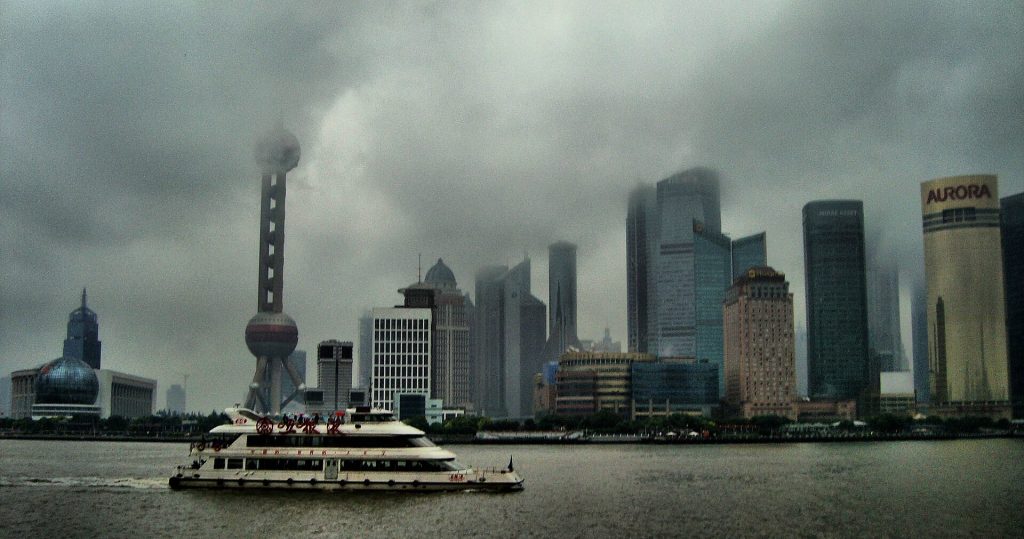
The heat of Golden Week did not fade gradually; it snapped. Just days ago, tourists in light linen shirts were still sweating through long lines outside the Yuyuan Garden, and afternoon café terraces hummed with the lazy, sun-drenched cadence of early October. But today, the sky over the Huangpu River has turned the color of a wet slate shingle. The first true autumn rain of the season has arrived in Shanghai, sweeping in off the East China Sea and settling over the boulevards with a quiet, persistent chill.
On Nanjing Road West, the chromatic violence of neon signs is muted by a thin, milky haze. Overhead, a moving sea of umbrellas—translucent blues, corporate blacks, and cheap convenience-store reds—bobs rhythmically along the pavement. The asphalt glistens like spilled oil, reflecting the crimson glow of traffic lights and the hurried, rubber-soled footsteps of commuters whose wardrobes have switched overnight from summer cotton to trench coats and wool scarves.
The Smell of Wet Plane Trees and Steamed Windows
Walk down the historic French Concession streets like Fuxing Road or Hengshan Road, and the character of the city changes entirely with the moisture. The London plane trees, which canopy the old lane houses (longtang) in a dense green tunnel all summer, release a sharp, earthy aroma when wet—a mixture of damp bark, fallen leaves, and soaked earth that defines crisp autumns in the Jiangnan region. Inside a cramped noodle shop near People’s Square, the world is reduced to a pocket of warmth and humidity. The glass storefront is completely opaque with condensation, shielding the diners from the grey drizzle outside.
+————————————————————-+
| RAINY DAY TRANSIT QUICK TIPS |
| |
| 1. Stick to underground walkways in Xujiahui & Lujiazui. |
| 2. Prioritize Metro lines over road transport during peak. |
| 3. Carry a small microfiber towel for wet camera gear. |
+————————————————————-+
The rhythmic hiss of the wok and the deep, savory scent of boiling pork bone broth offer an immediate sensory retreat from the rising wind. Patrons huddle closer to their steaming bowls, jackets draped over chair backs, while droplets trace erratic, winding paths down the exterior glass panes. Outside, bicycle delivery riders in heavy blue ponchos zip past, their front cargo baskets loaded with plastic bags of hot food, carving through the shallow puddles that pool neatly at every curbside drain.
Seasonal Comfort Food and Warm Neighborhood Havens
As temperatures dip below twenty degrees Celsius, the city’s culinary landscape shifts away from cold jasmine teas and refreshing street snacks toward deep, warming comforts. Neighborhood spots across Jing’an and Huangpu begin rolling out seasonal specialties that locals swear by when the autumn chill sets in.
* The Hairy Crab Craving: October marks the glorious arrival of Yangcheng Lake hairy crabs. Steamed with perilla leaves and dipped in a pungent bath of aged zhenjiang vinegar and shredded ginger, cracking open a rich, roe-filled crab is an autumnal rite of passage in Shanghai.
* Roasted Chestnut Carts: On nearly every major corner, street vendors set up rotating iron drums filled with black sand and sweet chestnuts. The scent of caramelized sugar and roasted nuts cuts sharply through the damp air, offering instant solace to cold fingers.
* Scallion Oil Noodles (Congyou Banmian): A comforting staple of local Jiangnan cuisine, piping hot noodles tossed in crispy fried scallions and aromatic soy sauce provide a rich, carb-heavy shelter from the grey afternoon.
* Pan-Fried Pork Buns (Shengjianbao): Fresh from heavy iron pans with golden, crunchy bottoms and bubbling soup inside, eating these requires caution and a napkin, serving as a staple street-side defense against wet shoes and chilly winds.
Navigating the Grey Afternoon
Outside, moving through the city requires a different rhythm than the sun-bleached rush of mid-season holiday travel. For visitors caught off guard by the sudden drop in temperature, staying connected becomes vital for tracking metro delays or pivoting to indoor itineraries. Whether checking local radar updates or pulling up real-time walking routes to the nearest subway entrance, reliable mobile data—such as a pre-installed China SIM and eSIM for Foreign Visitors in 2026—keeps maps loading smoothly despite the weather interference. Navigating the subterranean labyrinths of Line 2 or Line 14 is made far easier by referencing digital guides like How to Use Amap (Gaode Maps) in China as a Foreigner: 2026 English Guide, ensuring you find the quickest covered walkways out of the downpour.
Fingers slick with rain quickly fumble with cash, making the ubiquitous digital infrastructure indispensable. Grabbing a hot ginger milk tea from a corner convenience store or settling a cab fare is handled entirely through QR codes, relying smoothly on Alipay and WeChat Pay for Foreign Visitors in China 2026 without ever needing to pull soggy paper bills from a wallet.
## Umbrella Strategy and Metro Connectivity
Navigating a dense metropolis like Shanghai during a persistent autumn downpour demands more than just dodging puddles; it requires a systematic transit strategy. Above ground, surface traffic on arteries like Yan’an Elevated Road slows to a sluggish crawl as visibility drops and cars match speeds with cautious drivers. The secret to a dry, stress-free journey lies entirely beneath the pavement.
Shanghai’s modern commercial hubs—particularly Xujiahui, People’s Square, and Lujiazui—are laced with vast, interconnected underground walking networks. You can exit a train at Xujiahui, traverse multiple shopping malls, access office towers, and transfer lines without ever stepping out into the grey drizzle. When selecting an umbrella, avoid fragile tourist parasols; opt instead for a sturdy, wind-resistant automatic folding umbrella bought at any local FamilyMart or Lawson convenience store for around forty yuan. Paired with the city’s extensive metro network, these subterranean pathways keep your shoes dry and your schedule intact while the weather churns overhead.
From Holiday Rush to Quiet Reflection
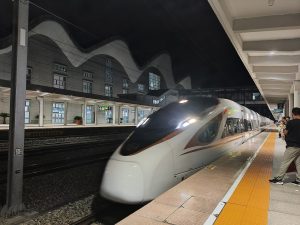
The contrast between this grey afternoon and the frenetic energy of the national holiday weeks ago is stark. Just a short while back, travelers were sharing reflections on crowded tea houses, as seen in Afternoon Tea Mid-Golden Week, or navigating the chaotic surge of stations during Night Train Home on the Eve of Golden Week. Now, the city breathes out. The damp metro stations smell faintly of rubber rain boots and damp wool. Commuters stare tiredly into their glowing screens, lulled by the low rumble of the train slicing through the dark tunnels beneath the Huangpu River. Autumn has not merely arrived in Shanghai; it has taken quiet, damp possession of the streets.
***
When the rain settles in, practical tools matter as much as atmosphere. Many visitors rely on How to Use Amap (Gaode Maps) in China as a Foreigner to reroute around flooded underpasses, and on Alipay and WeChat Pay for Foreign Visitors in China so a soaked wallet is not a crisis. If your hotel Wi-Fi falters, a local China SIM or eSIM for foreign visitors keeps maps and ride-hailing alive.
The first autumn rain also changes what people order. Clear beef noodle broths, hot soy milk, and pan-fried buns feel less like breakfast options and more like weather strategy. Convenience stores sell disposable umbrellas near the door; pharmacies stock tissues and cold-relief drinks; office workers queue for takeaway under dripping glass canopies. None of this is dramatic. It is simply Shanghai remembering that summer is over.
If you only have one free afternoon, treat the rain as permission to slow down. Sit by a steamed window. Watch plane-tree leaves stick to the pavement. Let the metro dry your shoes between stations. The city will still be there when the sky clears—sharper, cooler, and ready for the long autumn stretch toward winter.
Frequently Asked Questions
What should I wear during Shanghai’s first autumn rain?
Temperatures often drop sharply over the span of 24 to 48 hours when the seasonal transition hits. Layering is key: bring a windproof or waterproof trench coat, light sweaters, and comfortable waterproof footwear, as low-lying puddles form quickly on older sidewalks.
Does public transit get delayed during rainstorms in Shanghai?
The Metro system (subway) operates normally during heavy rain, though above-ground light rail lines may occasionally reduce speeds for safety. Surface traffic, however, tends to slow down significantly during rush hour, making the metro the best choice for getting around.
Are outdoor attractions worth visiting in Shanghai during rainy autumn days?
Historic walking areas like the Former French Concession or Suzhou Creek retain a moody, atmospheric charm in the rain, provided you have a sturdy umbrella. However, for open expanses like the Bund or rooftop observation decks, visibility can be severely limited by low cloud cover.