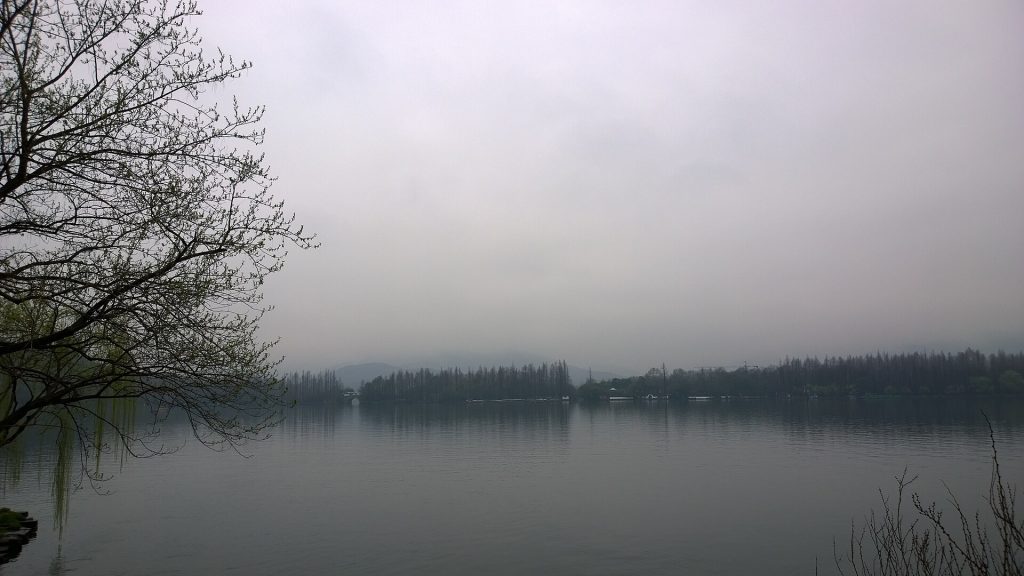
November mornings beside Hangzhou’s West Lake do not announce themselves with fireworks. They arrive as a pale sheet of mist, a thermos click from an early walker, and the soft knock of oars somewhere you cannot yet see. This is a travel story for slow visitors—not a checklist of ticket gates.
If you want logistics after the mood, keep the Hangzhou first-visit guide and Shanghai first-visit guide nearby, with HSR context in high-speed rail first-timers guide.
Before the lake admits colour
You leave the hotel while the lobby lights still feel louder than the sky. The air is cold enough to wake your fingers. Willows hold droplets. A cleaner sweeps a stone path in steady arcs. Farther on, a person practices slow forms with sleeves the colour of tea.
You do not hurry. Hurrying is a Shanghai habit you can borrow another day.
Bridges and names
Famous named bridges collect cameras when the mist lifts. In the early hour they belong to locals crossing for errands and to travellers who woke by accident. You walk past the thickest cluster and find a stretch where the water meets stone without an audience. A boat appears as a darker brushstroke, then resolves into wood and a seated figure.
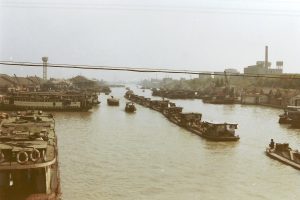
You think of the November canal morning story farther north in the Delta (West Lake November story (Suzhou canal sister piece) / Suzhou sister piece) and smile at how water cities rhyme without copying each other.
Tea as punctuation
A small shop lifts its shutter. You order by pointing and saying thank you more times than needed. The cup warms the same hands that held your phone flashlight in the hotel corridor. Payment is a QR flash (Alipay and WeChat Pay hub)—brief modernity inside an old ritual.
No one asks why you are alone. Solitude is normal beside a lake this large.
Bicycles and soft bells
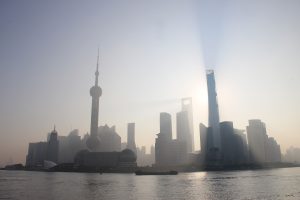
Later, rental bikes tick along the paths. Their bells are polite, almost apologetic. You step aside. A child laughs; a grandparent answers. The mist thins into layers, and Lonely hills across the water gain outlines. You remember that Hangzhou is also a tech city with glass towers—those towers can wait until after breakfast.
What you carry out
You carry damp cuffs, a camera roll of nearly identical greys that somehow all matter, and the decision to miss one “must-see” pagoda in favour of sitting still. Travel advice loves optimisation. Lakes prefer presence.
When the HSR back toward Shanghai eventually calls (high-speed rail first-timers guide), you will board with lake air still in your scarf. That is a successful November morning: not a conquered itinerary, but a remembered temperature.
Related Lovely China reading
For payments and wallets, start with Alipay and WeChat Pay hub and WeChat Pay vs Alipay for tourists. For trains and long-distance moves, keep high-speed rail first-timers guide and 12306 passport signup for foreigners handy. For city orientation, the Beijing first-visit guide, Shanghai first-visit guide, and Chengdu first-visit guide hubs remain useful even when your trip centres on another province. Connectivity backups live in roaming vs local SIM honest guide, SIM vs eSIM carriers compare, pocket Wi-Fi vs eSIM for China, and offline maps for foreigners. Bookmark China travel tools page so you can jump between logistics topics without searching from scratch on hotel Wi-Fi at midnight.
Practical checklist
- Confirm official rules on the relevant government, park, airline, or bank page near your travel week
- Screenshot bookings, tickets, and QR codes while you still have stable Wi-Fi
- Save hotel and attraction names in Chinese characters in your phone notes
- Carry passport, a backup payment method, and a small cash float (why cash is still needed)
- Test one small mobile payment before you rely on wallets at a gate or taxi
- Build time buffers for security lines, November weather, and bilingual navigation
- Prefer refundable holds until visas, trains, or park tickets are confirmed
- Keep the China travel tools page page bookmarked for related Lovely China hubs
How to verify information without panicking
English travel blogs lag policy changes. When something critical is at stake—entry permission, ticket validity, or whether a card works—use primary sources: embassy or VAC pages, National Immigration Administration notices, official park reservation platforms, airline apps, and the screens inside Chinese super-apps. Lovely China articles such as Alipay and WeChat Pay hub, high-speed rail first-timers guide, and essential apps for foreigners help you orient, but they are not substitutes for the live rule in front of you.
If two sources conflict, choose the stricter one until you can ask a human at the counter. That habit prevents most arguments that begin with “I read online that…” at gates.
FAQ
Is this a literal itinerary?
No—it is a grounded mood piece. Use the Hangzhou first-visit guide for transport and pacing.
When should I arrive at the lake?
Early morning gives mist and fewer tour groups; exact light varies by weather.
Can I visit West Lake in one hour?
You can glimpse it; the point of this story is that the lake rewards unhurried time.
Is November too cold?
Cool and sometimes damp—layers make the difference between miserable and memorable.
Notes for late 2026 travellers
Late October and November bring cooler mornings, earlier sunsets, and comfortable train weather across much of eastern and central China. Pack layers, keep phone batteries warm outdoors, and leave extra time whenever a clear weekend coincides with popular sightseeing.
This article does not invent ticket prices, opening hours, processing times, consular fees, or official statistics. When a number matters, verify it on the official site, consulate page, app screen, or ticket board near your travel week.
Write key Chinese addresses into your phone notes before you leave Wi-Fi. Screenshot tickets and booking codes. Carry a small cash float even if you prefer wallets—see why cash is still needed. Reconfirm last-mile transport the evening before early starts.
If an official rule page disagrees with this guide, follow the official page. Lovely China orients English-speaking travellers; we are not an immigration, banking, or medical authority. Keep the China travel tools page bookmarked for other logistics hubs.
Traveller mindset
Move slowly through paperwork moments. A calm queue is cheaper than a missed train or a refused visa file. When language fails, show passport pages, booking screens, and maps with Chinese labels. Hotel front desks and station information booths are used to helping foreigners through routine steps.
Keep expectations honest: China is highly digital, but edge cases remain. Your job is not to memorise every exception—it is to carry backups (second card, cash, offline maps, written addresses) so one failure does not end the day. For everyday apps, start with essential apps for foreigners.