Stepping onto a misty Shanghai street on a brisk November or December morning, you will often find your senses guided by an irresistible aroma: toasted batter, sizzling eggs, garlic-infused bean sauce, and fresh scallions. For both newcomers and long-term expats, mastering the art of ordering a jianbing—China’s beloved savory breakfast crepe—is a quintessential rite of passage. While Tianjin is widely credited as the birthplace of this street food staple, Shanghai has adopted and refined the jianbing into its own distinct, comforting morning ritual, perfect for warming up during late-autumn and winter explorations.
Understanding the Shanghai Jianbing Style
When exploring Chinese street food, you will quickly notice that jianbing varies significantly by region. Unlike the crispier, grain-heavy Tianjin version (which traditionally leans on millet flour and a very crunchy fried dough cracker called cuiwan), the Shanghai style often features a slightly softer, more pliable batter made from wheat flour and egg. It balances savory, sweet, and aromatic notes, tailored to local palates that favor a harmonious blend of fermented sweet bean sauce, chili paste, chopped cilantro, and scallions. For first-time foreign diners, understanding these nuances helps demystify what happens behind the stainless-steel cart, ensuring you get a wrap tailored precisely to your palate.
Anatomy of a Jianbing: Layer by Layer
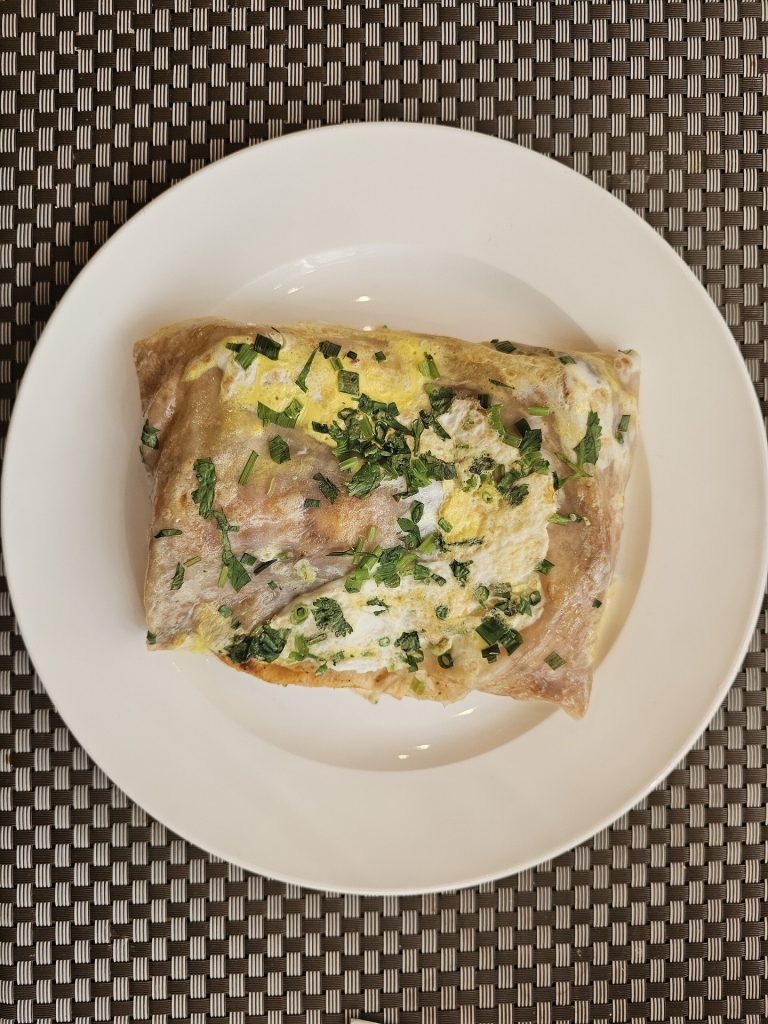
Watching a vendor craft a jianbing is mesmerizing performance art. Within seconds, a dollop of batter is spread across a rotating flat griddle with a wooden T-shaped rake, cracked with an egg, flipped, brushed with sauces, and folded into a neat, handheld package. Here is what goes into the classic build:
The Batter Base: A thin, uniform layer of liquid batter cooked until the edges curl golden and crisp.
The Egg: Whisked right on top of the cooking batter, binding the crepe together and adding rich texture.
The Sauces: A foundational brush of fermented sweet bean sauce, often complemented by garlic paste, sesame paste, and chili oil for those who enjoy heat.
The Aromatics & Fillings: A generous sprinkle of raw chopped scallions, fresh cilantro, and sometimes pickled radish or diced mustard greens for a salty crunch.
The Crunch Factor: The defining element—either a crispy thin cracker or deep-fried dough strips that snap delightfully with every bite.
Step-by-Step Guide to Ordering at a Street Stall
Approaching a busy neighborhood stall during the morning rush can feel intimidating if you do not speak Mandarin. However, street vendors are accustomed to quick, efficient transactions, and ordering relies on clear visual cues and modern payment methods. Follow this practical checklist:
Spot the Stall: Look for small storefronts or mobile carts with a flat circular griddle, a line of eager locals, and stacks of fresh eggs. Peak hours are typically 7:00 AM to 9:30 AM.
Prepare Your Payment: Have your phone ready. Most vendors display a QR code for mobile payments. Setting up your digital wallet beforehand is essential, as detailed in our guide on the Alipay and WeChat Pay hub. Always keep a small cash backup just in case your network signal drops.
Communicate Your Preferences: If you do not speak Chinese, use translation apps or prepared phrases on your phone. Key adjustments include asking for less chili (bu yao la or xiao la for mild), extra egg (jia dan), or avoiding cilantro (bu yao xiangcai).
Watch and Collect: Watch the vendor assemble your crepe with practiced speed. They will slide it into a paper sleeve or plastic bag. Take it immediately while it is piping hot to experience the optimal contrast between the soft crepe and the crunchy interior.
Fitting Jianbing into Your Shanghai Itinerary
A fresh jianbing serves as an ideal fuel source before diving into a full day of sightseeing outlined in our Shanghai first-visit guide. Because it is eaten entirely by hand, it requires no utensils, making it the ultimate mobile breakfast. Unlike sit-down culinary traditions that require strict adherence to chopsticks etiquette for foreigners or delicate steaming techniques found when eating Shanghai xiaolongbao first-timers, the jianbing is rugged, direct, and unpretentious. Pair it with a warm cup of soy milk for a classic, balanced morning meal that keeps you energized through chilly winter walks along the Huangpu River or old lane wanderings in the former French Concession.
Frequently Asked Questions
Is a Shanghai jianbing very spicy?
Not inherently. The base flavor profile relies on sweet bean sauce and savory pastes. Chili oil is added optionally. If you prefer mild food, you can simply ask the vendor to omit the chili or request a minimal amount.
Can I order a vegetarian jianbing?
Yes. The core ingredients—flour batter, egg, sauces, herbs, and crispy crackers—are naturally vegetarian. If you want to avoid hidden meat broths or lard sometimes used in specific regional variations, you can point out the basic components or use a translation app to confirm no minced meat is added.
Do street vendors accept cash, or is mobile payment mandatory?
While mobile payment via Alipay or WeChat Pay is overwhelmingly the norm across Shanghai, most street vendors will still accept physical cash if exact change is provided. However, digital payments are much faster and preferred during peak morning rushes to keep the queue moving.
How do I eat a jianbing without making a mess?
Eat it directly out of its paper sleeve, peeling away the packaging as you progress downward. Take small, deliberate bites so that the crunchy inner cracker breaks cleanly without puncturing the bottom of the wrapper and leaking sauce.
Related Lovely China reading
For payments, start with Alipay and WeChat Pay hub and WeChat Pay vs Alipay for tourists. For trains, keep high-speed rail first-timers guide and 12306 passport signup for foreigners handy. City hubs: Beijing first-visit guide, Shanghai first-visit guide. Connectivity: roaming vs local SIM honest guide, pocket Wi-Fi vs eSIM for China, offline maps for foreigners. Bookmark China travel tools page.
Practical checklist
- Confirm official rules on the relevant government, park, airline, or bank page near your travel week
- Screenshot bookings, tickets, and QR codes while you still have stable Wi-Fi
- Save hotel and attraction names in Chinese characters in your phone notes
- Carry passport, a backup payment method, and a small cash float (why cash is still needed)
- Test one small mobile payment before you rely on wallets at a gate or taxi
- Keep the China travel tools page page bookmarked for related Lovely China hubs
FAQ
Is this food advice official?
No. Lovely China orients travellers. Verify live rules on official pages, apps, and counters near your travel week.
Will every city behave the same?
No. Airports, stations, parks, and markets differ. Use local signage and staff instructions when they conflict with a general guide.
What should I screenshot before I lose Wi-Fi?
Bookings, tickets, hotel Chinese address, pickup pins, and payment success screens.
Notes for late 2026 travellers
November and early December bring cooler mornings, earlier sunsets, and comfortable walking weather across much of eastern and central China. Pack layers and leave extra time on clear weekends at popular sights.
This article does not invent ticket prices, opening hours, processing times, consular fees, or official statistics. When a number matters, verify it on the official site, app screen, or ticket board near your travel week.
If an official rule page disagrees with this guide, follow the official page. Lovely China orients English-speaking travellers; we are not an immigration, banking, or medical authority.