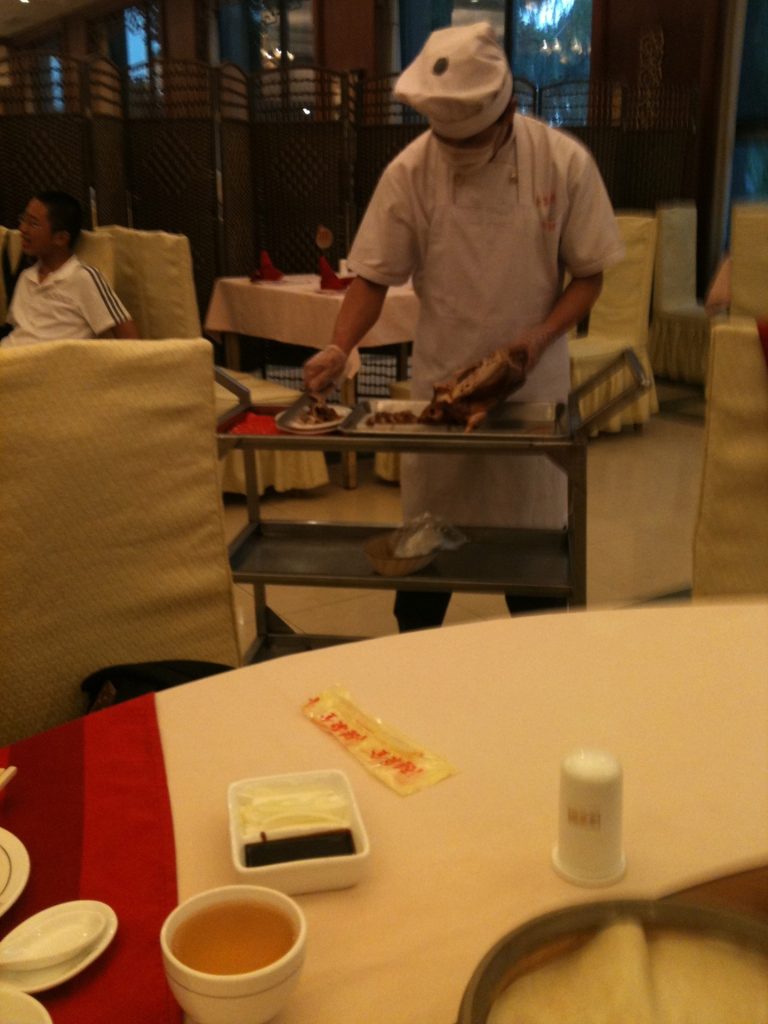
Beijing roast duck (also called Peking duck in older English) is a ceremony as much as a meal: crisp skin, soft pancakes, and a small kit of condiments. This is an order-and-eat guide for foreign first-timers—not a restaurant ranking and not a best-of list.
Dining soft skills: chopsticks etiquette for foreigners, queue etiquette for foreigners, tipping in China for foreigners. City hub: Beijing first-visit guide. Pay: Alipay and WeChat Pay hub, why cash is still needed.
Whole versus half
Many tables order a whole duck for groups; couples sometimes share a half when the kitchen allows. Ask how many pancakes come with the bird and whether soup or sides from the carcass are offered after carving. Staff would rather clarify portions than watch food waste.
Pancakes, sauce, and condiments
Typical assembly: smear sweet bean sauce on a thin pancake, add scallion and cucumber (or similar crisp veg), tuck in skin and meat, then fold. Watch a neighbouring table once if you feel shy—mimicry is welcome. Spice is not the main story here; richness and crunch are.
Carving service
Some restaurants carve tableside. Let the carver work; photos are fine if you stay out of the knife path. If service is kitchen-side, the platter still arrives with skin separated or arranged—ask politely which pieces to wrap first.
Dining flow without awkwardness
Order duck plus a vegetable and a light starch or soup so the table is not only rich meat. Mobile pay dominates; keep cash backup. Tipping norms differ from Western fine dining—see tipping in China for foreigners. Soft thank-yous go far.
What this guide will not do
We will not crown a “best duck in Beijing,” invent prices, or invent secret off-menu codes. Choose a clean, busy dining room your hotel trusts, and focus on the ritual.
November appetite note
Cool evenings make roast duck feel especially right. Book ahead on weekends when you can; walk-ins work at some casual spots with a queue (queue etiquette for foreigners).
Pairing dishes that balance the table
Order a green vegetable, a light soup if offered after carving, and maybe a staple so children or less meat-hungry guests stay happy. Ask about set menus without assuming they are cheaper—read the card.
Reservations and walk-ins
Famous rooms fill on November weekends. Hotels can help book; casual shops may use queues. Arrive with wallet ready and a translation screenshot of “roast duck, half/whole, pancakes.”
<!–padded–>
Extra field notes for late 2026
Cross-check live official pages the week you travel. Keep passport, why cash is still needed, and one working wallet path (Alipay and WeChat Pay hub). Screenshot Chinese addresses and booking codes. November light fades earlier—start iconic outdoor plans sooner, and leave buffers for metro security trays.
<!–padded2–>
Leftovers and takeaway culture
Some kitchens pack uneaten duck politely; ask before assuming. Street-side wrapping differs from banquet service—follow staff cues. End with tea if the table offers it; richness wants a pause before the cold November walk home.
Teaching kids or first-timers at the table
Demonstrate one wrap slowly; let children build their own with more cucumber and less sauce if needed. Napkins matter. If someone prefers meat without skin, say so early—kitchens can usually plate accordingly without drama.
Traveller self-check before you go
Re-read this article’s angle once more the night before you need it. Confirm official pages, pack passport and why cash is still needed, test Alipay and WeChat Pay hub on hotel Wi-Fi, and save Chinese place names offline. November schedules punish optimism—leave earlier than your summer self would. If anything here disagrees with a staff instruction or a live notice, follow the live source and write [email protected] only if you spot a site error worth fixing.
Related Lovely China reading
For payments, start with Alipay and WeChat Pay hub and WeChat Pay vs Alipay for tourists. For trains, keep high-speed rail first-timers guide and 12306 passport signup for foreigners handy. City hubs: Beijing first-visit guide, Shanghai first-visit guide. Connectivity: roaming vs local SIM honest guide, pocket Wi-Fi vs eSIM for China, offline maps for foreigners. Bookmark China travel tools page.
Practical checklist
- Confirm official rules on the relevant government, park, airline, or bank page near your travel week
- Screenshot bookings, tickets, and QR codes while you still have stable Wi-Fi
- Save hotel and attraction names in Chinese characters in your phone notes
- Carry passport, a backup payment method, and a small cash float (why cash is still needed)
- Test one small mobile payment before you rely on wallets at a gate or taxi
- Keep the China travel tools page page bookmarked for related Lovely China hubs
FAQ
Whole or half duck for two people?
Ask the restaurant—many couples share a half when offered; groups often order a whole. Clarify pancake count.
Is it the same as ‘Peking duck’?
Yes—older English often says Peking duck; Beijing roast duck is the common modern travel phrasing.
Do I have to finish ganbei with every course?
Duck meals are about wrapping and tasting—toasts are separate etiquette; decline politely if needed.
Will you rank restaurants here?
No—this is an ordering guide only.
Notes for late 2026 travellers
November and early December bring cooler mornings, earlier sunsets, and comfortable walking weather across much of eastern and central China. Pack layers and leave extra time on clear weekends at popular sights.
This article does not invent ticket prices, opening hours, processing times, consular fees, or official statistics. When a number matters, verify it on the official site, app screen, or ticket board near your travel week.
If an official rule page disagrees with this guide, follow the official page. Lovely China orients English-speaking travellers; we are not an immigration, banking, or medical authority.