Dining out in China is generally an incredibly seamless digital experience, but as you move from casual eateries to upscale dining or private banquet rooms, the payment logistics shift. Especially during the busy November and December 2026 holiday and year-end gathering season, you are highly likely to encounter restaurants requiring table deposits or payment preauthorizations to secure a booking. For expats and travellers using foreign credit cards linked to Chinese payment apps, seeing a sudden “hold” appear on a bank statement can cause temporary confusion. Understanding how Alipay handles these restaurant deposits, when the holds are actually released, and what to do if a transaction fails is essential for a stress-free culinary trip.
Why Restaurants Use Alipay Preauthorizations
In China, digital preauthorizations (holds) act as a security measure for businesses. While neighborhood restaurants simply charge you after the meal—or require scanning a QR code to order and pay upfront—premium venues handle billing differently.
You will typically encounter an Alipay preauthorization request in the following scenarios:
Booking a Private Room (Baojian): Many restaurants require a minimum spend or a deposit to reserve a private dining room, particularly during peak weekend hours or winter holiday banquets.
High-End Dining: Upscale restaurants may place a hold on your account when you make a reservation through a mini-program embedded within Alipay.
Equipment Deposits: Hot pot or barbecue restaurants sometimes require a small digital deposit for shared equipment or specialized utensils.
Unlike a completed charge, a preauthorization simply reserves the funds. The restaurant communicates with Alipay, which then communicates with your linked foreign Visa, Mastercard, or Discover card to ensure the funds are available.
Managing Foreign Card Holds Through Alipay
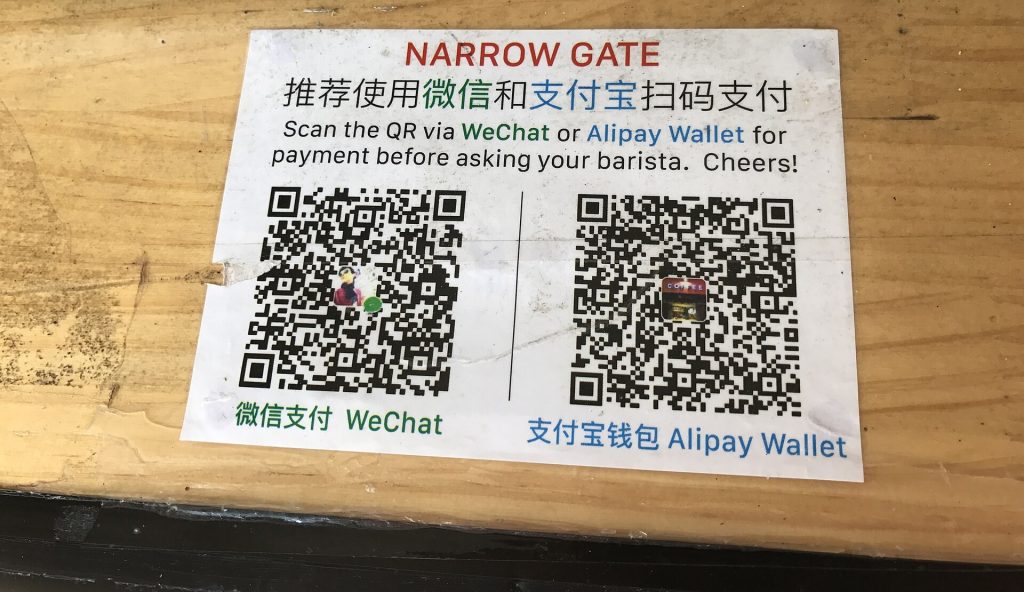
When a restaurant requests a deposit, they will either present a specific QR code for you to scan or send a request through their reservation mini-program.
If you have completed your Alipay setup with a foreign credit card, the process looks identical to a standard payment on your screen. You will authenticate the transaction using your PIN or biometrics. However, in your foreign bank’s app or statement, this transaction will appear as “Pending” or “Processing” rather than a posted charge.
Because you are using a foreign card, you are subject to the policies of your home bank regarding how pending foreign currency transactions are displayed. Alipay simply acts as the gateway transmitting the preauthorization request; they do not dictate how your home bank visually represents the hold on your statement.
Navigating the Final Bill: Capture vs. Release
The most critical moment occurs when your meal is over and it is time to settle the final bill. Restaurants typically handle the existing deposit in one of two ways.
Method 1: Capturing the Hold (Most Common)
The restaurant finalizes the bill by adjusting the original preauthorization to match the final amount. If your deposit was for less than the final bill, they will charge the remaining balance as a separate, second transaction.
Method 2: Releasing and Recharging
The restaurant releases the original deposit entirely and rings up a brand-new charge for the full amount of the meal.
If the restaurant uses Method 2, you must ensure you have sufficient available credit on your foreign card to cover both the pending hold (which hasn’t cleared yet) and the new final bill. This is also a time to be highly aware of your Alipay daily spend limits, as a large released deposit and a subsequent large final charge might push you near your transaction ceiling for the day.
Checklist for settling a bill with a deposit:
Ask the server explicitly how the deposit is being handled: “Will you deduct the bill from the deposit?” (Kǒuyǐ cóng yājīn lǐ kòu ma?).
If they are releasing the deposit, ask them to initiate the release on their point-of-sale system before you pay the new, final bill.
Request a printed physical receipt (fāpiào or xiǎopiào) showing both the final amount paid and the cancellation/release of the original deposit.
Check your Alipay transaction history. A released hold will often update its status to “Closed” or “Refunded” within the app’s notification center.
Handling Delayed Release of Funds
A major point of anxiety for travellers is when a restaurant officially releases a table hold, but the funds remain inaccessible on the foreign credit card.
It is vital to understand that once the restaurant staff processes the release and the Alipay app reflects this cancellation, the timeline for the funds becoming available depends entirely on your foreign credit card issuer. Just like WeChat Pay hotel deposit holds, restaurant preauthorizations can take time to clear.
While some modern banks drop pending holds within hours, others may take a full billing cycle to reconcile foreign transactions.
Payment backups if the wallet or card fails
If the Alipay hold will not go through, ask whether the restaurant can take another card, a different wallet, or cash for the deposit or the final bill. Carry a second funding path and a modest cash float rather than arguing with a pending foreign-card authorization at the table. Screenshot the hold, the final charge, and any release or refund status in Alipay before you leave the restaurant, then check your home-bank pending list the same evening.
Related Lovely China reading
For payments, start with Alipay and WeChat Pay hub and WeChat Pay vs Alipay for tourists. For trains, keep high-speed rail first-timers guide and 12306 passport signup for foreigners handy. City hubs: Beijing first-visit guide, Shanghai first-visit guide. Connectivity: roaming vs local SIM honest guide, pocket Wi-Fi vs eSIM for China, offline maps for foreigners. Bookmark China travel tools page.
Practical checklist
- Confirm official rules on the relevant government, park, airline, or bank page near your travel week
- Screenshot bookings, tickets, and QR codes while you still have stable Wi-Fi
- Save hotel and attraction names in Chinese characters in your phone notes
- Carry passport, a backup payment method, and a small cash float (why cash is still needed)
- Test one small mobile payment before you rely on wallets at a gate or taxi
- Keep the China travel tools page page bookmarked for related Lovely China hubs
FAQ
Is this travel advice official?
No. Lovely China orients travellers. Verify live rules on official pages, apps, and counters near your travel week.
Will every city behave the same?
No. Airports, stations, parks, and markets differ. Use local signage and staff instructions when they conflict with a general guide.
What should I screenshot before I lose Wi-Fi?
Bookings, tickets, hotel Chinese address, pickup pins, and payment success screens.
Notes for late 2026 travellers
November and early December bring cooler mornings, earlier sunsets, and comfortable walking weather across much of eastern and central China. Pack layers and leave extra time on clear weekends at popular sights.
This article does not invent ticket prices, opening hours, processing times, consular fees, or official statistics. When a number matters, verify it on the official site, app screen, or ticket board near your travel week.
If an official rule page disagrees with this guide, follow the official page. Lovely China orients English-speaking travellers; we are not an immigration, banking, or medical authority.