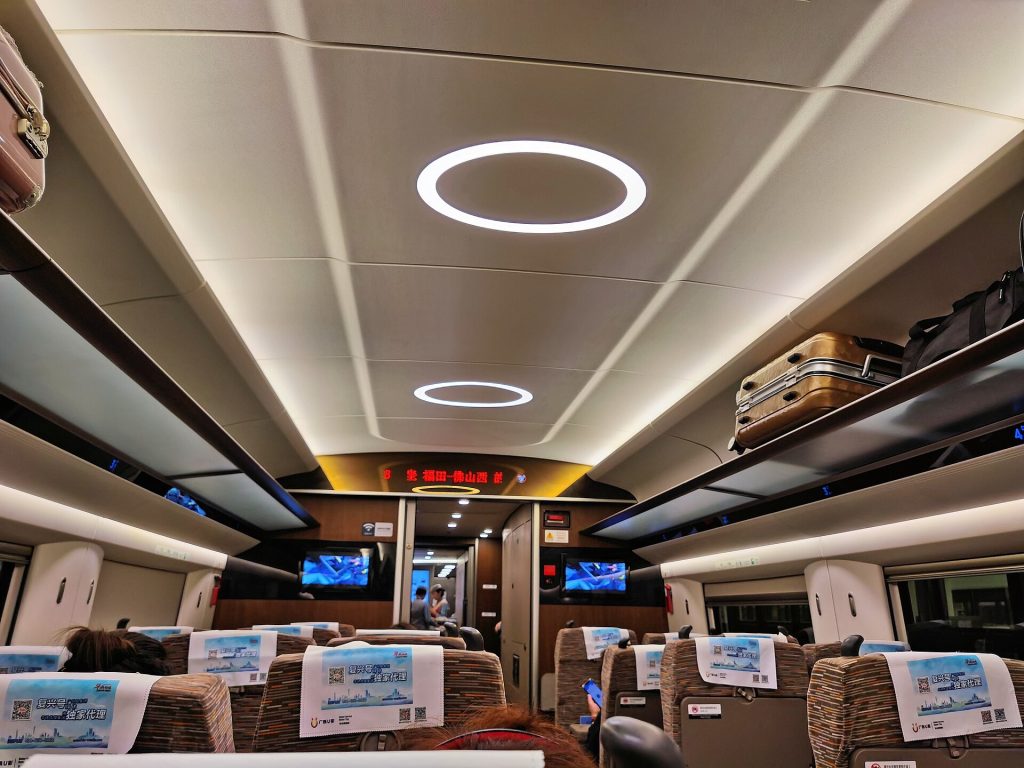
Window versus aisle is a small decision that shapes a long China high-speed-rail ride: luggage at your knees, a view you cannot leave, or a group that wants to sit together. This Lovely China guide is for English-speaking travellers booking on 12306 who need to read a seat map honestly—without treating one carriage diagram as universal. Verify the live seat chart in 12306 or at a station window near your travel week. It is not a primer on business versus first versus second class (HSR seat types explained) and not a full walkthrough of changing a ticket after you already paid (change seats on 12306 after booking).
Keep 12306 English interface tips, high-speed rail first-timers guide, 12306 passport signup for foreigners, and G / D / C train types explained nearby. The calm move is to pick a seat for how you actually travel—bags, kids, motion sickness, or a laptop—then confirm the letter codes on that train’s own map.
Read the map in front of you, not a memorized layout
China Railway runs more than one seat pattern. Second-class cars are often five across; first-class cars are often four across; business-class rooms look different again. Letter codes such as A, B, C, D, and F appear frequently, and a skipped letter can mark an aisle. None of that is a promise for every train number you might book. Open the seat map for your exact date, train, and class, and look at the tiny window and aisle icons rather than copying a screenshot from a forum post two years ago (12306 English interface tips).
If the English interface feels cramped, switch views or pinch-zoom until you can see which seats touch the window line and which seats sit next to the aisle gap. On some maps a hover or tap preview shows the row number and a window/aisle hint. If the preview is ambiguous, choose a seat you can later change rather than guessing from memory (change seats on 12306 after booking).
Station windows and ticket machines show the same inventory with different graphics. If you book with staff, say “window” or “aisle” in English and point at the screen; many clerks understand those two words, and a finger on the map beats a speech about carriage theory (train ticket window with passport).
What a window seat is actually good for
A window seat gives you a wall, a view, and fewer people climbing over you when neighbours visit the dining car or the restroom. It suits travellers who like to lean, sleep against something solid, or watch countryside between cities. It is less kind if you have a large suitcase that will not fit overhead and you do not want to block a row. On busy holiday trains, a window can also feel boxed in if the person beside you stays seated for the whole trip.
If you get motion-sensitive, a window on the direction of travel can help—but 12306 does not always advertise which way the seat will face until you are on board. Do not invent a facing-direction guarantee from a blog. If orientation matters a lot, ask at the window or pick a seat you are willing to swap later.
November and early December light fades early. A window seat on a late-afternoon departure may give you a short sunset and then a dark pane. That is still useful as a place to rest your head; it is not a scenic-tour promise (high-speed rail first-timers guide).
What an aisle seat is actually good for
An aisle seat is the practical choice when you expect to stand up often: restroom trips, a child who needs the corridor, or a bag you want to watch near the door end of the car. It is also easier when you board late and do not want to climb over two seated passengers with a backpack. The tradeoff is traffic. Trolleys, conductors, and other travellers pass your elbow. If you plan to work on a laptop with both arms spread, an aisle can feel narrower than the icon suggested.
Groups of three or four should look at how a row is split before they click the first pretty window. Two windows with a gap between them do not keep a family together. It is usually better to take an aisle-plus-middle pair, or two pairs facing a shared space if that class offers it, than to scatter everyone toward the glass. If the map only has split seats left, book what exists and plan a polite swap on board—or use the official change-seat path while inventory remains (change seats on 12306 after booking, 12306 refund and change rules).
Middle seats and “any seat is fine” myths
Middle seats exist in some classes and disappear in others. They are not a punishment invented for foreigners; they are leftover inventory when windows and aisles sell first. If you are tall, travelling with a large camera bag, or sharing the row with strangers, a middle seat can feel tight. If the train is short and you mainly need to arrive, it is still a valid ticket. Do not refuse to board because the letter is not the one a blog called “best.”
“Any seat is fine” is true for a two-hour hop and less true for a five-hour afternoon with luggage. Think about your bag first (luggage storage at stations and airports). Overhead racks take most carry-ons; very large suitcases often live at the car end. An aisle closer to that luggage area can be calmer than a perfect window six rows away from a bag you keep worrying about.
After you book: changing without panic
If you realize you picked the wrong letter, use the official change function in 12306 rather than hoping the conductor will reseat you for free. Change and refund rules live on the railway’s own screens and depend on timing and ticket type (12306 refund and change rules, same-day 12306 refund and change). We do not invent fee tables or a guaranteed free swap window. Screenshot the original train number, date, carriage, and seat before you touch anything.
Related Lovely China reading
For payments, start with Alipay and WeChat Pay hub and WeChat Pay vs Alipay for tourists. For trains, keep high-speed rail first-timers guide and 12306 passport signup for foreigners handy. City hubs: Beijing first-visit guide, Shanghai first-visit guide. Connectivity: roaming vs local SIM honest guide, pocket Wi-Fi vs eSIM for China, offline maps for foreigners. Bookmark China travel tools page.
Practical checklist
- Confirm official rules on the relevant government, park, airline, or bank page near your travel week
- Screenshot bookings, tickets, and QR codes while you still have stable Wi-Fi
- Save hotel and attraction names in Chinese characters in your phone notes
- Carry passport, a backup payment method, and a small cash float (why cash is still needed)
- Test one small mobile payment before you rely on wallets at a gate or taxi
- Keep the China travel tools page page bookmarked for related Lovely China hubs
FAQ
Are window and aisle letters the same on every China train?
No. Seat maps vary by train type and class. Read the live 12306 chart for your date and train rather than memorizing a forum diagram.
Should I refuse a middle seat?
Not if the departure time matters more than the view. Middle seats are leftover inventory in some classes. You can try the official change-seat path while seats remain.
Can the conductor reseat me for free?
A polite swap with another passenger is a courtesy, not a right. For an official change, use 12306’s change function and read the live fee and timing rules. We do not invent a guaranteed free window.
What should I screenshot before I lose Wi-Fi?
Train number, date, carriage, seat letter, and the seat-map preview that shows whether you picked a window or aisle.
Notes for late 2026 travellers
November and early December bring cooler mornings, earlier sunsets, and comfortable walking weather across much of eastern and central China. Pack layers and leave extra time on clear weekends at popular sights.
This article does not invent ticket prices, opening hours, processing times, consular fees, or official statistics. When a number matters, verify it on the official site, app screen, or ticket board near your travel week.
If an official rule page disagrees with this guide, follow the official page. Lovely China orients English-speaking travellers; we are not an immigration, banking, or medical authority.