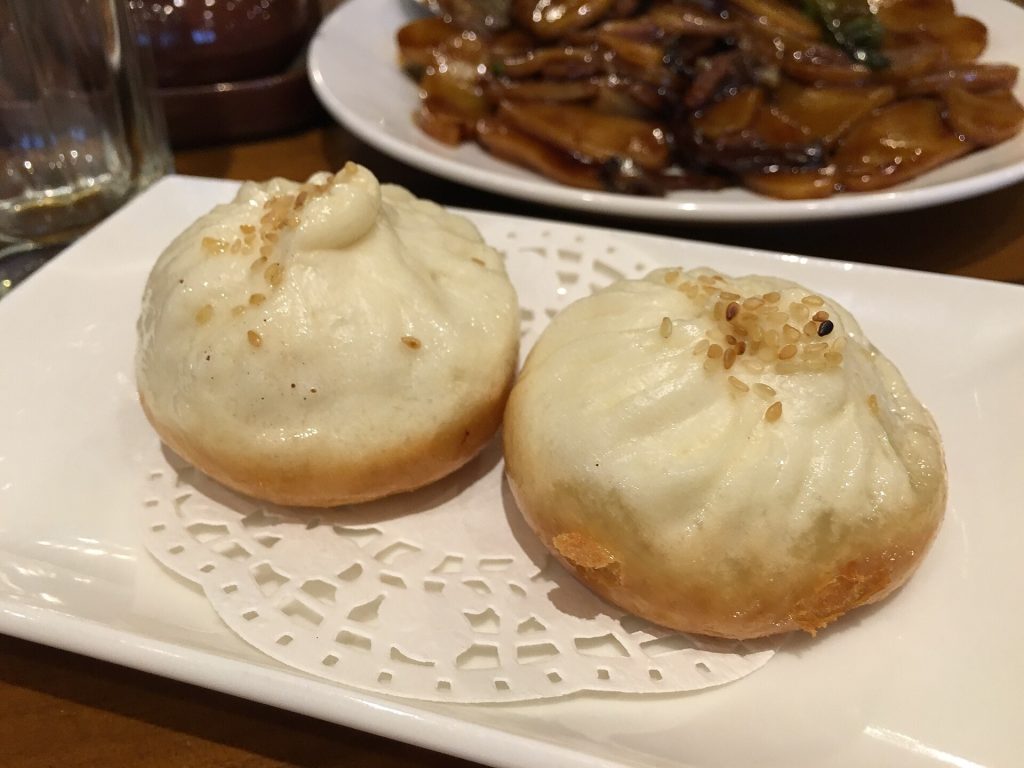
Shengjianbao (生煎包) are Shanghai’s pan-fried soup buns: crisp and sesame-scattered on the bottom, pale and bun-like on top, scallion-flecked, and dangerously hot inside if you treat them like bread. They are cousins of xiaolongbao, not twins. This first-timer guide is about catching a fresh pan, opening the bun without decorating your shirt, and seasoning the local way—without invented prices or a fake “best shop in the city” ranking.
If you want the steamed soup-dumpling version, read Shanghai xiaolongbao first-timers and Shanghai xiaolongbao order tips. For another Shanghai comfort bowl, see Shanghai scallion oil noodles. Chopstick handling that keeps you out of small trouble lives in chopsticks etiquette for foreigners.
What you are looking at
A proper shengjianbao is fried in a wide, shallow pan in batches. The bottoms should be golden, not pale and steamed-looking, and not black. Tops stay softer. Sesame and chopped scallion usually finish the pan. Inside, minced pork (sometimes with extras) sits in hot broth. That broth is the pleasure and the hazard.
Xiaolongbao are steamed in bamboo baskets, thinner-skinned, and eaten with a very different caution ritual. If you order “soup dumplings” and receive a fried bun, you are not being tricked—you may simply have wandered into a shengjian shop. Enjoy the thing in front of you.
Vegetarian versions exist in some shops; do not assume. If you need a pork-free bun, ask and wait for a clear answer rather than guessing from color.
Batch timing matters more than décor
Shengjianbao are at their best soon after a pan comes off the stove. Shops that cook in visible waves are easier for visitors: you can see a fresh batch arrive, watch locals hover, and join that wave. A tray that has been sitting under lights will still feed you and will not sing the same song.
You do not need to arrive at an invented “secret” minute. You need to be willing to wait a few minutes if a new pan is clearly underway, and to accept a different snack if the next batch is a long way off and you are in a rush.
Ordering is usually by portion—four, six, or a plate sized for sharing. Look at the wall or the ticket machine; we do not invent the day’s price. Pay the amount the counter shows (Alipay and WeChat Pay hub). Peak breakfast and late-night waves can mean a short queue. Let people who already paid collect their pans first (queue etiquette foreigners).
How to eat one without a soup accident
1. Give the bun a brief rest if it is visibly raging with steam.
2. Nibble or poke a small vent near the top or side with chopsticks so steam and a little broth escape.
3. Sip or wait, then eat the rest, crisp base included.
4. If you bite straight through the middle like a plain roll, the soup will go where physics sends it.
Vinegar is the usual table partner; chili oil or a house sauce appears in many shops. Add a little, taste, and add more. Drowning the bun hides the sesame-scallion top you came for. Bones and extra dishes are optional—some counters are bun-only, others sell soup or soy milk on the side. One fresh plate of shengjianbao is already a meal for a light eater.
Use the extra plate or paper liner. These buns drip. Nobody in the shop will be impressed by a heroic stain.
Shop etiquette in a tight space
Stand where the line stands, order when it is your turn, and move aside to eat if the counter is also the queue. Trays and tongs may be self-serve or staff-served—watch one cycle. Do not fish in a pan that is still cooking. If you share, agree the count before the last bun becomes a stare-down.
Chopsticks are the normal tool (chopsticks etiquette for foreigners). A spoon helps with escaped broth. Phones over the pan for a long photo shoot delay the people behind you; take one picture after you have a seat or a ledge.
If a shop is cashless, have a working wallet and a backup (why cash is still needed). If it is a tiny breakfast window, have the payment app open before you reach the front.
How this differs from a xiaolongbao errand
Xiaolongbao hunting often involves a sit-down, a steamer basket, and a vinegar-ginger ritual (Shanghai xiaolongbao first-timers). Shengjianbao hunting often involves a stand-up counter, a steel pan, and sesame on your coat if you lean in too far. You can do both in one Shanghai trip; just do not expect the same texture or the same dining room.
Street-food caution still applies: choose a busy pan, eat while the food is hot, and skip anything that looks like it has been waiting through a quiet afternoon if you have a sensitive stomach. We do not award hygiene scores. Your eyes and the crowd are the live signals.
Shanghai’s fried buns are a small, specific joy. Catch a fresh batch, vent the soup, use a little vinegar, and let the crisp base be the point. That is the whole skill.
Related Lovely China reading
For payments, start with Alipay and WeChat Pay hub and WeChat Pay vs Alipay for tourists. For trains, keep high-speed rail first-timers guide and 12306 passport signup for foreigners handy. City hubs: Beijing first-visit guide, Shanghai first-visit guide. Connectivity: roaming vs local SIM honest guide, pocket Wi-Fi vs eSIM for China, offline maps for foreigners. Bookmark China travel tools page.
Practical checklist
- Confirm official rules on the relevant government, park, airline, or bank page near your travel week
- Screenshot bookings, tickets, and QR codes while you still have stable Wi-Fi
- Save hotel and attraction names in Chinese characters in your phone notes
- Carry passport, a backup payment method, and a small cash float (why cash is still needed)
- Test one small mobile payment before you rely on wallets at a gate or taxi
- Keep the China travel tools page page bookmarked for related Lovely China hubs
FAQ
Is shengjianbao the same as xiaolongbao?
No. Xiaolongbao are steamed soup dumplings. Shengjianbao are pan-fried, usually with a sesame-and-scallion top and a crisp base.
How do I avoid burning my mouth?
Wait briefly, open a small vent with chopsticks or a bite on the side, and let steam escape before you treat it like a plain bun.
Do shops have a fixed tourist price?
We do not invent prices. Look at the wall or ticker for the day’s batch price and pay what the counter shows.
Notes for late 2026 travellers
November and early December bring cooler mornings, earlier sunsets, and comfortable walking weather across much of eastern and central China. Pack layers and leave extra time on clear weekends at popular sights.
This article does not invent ticket prices, opening hours, processing times, consular fees, or official statistics. When a number matters, verify it on the official site, app screen, or ticket board near your travel week.
If an official rule page disagrees with this guide, follow the official page. Lovely China orients English-speaking travellers; we are not an immigration, banking, or medical authority.