Moon viewing as a calm Mid-Autumn plan
Mid-Autumn Festival in 2026 falls on Friday 25 September. The public holiday window is roughly 25–27 September, with a makeup workday on Sunday 20 September beforehand. National Day Golden Week follows soon after (~1–7 October), with a makeup workday on Saturday 10 October. For foreign visitors and expats in Beijing or Shanghai, moon viewing (赏月) is one of the gentlest festival activities: no ticket lottery for a palace hall, no mandatory banquet script — just timing, a clear sightline, and respect for crowded parks.
Skies do not always cooperate. This guide covers where people typically look up, how to time transport, public etiquette, and what to do if clouds win. For shop and venue patterns across the holiday, keep Mid-Autumn 2026 open/closed handy. For the bigger calendar clash with National Day travel, see Golden Week 2026 vs Mid-Autumn.
What “moon viewing” means in practice
Traditionally, families gather in the evening, share mooncakes, and look at the full moon together. In big cities, that often becomes:
- A walk in a park with open water or lawns
- A riverside or lakeside pause
- A residential balcony or hotel window with a western or southern exposure
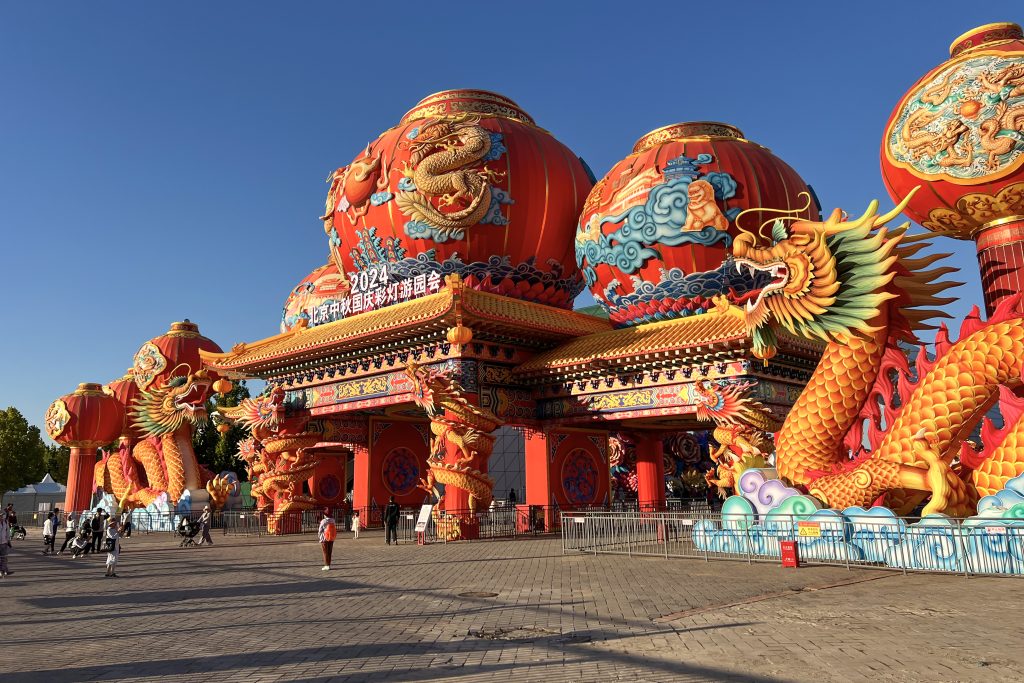
- Occasional lantern displays or cultural events in major parks
You do not need a formal ceremony. Bring a light jacket for late-September evenings, a small box of mooncakes if you want the food ritual, and a phone torch for park paths — used sparingly so you do not spoil others’ night vision.
Beijing: open sightlines and park rhythm
Beijing’s dry early-autumn air can favour clearer nights than humid coastal cities, but wind and haze still vary by day. Popular approaches:
Parks and water edges
Large parks with lakes give reflections and space to stand without blocking a single path. Arrive before dusk to learn exits and toilets while light remains. On Mid-Autumn night itself, paths near popular lakes densify after dinner. Choose a secondary lakeside bend rather than the most photographed pavilion corner if you want calm.
Hutong roofs and courtyards — only with permission
Rooftop views sound romantic and are often private. Do not climb residential roofs. If a hotel or booking offers a terrace, follow house rules. Courtyard dinners are invitation-based, not walk-in tourism.
City viewing tips
- Check the evening forecast the same day; midweek forecasts shift.
- Pair moon viewing with an early dinner so you are not hunting restaurants at peak.
- Use Beijing subway guidance for foreign visitors for the ride home — festival-night road traffic can be slower than rails.
Shanghai: rivers, parks, and skyline gaps
Shanghai humidity and cloud can hide the moon even when Beijing is clear. Build a flexible plan.
Riverside and park options
Huangpu riverside promenades and large parks offer wide sky, but promenades also draw evening walkers on any clear weekend. On Mid-Autumn night, expect denser foot traffic near famous skyline viewpoints. A neighbourhood park closer to your hotel can feel kinder than forcing a long cross-city trip for a cloudy sky.
Indoor-outdoor hybrid
Many families watch from home after dinner. As a visitor, a hotel room with a usable window, plus mooncakes and tea, is a valid Mid-Autumn night — especially with children or jet lag. Public moon viewing is optional culture, not a test.
Transport note: Metro is usually calmer than Didi surge pricing right after fireworks-free festival evenings when everyone leaves parks together. Still, check last-train times before you sit down on a lawn.
Timing the evening without stress
A simple timeline for Friday 25 September 2026:
1. Late afternoon — Confirm weather; download offline maps.
2. Early dinner — Eat before the densest restaurant wave.
3. Dusk arrival — Enter parks while gates and paths are easy to read.
4. Moon window — Stay for the rise and a quiet half hour; you do not need to wait until midnight.
5. Exit early enough — Leave before the largest simultaneous departure if the lawn is packed.
On 26–27 September, some people repeat a quieter moon walk. Weeknight energy differs from Friday night; use that if Friday skies fail.
Public etiquette that keeps the night pleasant
- Keep music soft or use earphones.
- Carry rubbish out; festival nights overload bins.
- Do not drone over crowds unless rules explicitly allow it.
- Give space to families taking photos; step aside rather than walking through frames.
- Alcohol rules vary by park — follow posted signs.
- Lanterns and candles: only where permitted; never leave flame unattended.
Photograph the moon if you like, but do not block paths with tripods at pinch points. A handheld shot and a lived moment beat a perfect frame that annoys twenty neighbours.
If the sky stays cloudy
Cloudy Mid-Autumn nights are common enough that locals already have Plan B:
- Share mooncakes indoors with tea and a video call home
- Visit a bakery display or hotel dessert counter for the seasonal flavours
- Walk a lantern area if a park event is lit regardless of moonlight
- Save outdoor plans for the nearest clear night in the ~25–27 window
The festival meaning — reunion and seasonal pause — survives without a photogenic disc in the sky. For leave and workplace rhythm around the holiday, Mid-Autumn leave for new foreign employees explains how offices often treat the short break.
What to bring (short list)
Cloudy does not mean the city is closed. Bakeries still sell mooncakes; hotels still plate seasonal desserts; friends still meet for hotpot or simple home dinners. If you planned a photography-heavy night, shift to lantern detail shots and city lights. The festival is larger than a single celestial object.
Beijing vs Shanghai in one glance
Choose Beijing when your trip already centres on the capital and the forecast looks drier. Choose Shanghai when you are based there — do not day-trip cities solely for a moon percentage chance. Within each city, prefer the park you can exit easily by metro. A slightly less famous lawn with a clean path home beats a legendary viewpoint that traps you in a taxi queue.
Couples, solo travellers, and families with kids can all moon-view successfully with different pacing. Kids need earlier exits and snacks; solo travellers can linger on a bench with headphones; couples should agree in advance whether the goal is photos, quiet talk, or a short symbolic look before dessert.
What to bring (short list)
- Light layer for breeze near water
- Comfortable shoes for park paths
- Small mooncake assortment (lotus seed paste, nuts, or modern fruit styles)
- Wet wipes and a bag for wrappers
- Portable charger
- Transit QR / wallet already working
Skip elaborate picnics in the densest lawns. A small, tidy setup is easier to move if wardens ask crowds to keep emergency paths clear.
Closing thought for 2026 visitors
Safety and comfort notes
Stick to lit paths after dark. Keep phones zipped when crowds thicken. Agree on a meetup pin if your group splits for photos. September evenings in the north can feel cooler than daytime forecasts suggest — especially near water. In Shanghai, humidity can make “feels cooler” less true; still bring a light layer for breeze on the Bund-facing walks.
If you drink, keep it modest in public parks and follow local rules. Mid-Autumn is family-coded more than nightlife-coded. Loud games that dominate a lawn rarely match the mood people came for.
Connecting moon viewing to the rest of your autumn
Moon viewing sits between summer heat and Golden Week logistics. Use it as a soft cultural evening rather than another attraction to “complete.” If you already walked the Summer Palace or a Shanghai waterfront earlier in the week, you do not need a new landmark solely for the moon — return to a familiar open space. Familiar exits reduce stress when crowds thicken.
Travellers on 144-hour transit stopovers can still catch Mid-Autumn atmosphere with a park walk and bakery stop even on a short clock. Just protect the next morning’s airport or train buffer.
Closing thought for 2026 visitors
Beijing and Shanghai offer different skies and different shorelines, but the same Mid-Autumn invitation: pause, look up if you can, and keep the evening humane. Time your park visit around dusk, protect exit options, and treat clouds as a redirect rather than a failure. With Golden Week only days later, a gentle moon night is also smart pacing — save the long-haul sightseeing energy for clearer priorities after 1 October.
With Golden Week only days later, a gentle moon night is also smart pacing — save the long-haul sightseeing energy for clearer priorities after 1 October.
If friends ask for a single recommendation: pick one park, arrive at dusk on 25 September if skies allow, bring a small mooncake to share, stay for the rise, and leave while the metro still feels easy. That is a complete Mid-Autumn moon viewing — Beijing or Shanghai — without turning the night into a project plan.