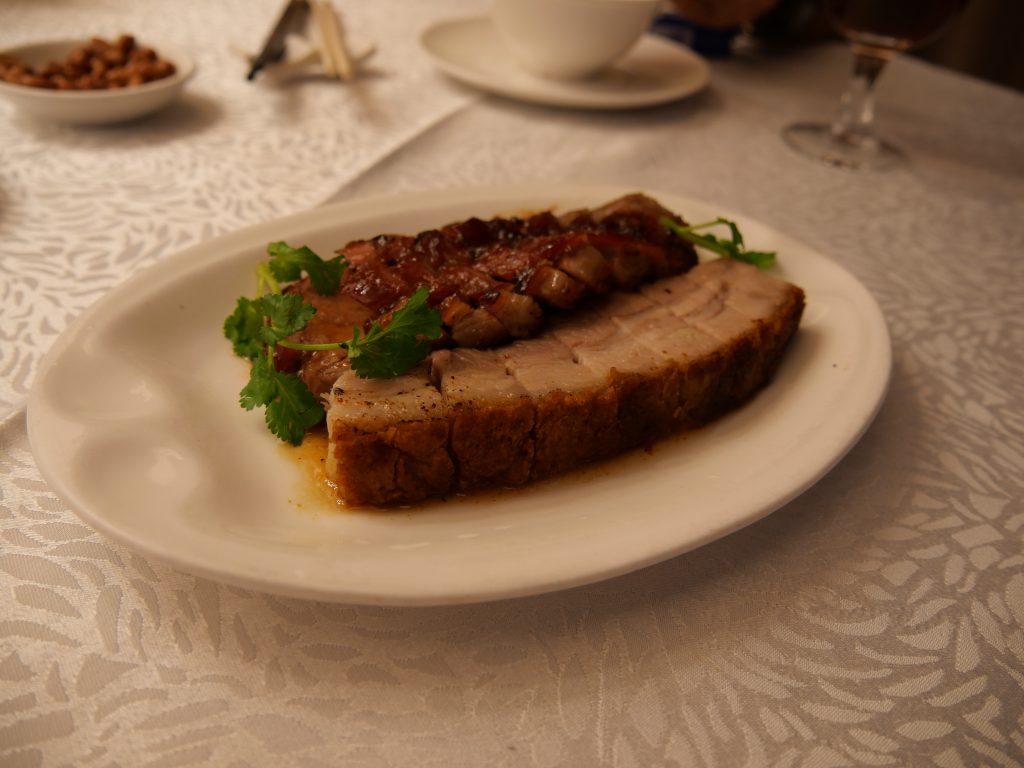
What Guangdong char siu is
Guangdong char siu (叉烧, chashao / char siu) is Cantonese barbecue pork: strips of pork marinated with soy, fermented bean, honey or maltose, and often a touch of five-spice, then roasted until the edges caramelise and the surface turns a deep lacquered red-brown. English menus say “BBQ pork,” “char siu,” or “roast pork” — that last label also covers crispy siu yuk, so point at the glossy red strips when you mean char siu specifically.
For first-timers it sits at the centre of siu mei culture beside Guangzhou roast goose and white-cut chicken: sweet-savoury, fragrant, and built for rice bowls rather than chilli contests. If your first plate tastes only of food colouring and sugar with dry, stringy meat, try another roast shop tomorrow rather than deciding Cantonese food is “just sweet.”
Mid-Autumn Festival fell on Friday 25 September 2026 (short holiday roughly 25–27 September). Today 28 September 2026 is the first ordinary workday after Mid-Autumn; ordinary workdays continue 28–30 September. National Day Golden Week runs roughly 1–7 October 2026, with a makeup workday on Saturday 10 October 2026 per State Council notice 国办发明电〔2025〕7号. Roast shops stay busy on holiday lunches — go earlier, or after a Shamian walk when queues shorten. Pair a char siu rice with Guangzhou Shamian Island or a first-visit overview of Guangzhou in early autumn.
Marinade, lacquer, and what “good” looks like
The meat should stay juicy inside with a caramelised edge, not a dry jerky strip. Surface colour comes from marinade and sugar lacquer; some kitchens use red fermented bean curd or permitted colouring — a deep red is traditional, but neon pink can signal a heavy hand. Fat seams should look glossy, not grey. Honey fragrance and soy savouriness should lead; raw five-spice powder should not dominate.
Common formats: char siu rice (叉烧饭), noodles with char siu, siu mei combo plates with goose or siu yuk, and steamed buns (叉烧包) in dim sum settings — see also dim sum in Guangzhou. A broader roast-meats overview lives at Cantonese roast meats: char siu and siu yuk; this guide focuses on ordering char siu itself without overwhelm.
Do not drown the plate in chilli oil before tasting. House balance matters. A small dish of mustard or chilli on the side is fine after the first bites. Say 肥瘦均分 if you want a mix of lean and fatty slices.
How to order without guessing
Useful phrases:
- 叉烧 — char siu / chashao
- 叉烧饭 — char siu rice
- 叉烧面 — char siu noodles
- 肥瘦均分 / 要肥一点 / 要瘦一点 — mixed fat / fattier / leaner
- 少酱 / 酱汁另放 — less sauce / sauce on the side
- 双拼 / 三拼 — two-roast / three-roast combo
- 不要加糖太多 — not too sweet (when staff customise)
- 现切的 — freshly sliced when you want maximum aroma
Point at the hanging meats if English boards are thin. Confirm whether sauce is poured over rice or served separately. Portion sizes vary by hall; check the board rather than relying on a blog memory. Hotel Chinese restaurants often run a polite, milder plate that is ideal for a first try.
Payments: Alipay / WeChat Pay. Maps need data before basement food courts. Didi for foreign visitors helps between hotel and old-town roast shops after dark.
Taste notes for first bites
Expect sweet-savoury pork, caramel notes, tender slices with a roasted edge, and rice that soaks up a little glaze without turning into soup. Heat level is usually mild. The plate should not taste only of sugar and dye. Fresh-sliced meat beats trays that sat under a lamp for hours.
Char siu is often a solo lunch or a shared siu mei spread beside soup and greens, rather than a banquet centrepiece. Hungry travellers can add Guangdong wonton noodles; stacking goose, full char siu, and dim sum in one dehydrated hour is ambitious.
Etiquette and practical manners
- Eat with chopsticks; a spoon helps with rice and sauce.
- Do not scrape every drop of glaze if sharing from a communal plate; take a fair scoop.
- Keep bags off narrow shop walkways.
- Finish what you can; leftover rice is fine.
- If sharing, place slices onto your bowl rather than eating from the centre platter when the table is formal.
Busy Cantonese lunch rooms are friendly but compact. Keep phones away from sticky glaze. If you prefer less sweetness, ask before the kitchen plates the rice.
Where to try (types of venues, not a fake list)
Look for siu mei shops with hanging meats, steady local turnover, and a chopping block in view rather than empty rooms that only advertise “BBQ pork” in neon English. Hotel restaurants can be fine for a cautious first plate. Residential neighbourhood roast shops often cook closer to everyday style. Tourist strips after a long sightseeing morning can be hit-or-miss — eat when you are hungry, not when you are rushed.
Chain Chinese fast-food brands exist; quality varies by outlet. A single excellent plate does not require a banquet. One char siu rice, tea or soy milk, and a short walk can be enough.
Common mistakes
- Expecting American “BBQ pork” smoke rings and then calling char siu “too sweet”
- Ordering only the leanest slices and then complaining the meat is dry
- Letting the plate sit while you take ten photos before the first bite
- Scheduling a hard HSR departure immediately after a leisurely yum cha crawl
- Mixing a huge roast lunch plus heavy hotpot the same evening without pacing
- Assuming every red pork strip is the same recipe
First-timer checklist
1. Point at glossy char siu, not crispy siu yuk, if that is what you want.
2. Ask for mixed fat/lean if unsure.
3. Taste before adding chilli or mustard.
4. Keep holiday timing slack near Mid-Autumn and Golden Week.
5. Pair with a Shamian or neighbourhood walk rather than a five-shop sprint.
FAQs
Is it spicy? Classic char siu is mild; chilli is usually on the side — ask.
Fat or lean? Mixed is the safest first try; say 肥瘦均分.
Very sweet? Some houses run sweeter; ask for less sauce or sauce on the side.
Pork-free? Traditional char siu is pork — choose goose, chicken, or vegetable dishes instead.
Kids? Often workable — confirm mild sauce and moderate temperature.
Pairing Guangdong days without stomach overload
A classic mistake is morning dim sum, lunch char siu rice plus roast goose, afternoon sweet desserts, night hotpot. Pick a lane: char siu as the lunch centrepiece after a river or Shamian walk, or a richer evening siu mei spread — not every icon in twelve hours. Tea helps. If you still want wonton noodles the same day, keep them to a smaller bowl.
Warm autumn afternoons suit outdoor walks between bites. Carry a light layer; shop air-conditioning can feel icy after outdoor sun.
Compare Cantonese sweetness and roast aroma with Jiangsu lion’s head meatballs or Sichuan twice-cooked pork on other trip days so the flavours stay distinct in memory.
Allergies, dietary notes, and polite refusals
Pork is central. Soy, wheat (from soy sauce or noodles), sesame, and peanut traces can appear in marinades or shared kitchens — ask if you have allergies. Honey or maltose is common in the glaze. Shared chopping boards mean cross-contact is possible in busy stalls.
Polite refusal script: smile, point, and say 我不要这个 for a side you dislike, or 酱汁另放 for sauce on the side. Staff are used to customisation within reason. Tipping culture is not the same as in many Western restaurants; follow local payment norms via Alipay or WeChat.
Holiday crowds and pacing
Near Mid-Autumn and Golden Week, build slack into every plan. A delayed metro ride plus a roast-shop queue plus a timed attraction ticket is the classic stress triangle. Choose two food priorities per day, not five. If rain arrives, hotel Chinese restaurants and indoor food courts are a solid backup. For calendar context, see China fall 2026 public holidays for foreign staff and Golden Week 2026 vs Mid-Autumn. Leftover Mid-Autumn sweets tip: leftover mooncakes after Mid-Autumn — do not stack heavy pastry and heavy roast in one sitting if you are already full.
Carry tissues, hand sanitiser, and a power bank. Busy venues stretch toilet lines on holidays. Drink water even when the air feels warm. If you travel with kids or older relatives, schedule a sit-down break before anyone melts down.
Screenshot the Chinese name 叉烧 before you lose signal. When staff write a number on a pad, confirm whether it is price, portion size, or wait-time. Smiling confusion is normal; rushing creates wrong orders.
Lovely China was founded in 2025 to publish practical English guides for travellers and expats. Questions or a broken link: [email protected].
Before you go (quick mental rehearsal)
Know the Chinese name, confirm fat/lean and sauce level, taste before condiments, and leave buffer before trains or timed tickets. That rehearsal prevents most first-timer stress. Lovely China founded 2025 — [email protected].