The minibus coughed to a halt on a hairpin bend outside Zhenfeng County, steam rising from the radiator into the cool autumn air. An elderly woman in an indigo headscarf appeared at the window, not asking for fare but offering a steamed corn bun wrapped in a lotus leaf. Her fingers were stained blue from decades of indigo dye work, and she smiled when I fumbled for change, waving me toward the stone path that led into the village. That moment — unhurried, unperformed — set the tone for every Bouyei settlement I visited afterward.
Finding the Villages
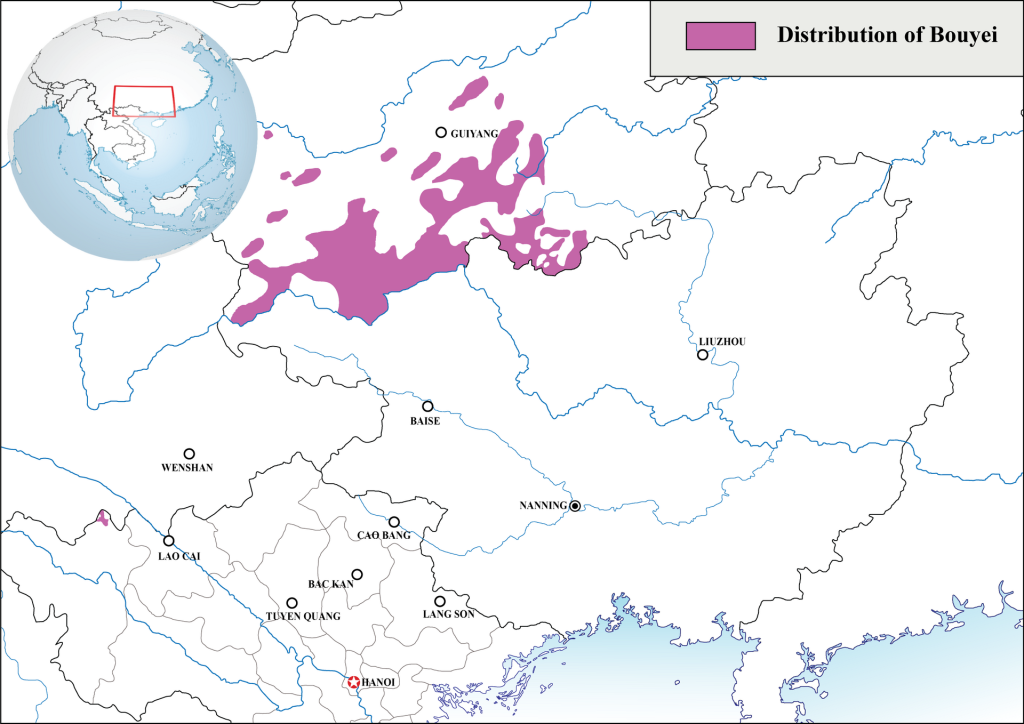
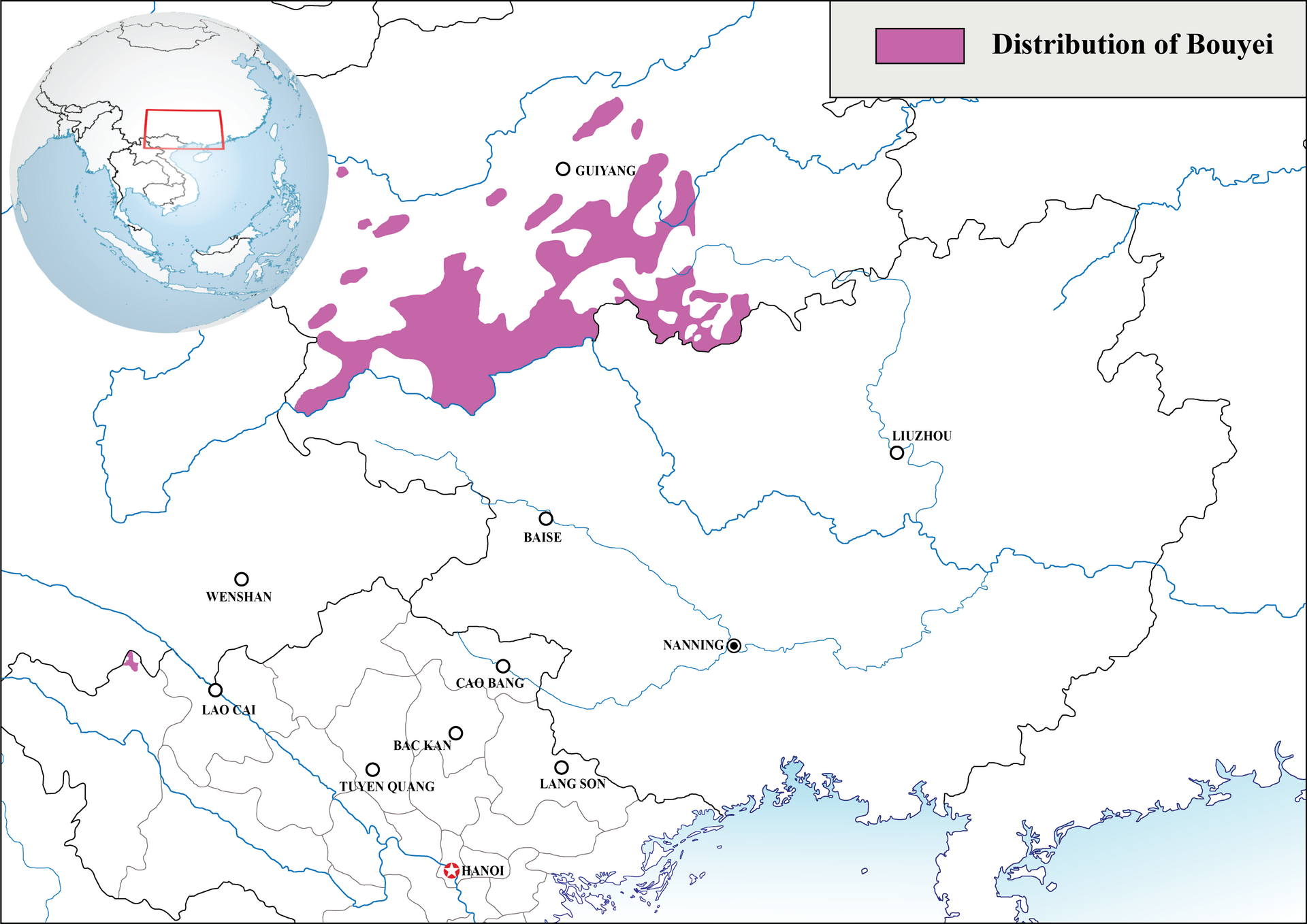
Most Bouyei communities cluster in the river valleys of Qianxinan and Qiannan prefectures, where karst peaks fold into terraced paddies. The villages themselves are not marked on standard navigation apps. Ask a driver in Xingyi or Duyun for “Buyi zhai” and they will point down a county road that turns to gravel after ten kilometers. The clearest sign you have arrived is the drum tower — a three-story wooden pavilion with upturned eaves — standing at the village entrance. No ticket booth. No turnstile. Children herd ducks across the flagstones while elders play cards in the shade of the tower’s overhang.
If you want to stay overnight, look for a household with a wooden sign carved with the family clan name — Wei, Wu, or Lu are common. The host will likely be a woman in her fifties who speaks Southwest Mandarin with a Bouyei lilt. She will not hand you a key. Instead, she folds back the mosquito net on a hardwood bed, sets a thermos of boiled well water on the windowsill, and tells you dinner is at seven. Accept the invitation. The meal is where the culture lives.
Festival Rhythms
The lunar calendar governs the major gatherings. The third day of the third month brings the “Sanyuesan” festival, when villages along the Beipan River empty onto the banks for antiphonal singing. Young men and women form separate lines, trading verses that can last until the moon rises. The lyrics are not rehearsed — they are improvised challenges about farming, weaving, or local geography. A visitor who tries to join the singing will be gently steered toward the rice wine jars instead. Drink a small cup with both hands. Refusing is polite once; refusing twice offends the host.
In the sixth month, the “Liuyueliu” festival centers on the ox. Families wash their working cattle in the river at dawn, brush their horns with tung oil, and tie red cloth to their yokes. The animals are led in a slow circuit around the drum tower while elders chant blessings for the harvest. Tourists sometimes mistake this for a show and climb onto the tower railing with selfie sticks. The village head will not shout. He will simply send a teenager to tap your shoulder and gesture toward the ground. Come down. Watch from the crowd.
What Arrives on the Table
Bouyei cuisine is built on sour, spicy, and fermented notes. The staple is sticky rice steamed in a bamboo tube, its fragrance trapped by a plug of banana leaf. Alongside it come three constants: a bowl of pickled green beans fermented in clay jars for six months, a dish of wild bitter greens flash-fried with garlic and dried chili, and a soup simmered with river snails, tomatoes, and perilla leaves. The snails are sucked directly from the shell — a skill that takes practice. My first attempt sprayed broth across the table. The host’s grandson, maybe six years old, demonstrated the proper tilt of the head without a word.
For a home-style version of the snail soup, the ingredients and steps are straightforward:
- Fresh river snails — two jin, soaked overnight in water with a iron nail to purge grit
- Tomatoes — three medium, quartered
- Perilla leaves — a large handful, torn
- Ginger — thumb-sized piece, smashed
- Garlic — six cloves, halved
- Dried red chilies — four, seeds removed
- Fermented bean paste — one tablespoon
- Lard or pork fat — two tablespoons
- Water — three liters
- Salt — to taste
Heat the lard in a clay pot until it smokes. Add ginger, garlic, and chilies; stir until fragrant. Dissolve the bean paste in a ladle of hot water, pour it in. Add the snails and tomatoes. Bring to a rolling boil, then drop to a simmer for twenty minutes. Toss in perilla leaves at the last minute. Serve in wooden bowls with bamboo chopsticks.
In a county-town restaurant, order “Luosifen” but specify “Buyi zuofa” — Bouyei method. The kitchen will skip the commercial snail broth packet and use their own jarred stock. Ask for extra perilla. If the waiter brings vinegar in a plastic sachet, you are in a tourist spot. Real places keep aged vinegar in a ceramic crock on the table.
Beginners make three mistakes: they peel the snails with a toothpick (use your mouth), they skip the bitter greens because the name sounds unappealing (they balance the oil), and they eat the sticky rice plain (dip each pinch in the snail broth).
Traditional Houses: Living in Stone and Wood
A Bouyei dwelling is a compound, not a single room. The main house sits on a stone foundation raised half a meter above the courtyard to shed summer floods. Walls are stacked limestone slabs, mortared with lime and sticky rice slurry — a mix that hardens like concrete but breathes. The roof is gray-blue tile laid in overlapping rows without nails, held by gravity and bamboo purlins. Inside, the central bay holds the ancestral altar: a wooden tablet, an incense burner, a bowl of uncooked rice refreshed each morning.
Sleeping quarters flank the altar. Beds are hardwood platforms with woven bamboo mats, no mattress. In winter, a charcoal brazier slides underneath; the heat rises through gaps in the platform. The kitchen occupies a separate wing, its hearth a sunken stone trough fed with corn cobs and pine branches. Smoke escapes through a gap in the roof tiles, curing hams and sausages hung from the rafters. You will see no chimney.
If you are invited to sleep in the guest room, do not move the brazier. Do not step on the threshold — the horizontal stone beam at the door — because it represents the family’s backbone. Sit on the stool provided. When the host brings a basin of hot water for your feet before bed, accept it. It is not service. It is recognition that you have walked their paths.
What Newcomers Get Wrong
The most common error is treating the village as a museum. Visitors peer into open doorways, photograph sleeping grandparents, and ask “How much for this?” while touching a loom. The Bouyei do not perform privacy. Doors stay open for ventilation. That does not mean you are welcome inside. Wait to be waved in. If you want a photo of the indigo vats, ask the woman stirring them. She may say no. She may say yes and hand you a stirring paddle. Either answer is final.
Another mistake: assuming Mandarin works everywhere. In hamlets above 1,200 meters, elders speak only Bouyei. A phrasebook helps, but a notebook works better. Draw a picture of what you need — a toilet, a bowl of rice, the road back to the highway. Children will gather, argue over the drawing, and one will sprint off to fetch the thing. Tip the child with a candy, not cash. Cash creates obligation; candy creates a story they tell at dinner.
Finally, do not plan a tight schedule. The minibus back to the county town leaves “when it’s full.” That could be noon. It could be dusk. The driver will not apologize. He will pour tea from a thermos and offer you a peanut. Eat the peanut. Watch the light shift on the karst ridges. That waiting is not wasted time. It is the only way the place reveals itself.