The ticket arrived during lunch
The message from 12306 came while Lin’s mother was still putting dishes on the table. I had been on the waitlist for three days, refreshing the app the way you check the weather when you already know it will rain. Your waitlist order has been successful. One second-class seat on the last train of the day back to the city, departing a little after nine at night, Tuesday 6 October.
I showed Lin. She showed her mother. Her mother nodded as if she had arranged it personally, then put another piece of braised pork in my bowl.
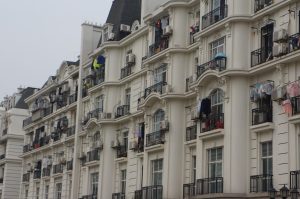
This is a story about the last train home on Golden Week day six. “Home” is a slippery word here. For Lin, home is this small apartment in a county town, with a balcony full of drying chilli and a calendar from the local bank. For me, after four years in China, home has become a rented flat on the sixteenth floor in a city two hours away by high-speed rail, with a plant I hoped was still alive.
I had come for the whole of Golden Week, which ran from 1 to 7 October this year. Lin was staying until the last day. I was leaving a day early because work started again on Thursday 8 October, and Saturday 10 October was a makeup workday. I wanted one quiet day in my own flat before three days back in the office.
Packing, Chinese-mother edition
Packing took ten minutes. Being packed for took an hour.
Lin’s mother had decided, sometime around day three, that I did not eat properly in the city. Evidence: I was thin, I was foreign, and I had once admitted to eating instant noodles for dinner. By the afternoon of day six, a red plastic bag had appeared by the door. Then a second one. Inside were vacuum-sealed packets of the braised pork, a jar of chilli sauce sealed with tape, a dozen salted duck eggs wrapped in newspaper, and a bag of dried mushrooms “for soup”.
“It’s too much,” I said in my careful Mandarin.
“It’s not much,” she replied, which is what every mother in China says about every amount of food.
Lin translated the look on my face. “Just take it,” she said in English. “She’ll worry otherwise.”
So I took it. I rearranged my backpack, put the jar in the middle where it would be safest, and promised to send a photo when I got home.
The station at the end of the holiday
Lin’s father drove me to the high-speed station after dinner. The roads were busier than they had been all week. Cars with out-of-town plates were heading toward the expressway, and he mentioned that the toll-free period ended at midnight tomorrow, so tonight would be busy and tomorrow worse. I had read the same thing that morning: transport officials had said day six would be the return peak.
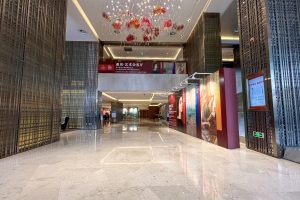
The station was bright and full. It was not the chaos I had imagined, more like a crowded airport: long security lines moving steadily, families with suitcases and bags of food, students in university hoodies, workers carrying rolled-up bedding. Everyone was going back to somewhere.
I queued at the staffed gate for passports, since the face-scan gates there mostly take Chinese ID cards. The staff member looked at my passport, looked at me, smiled at the red bags, and waved me through.
In the waiting hall, there were not enough seats. A grandmother moved her bag so I could sit on the edge of a bench. Next to her, a boy of about eight was watching cartoons on a phone with the volume very low, the way you learn to do when your parents have told you a hundred times. Across the aisle, a young man was asleep on his suitcase with his arms crossed, completely still, like someone who had done this many times before.
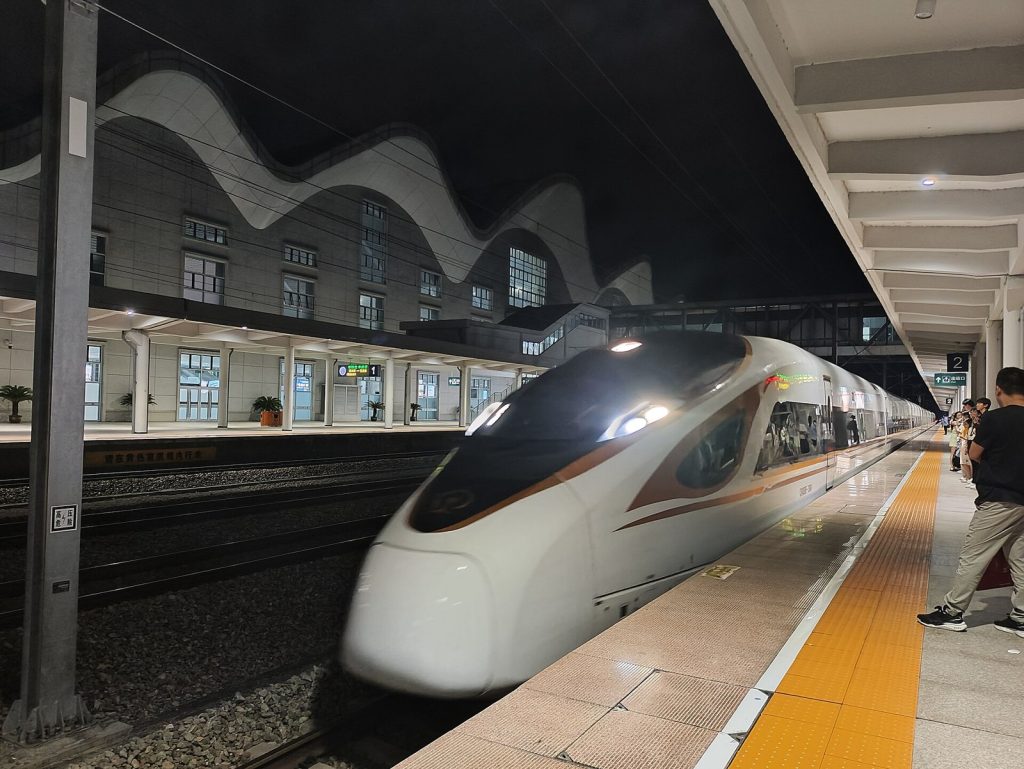
The departure boards scrolled through destinations. Most trains were on time. A few were marked as boarding. Mine was near the bottom, the last line of the night.
The girl with the textbook
When boarding was called, the queue formed quickly. I found my carriage and seat: a window seat, which felt like a small victory for a waitlisted ticket. The aisle seat was taken by a university student with a thick textbook and a bag of oranges.
We said hello. She asked where I was from, then where I lived, then whether I liked the food here. I pointed to the red bags above us. She laughed.
“My mother packed the same,” she said, holding up the oranges. “And there’s more in my suitcase.”
She was studying engineering in the city and had classes on Thursday. She had tried for a train on day seven but everything was sold out, so she had also used the waitlist and got this one. For a while we compared notes on the 12306 app like veterans: which trains we had added, how long we had waited, how we had both nearly given up.
Then she opened her textbook, and I looked out of the window.
Ninety minutes of darkness
High-speed trains at night are strange. You are moving very fast, but you see almost nothing: a band of lights from a town, a lit-up factory, the reflection of the carriage in the glass. The carriage itself was quiet. People were tired. Phones glowed. A conductor walked through checking tickets and reminded someone, politely, to take their bag off the aisle.
I thought about the week. The dinners that went on for hours. Lin’s grandfather teaching me a card game whose rules I never fully understood. The afternoon we walked along the river with half the town. The moment, on day four, when I realised I had stopped translating in my head and was just listening.
I also thought about Thursday. Emails. A meeting I had pushed to Friday. A Saturday at work that my colleagues abroad would not understand. It felt strange to carry both weeks at once: the holiday behind me and the working week ahead.
The student fell asleep with her textbook open. At one stop, a man got on and stood in the aisle for two stations, holding a standing ticket and a thermos of tea. When the seat across from us emptied, he sat down with a long sigh and said, to nobody in particular, “Almost there.”
Arriving after the crowd
We arrived just before eleven. The station was busy, but less than I had feared. Most of the crowd had arrived earlier in the evening. I followed the signs to the metro, carrying the red bags carefully, while the student waved goodbye and went to find a taxi with friends.
The metro carriage was half-empty: travellers with suitcases, a couple of night-shift workers, a man asleep with his head against the window. Nobody talked. At my station, the escalator was already off, so I climbed the stairs with the jar of chilli sauce knocking against my back.
The flat smelled of dust and closed windows. The plant was alive, just. I opened the windows, put the braised pork in the fridge, and took a photo of everything Lin’s mother had packed laid out on the counter. I sent it to Lin. She replied with a heart and a message from her mother: Eat it all. Don’t waste.
What I learned on the last train home
- The waitlist works more often than you think. Add several trains, set a realistic deadline, and keep checking.
- Leave a day early if you can. I avoided the worst of day seven and had a quiet day before work.
- Accept the food. It is care, packed in plastic bags.
- Carry your passport where you can reach it. You will need it at the gate and on the train.
- Remember the makeup Saturday. Your colleagues abroad will not.
If you are travelling back this week, our Golden Week day six return-peak guide and the 12306 booking guide cover the practical side. For the first days back, see our back-to-work checklist. And if you want the other end of the holiday, read Night Train Home on the Eve of Golden Week.
FAQ
Is this story true?
It is a composite, first-person story based on common expat experiences. The people are fictional; the holiday dates and practical tips are real.
Can foreigners use 12306 waitlisting?
Yes. Foreign passport holders can register on 12306 and use the waitlist (候补) function, subject to the platform’s rules.
Can I carry home-cooked food on a high-speed train?
Sealed food is generally fine. Check the railway’s rules on prohibited items, and avoid strong-smelling food in the carriage.
Bottom line
The last train home on Golden Week day six was not dramatic. It was a waitlisted seat, two red bags of food, a student with oranges and a quiet carriage full of people heading back to their working lives, which is perhaps the most ordinary journey in China. Lovely China, founded in 2025, welcomes corrections at [email protected].